
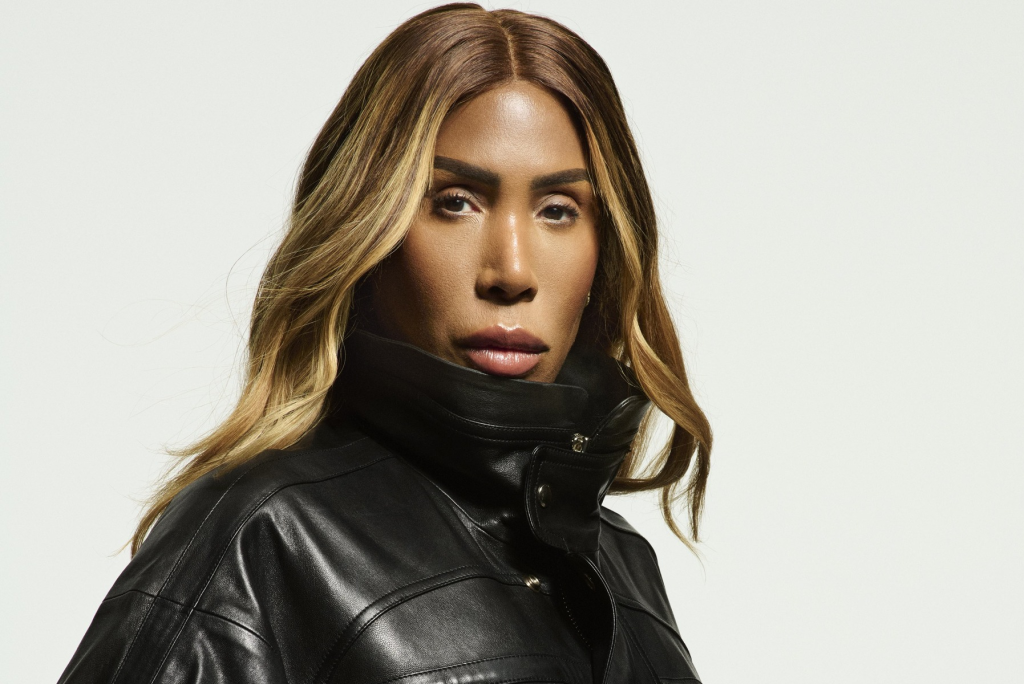
“I wanted to do something that pushed me out of my comfort zone,” Honey Dijon tells Billboard over Zoom from her home in London, where she’s cozied up on the couch on a recent Wednesday evening.
Explore

See latest videos, charts and news
That thing is The Nightlife, the iconic producer’s third studio album, out today (April 16.) Featuring collaborators including Chlöe Bailey, Greentea Peng and Jacob Lusk, the 14-track LP is inspired by the past three years Dijon has spent living in London. But it’s themes also go far deeper into her history, unpacking the very meaning of the club culture she grew up in in her native Chicago and later New York and the safety, community and joy clubbing has provided for her and countless other LGBTQ people.
Now a globally famous artist, Dijon’s summer schedule includes a list of big festival plays — Time Warp Miami, London’s Field Day, Italy’s Adriatic Sound Festival and Chicago’s ARC among them — with this shows coming after a run of much smaller headlining club sets that were designed to present the album in the intimate spaces that inspired it.
Here, Dijon talks about what she learned from working with Beyoncé, the difference between entertainment and nightlife, and why while “a nice piece of ass and great art and beautiful clothes” are great, learning to love herself has been greater.
1. Where are you in the world right now, and what’s the setting like?
I am at home in London after walking around the city center, because it’s 19 degrees [Celsius] here today and sunny. So I had a Pilates class, and then I went and got a matcha, and then I walked home. I had a little bit of a spring afternoon, or almost spring.
2. What was the first album or piece of music you bought for yourself, and what was the medium?
Oh my god, this just brings back memories of going record shopping with my father. I would say the first 12-inch that I bought was Yello’s “Bostich.”
3. What did your parents do for a living when you were a kid, and what do or did they think of what you do for a living now?
My mom used to work for the airlines. She was a reservationist for an airline. And my father, who is deceased, used to be the manager of a drug store. Then he transitioned into doing landscaping for the city of Chicago. So, very blue collar, middle-class upbringing. And what they think of what I do for a living now? Obviously they’re very proud since I won a Grammy. My father passed the same year I was able to get the Grammy, so it was a very bittersweet year and also a very proud moment for my parents.
4. What is the first non-gear thing you bought for yourself when you started making money as an artist?
A Cartier Clou bracelet. I still have it. It was the first time I started making money, and I always wanted a Clou bracelet, and I took my ass to Cartier on Fifth Avenue in Manhattan when I was on tour for my birthday and I bought myself a Clou bracelet, rose gold.
5. If you had to recommend one album for someone looking to get into electronic music, what album would you give them?
I’m going to give you a couple. Tourism, by Danny Tenaglia. Of course The Best of Both Worlds by Honey Dijon. Lil Louis and The World’s Journey With the Lonely, and the next album would be That Total Age by Nitzer Ebb.
6. What’s the last song you listened to?
“Don’t Play” by Jill Scott. I’m loving the new Jill Scott album, but I have a few songs on repeat right now. One is “Pink Cashmere” by Prince. The other one is “Don’t Play” by Jill Scott and then “Make It Last Forever” by Inner Life and the last one is called “The Sound Table” by Cameo.
7. When is the last time you felt perfectly happy?
Last night having dinner with my friends. We are friends from New York, and we’ve been friends for a long time, and there’s something really nice about laughing with your friends over a meal. I was really happy at that moment, just talking s–t, laughing, gossiping and just being present with one another, not looking at our phones. I left that dinner feeling so happy and content that I have good friends in my life.
8. Your last album, Black Girl Magic, came out in 2022. Why is now the right time for a new one?
I think it took four years because, as you know, I was working on Beyoncé’s Renaissance album. I wrote two songs for that, “Cosy” and “Alien Superstar.” Me and my songwriters Luke Solomon, Chris Penny and Lance Dari, I call them my Bernie Taupins, those are my partners in crime. We all learned so much about the creative process working on that record.
9. What did you learn?
We learned more about songwriting, melody structure, which features to use on what songs and a bit more storytelling and sonically pushing. We wanted to push this the sonics of this new record. I like to call it progressive R&B. I’ve made two house albums, and I didn’t want to be predictable and make a third one.
It’s really about where I’m at in my life, wanting to push myself as an artist musically and not make a straight up 4/4 house record, and but to also incorporate — I listen to a lot of yacht rock. I love yacht rock, and what I love about that music is the analog warmth, the sound of the instruments and the songwriting and storytelling. I wanted to look at that in a critical way, not a nostalgic way, and apply that to this record. It would have been easy just to make another house record, but I thought that this is the moment to really explore myself as an artist, a songwriter and a musician and and go with that.
10. What story is this new album telling?
This album is really a celebration of and tribute to nightlife. Nightlife has become such big business globally, right? The DJ has transformed from being in the shadows to being a performer. My experience of clubbing was much more community, connection, release, celebration and culture. A lot of dance music and clubbing has gone from culture to entertainment, and out of very selfish reasons, I just wanted to remind people, my fans and the audience that listens to me, that there is a culture around this music.
11. Will you say more about that?
Clubs, especially for me for a lot of marginalized people — people of color, queer people and women — are safe spaces to be free, liberated and celebrated, and also just a great form of self-expression, especially for queer people and women, too. A lot of women that party in queer spaces can feel free to express their sexuality without the male predatory gaze. And also for queer people, they can be colorful without dealing with misogyny or homophobia or transphobia or these binary gender roles that are enforced upon all of us that don’t serve any of us. I wanted to tell that through the songwriting and the storytelling for this album. It’s a reminder that nightlife and clubbing are not just about getting high. It’s sanctuary, church and community for so many people.
12. How do the individuals tracks express that story?
“Slight Work” is a play on the word “work,” which is like a queer euphemism for when you’re turning it out. “The Nightlife” is inspired by Kim English’s “Nitelife,” which was a big New York dancefloor record. “Just Friends” has many different interpretations. It’s a nod and wink to modern dating, because people fall in love with their Only Fans.
You know, I feel that love and sex have become two-dimensional, virtual things with all the apps and all of these things. By the way, I’m not on any of those things, because I guess I’m kind of old-fashioned. I like IRL. I have to see what shoes you’re wearing, and I need to see how you walk, what you smell like, how you hold yourself in the world. I want to see you how you are, the way you are, without presenting what you think I’ll like about you, because attraction can come from the oddest of places, and so “Just Friends” is a nod and a wink to that, but also about falling in love with a friend. Do you dare cross that line?
13. Is it inspired by real life experiences?
There’s always autobiographical things in my music. My last album had a song I wrote about how difficult it is for trans women, especially trans women of color, to find healthy, loving relationships with men that aren’t ashamed of their attractions. It’s called “It’s Quiet Now” and was about when you have the courage to walk away from toxic love and find yourself again through quiet and peace. I think all of us, regardless of how we identify, when you go through a breakup or when a relationship doesn’t work out, or the projection of a relationship doesn’t work, sitting with that quiet can be so hard, but it’s also the quiet you need to come back to yourself.
A lot of my songs can be autobiographical, and on this album “Just Friends” is the one. There’s a lot of hot guys on the internet, especially on Instagram, and you have these quick obsessions for like, five minutes, until the next one comes along.
14. Maybe you just answered it, but what does this album says about who you are in 2026?
There’s a song on the album called “International,” and that’s me. I have such a crazy f–king life. I literally go to countries like most people go through the kitchen. I can be in five different countries in a week for DJ shows. It’s a commentary on the crazy international DJ life that people think is very glamorous, but it’s a lot of work. I mean, there are great perks to it, but it’s a lot of work — the lack of sleep, being away from friends and family, always sleeping in strange places, not being able to take care of yourself mentally or physically with lack of sleep, bad food, all of the things that go along with it. But that’s part of being international.
15. Your tour behind this album is being billed as “a deliberate return to smaller club spaces in the culture.” Why play these smaller shows, when you could play really big ones?
It’s about reminding people of community, because I grew up in small clubs, and I love small spaces. I play a lot of huge festivals and a lot of big things. Although I enjoy that, I wanted to do something more intimate and more about culture. This whole record is about the culture of nightlife, and less about the entertainment of nightlife.
16. How do you define that difference?
Now you go to festivals and there are 40 to 50 different DJs that play for one hour. That’s not nightlife, that’s entertainment, verses the resident DJ playing from beginning to end, or just having one opener in a small, dark room where you can see, feel and hear everything. So this is a deliberate return to the roots of the culture of nightclubbing that has gone on to have global impact and influence.
17. What are the proudest moments of your career so far?
The fact that I get to wake up every day and choose my day, as a marginalized trans woman of color. Most trans women don’t live past 35, especially trans women of color, so the fact that I am able to sit here, tell my story, share my culture, share my music and have influence in that way — I stand on the shoulders of so many that have gone before me. This is not mine. I’m a vessel for what has gone before me and the culture, and I try to honor and respect that.
So those are my proud achievements, just that I survived. I didn’t grow up in the time where you could have a big social media presence and become a DJ. You actually had to put in the long yards, make the records, play the parties, do all of the things. Now you can become a big DJ or be put on if you have enough followers and a good algorithm. I’m grateful that I get to choose my day, that I survived life in order to still share the experience that I had growing up as a clubber in music that I love. That’s my idea of success.
18. What’s the best business decision you’ve ever made?
Not letting other people dictate the artist they felt I should be. I’ve been told many times that if I played this or that, I would be big this or that way. Staying true to myself is the best decision I’ve made, because my audience found me. That’s the key to longevity — not trying to be everything to everyone, but being who you are, letting your people find you. And also creating space — throwing my own parties, making sure I include a lot of people of color and women and upcoming artists on the lineups I do.
Also buying real estate and investing my money in the S&P. I don’t have a Rolex. I don’t have a big car. I don’t smoke cigars. I don’t do drugs. I don’t buy magnums of champagne. I put my money in the stock exchange, I buy real estate and I stay true to who I am.
19. Who’s been your greatest mentor and what’s the best piece of advice they gave you?
I have several, but my biggest mentor was Danny Tenaglia, and he said, “You get back what you put out.” That really resonated with me and circles back to staying true to myself. If I put out this version of myself that wasn’t me, I would attract that audience and I would have this constant battle.
20. What’s one piece of advice you’d give to your younger self?
You didn’t need to outsource your happiness. You had it all along. I mean that via relationships, fame, money, any of these things we’re taught would give us meaning, purpose, visibility or whatever self-esteem or worth comes from the gaze of other people. People can add, but everything is so transitory, and the only thing you have at the end of the day is you. People die, markets change, styles change, friendships end, friendships begin, but in the center of that storm, your center of gravity is yourself.
So, make sure you fall in love with yourself before you fall in love with anything else, because that’s the love you need to nurture. It’s nice to have a nice piece of ass and great art and beautiful clothes, I’m not going to lie. I’m human. I’ve got eyes. But I’m learning more and more that if I could go back to that 15-year-old, honey, I would hug that person and tell them that you were already okay.





Leave a comment