

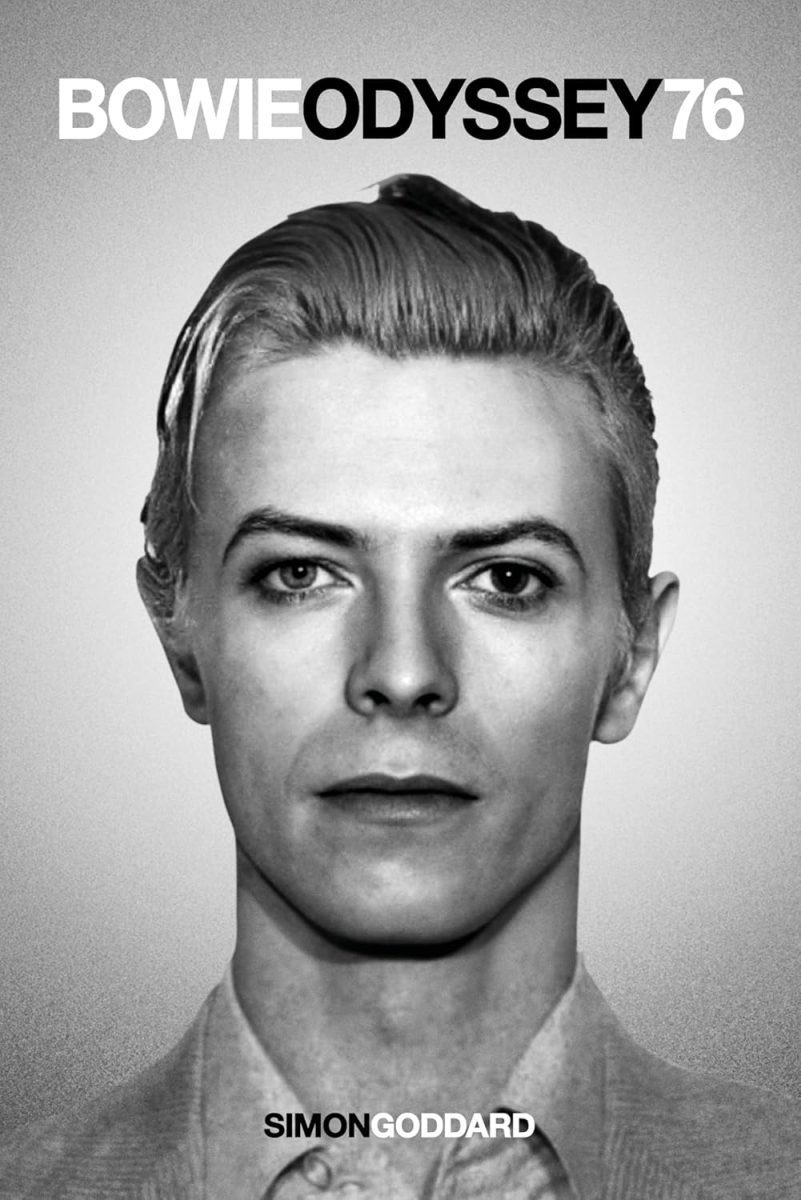
 Simon Goddard “Bowie Odyssey 76! (Omnibus 2025)
Published by Omnibus – out now
Simon Goddard’s books tracing Bowie’s life and music from 1970 onwards are essential reading for any serious Bowie fan. In addition, the books are characterised by some very sharply observed digressions into the history and feel of the times.
I can genuinely say I’ve been looking forward to this latest Bowie Odyssey book since reviewing the last one here a year ago. So here we are, 50 years on from 1976 – the hottest summer for years (pre climate change anyway), only 3 tv channels, the first stirrings of punk, charts dominated by disco lite & pap like the Brotherhood of Man. The author skilfully evokes key figures of mass entertainment from the time – remember the Fonz, anyone? Keith Carradine & Kung Fu? He’s also very astute on the decadent undercurrent of the time, Lisa Minelli in Cabaret, plus a series of films like The Damned and Night Porter, which flirted with themes of perversity and dependence. But the main theme running through the book is one that’s instantly recognisable today – racism and fascism. The author shows the different forms taken, before pulling together all the threads with Bowie’s infamous Nazi salute on arriving in London and his toying with fascist ideas and imagery. Not the brightest thing to do given the increased popularity of Far Right groups like the BNP & National Front. Then there’s Robert Relf, a pathetic “Tommy Robinson” wannabe and self-publicist whose series of racist stunts end up in regular prison stays. All this at a time tho when the likes of Alf Garnett spouted blatant racism on TV (sadly, the intended “irony” was lost on Alf’s fans.
The author describes the sheer extent of racist views, from the patrician spiritual leader Enoch Powell, picking up where he’d left off with his “rivers of blood” forecast in 1968, to a series of extraordinary outbursts at gigs from Eric Clapton. There’s some serious research done here – over the years, it’s been downplayed as a couple of off the cuff remarks made when drunk, but we can see that they were made at length on several occasions. Particularly vile coming from someone who’d based his career on copying Black r’n’b musicians before deciding to ride the Marley bandwagon with his cover of I Shot The Sheriff. Fortunately, the far right parties were too disunited to mount a serious electoral challenge, as the disillusioned & abandoned Robert Reff was to find out. There are also nice touches that fill in the background, like the contrast between the burgeoning African liberation movements taking on the likes of colonial Rhodesia and Bowie taking a loan of Keith Richards’ mansion in equally colonial Jamaica. As with Clapton’s excuses about being drunk, Bowie’s denials of flirtation with Nazis – and that salute at Victoria – are pretty unconvincing, with lots of statements about the country needing a strong leader or the facile guff about Hitler “being the first rock star”. His massive intake of cocaine at the time would have something to do with these OTT views, as well as a desire to shock and attract attention.
Bowie himself later explained this misstep by saying that it had all started in the innocent acid days of “Memories Of A Free Festival” as taking up the quest for Arthur’s Avalon, but got perverted when concepts like the Sword of Destiny strayed into Nazism, combined with his heavy drug intake at the time. … which connects to the regular appearances of Siouxsie Sioux thru the book, whether sporting a swastika arm band at the legendary 100 Club punk gig, shocking the straights in suburban Bromley or arguing that by the 70’s the swastika had lost many of its WW2 association’s for young people, and as a way of kicking back against the popular culture obsession with the war, even after 30+ years. Whether big budget Hollywood films glamorising the fight, or light entertainment like Allo Allo or Dad’s Army, all are replete with their own set of stereotypes and clichés.
Iggy Pop is another one who makes frequent appearances, starting inauspiciously being rescued from LA rehab by Bowie but reborn in Berlin and making a huge comeback with the David-inspired The Idiot, The book doesn’t shy away from Bowie’s coke addiction but equally shows this to have been a very productive period – making the Station To Station and Low albums, filming The Man Who Fell To Earth, starting his working relationship with Eno, even extricating himself from the Mainman contract, writing The Idiot for Iggy & touring as one of the band to promote the album.
Apart from the serious research that provides the material for the many themes that diverge and intersect through the book, there are some excellent photos illustrating the Thin White Duke in all his Colombian glory, alongside upcoming upstart Johnny Rotten, Enoch Powell, the Berlin Wall, Abba, Starsky & Hutch and some nightmare knitwear.
Early in the book Simon Goddard proposes that Bowie could only function when playing a part that he could hide behind or lose himself in, from Ziggy Stardust to Aladdin “Ziggy in America” Sane to the Thin White Duke. Anyone recalling the famous BBC doco of an ultra wired Bowie in LA can see that he and Iggy made it out just in time to Berlin, the proverbial “New Career in a New Town.” I’ve read elsewhere of even more out there manifestations of Bowie’s occult trips, exorcising a demon from his swimming pool in LA.
The book does a great job of evoking the mid 70s atmosphere, post-60s comedown, for sure, but also a time of change, lots of creativity and uncertainty, but what did it mean and where was it going? It certainly took me back to seeing one of that summer’s Empire Pool gigs, the banks of white light making it like a cocaine advert, the relentless power of the music … all before nearly being wiped out by Bowie’s limo as it swept away into the sultry night. I was really looking forward to this – like I used to with Bowie albums – and it’s totally lived up to expectations. All being well, there’ll be a Bowie Odyssey 77 to look forward to next year
~
All words by Den Browne, you can read more on his author profile here:
A Plea From Louder Than War
Louder Than War is run by a small but dedicated independent team, and we rely on the small amount of money we generate to keep the site running smoothly. Any money we do get is not lining the pockets of oligarchs or mad-cap billionaires dictating what our journalists are allowed to think and write, or hungry shareholders. We know times are tough, and we want to continue bringing you news on the most interesting releases, the latest gigs and anything else that tickles our fancy. We are not driven by profit, just pure enthusiasm for a scene that each and every one of us is passionate about.
To us, music and culture are eveything, without them, our very souls shrivel and die. We do not charge artists for the exposure we give them and to many, what we do is absolutely vital. Subscribing to one of our paid tiers takes just a minute, and each sign-up makes a huge impact, helping to keep the flame of independent music burning! Please click the button below to help.
John Robb – Editor in Chief
PLEASE SUBSCRIBE TO LTW






Leave a comment