

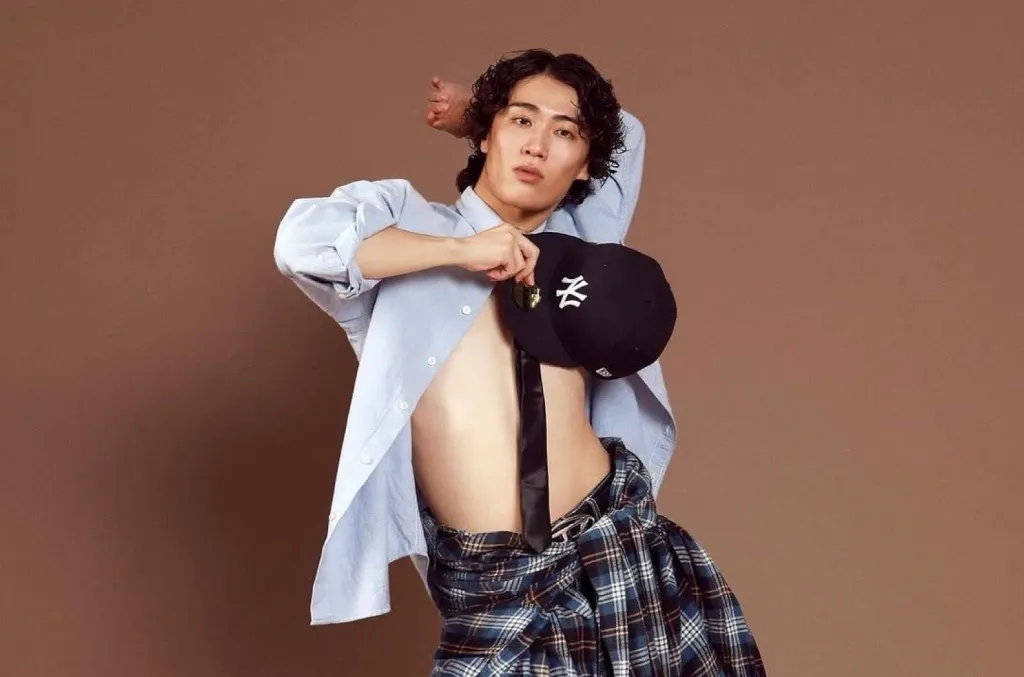
Unbound Japan is a new interview series spotlighting entertainment industry professionals who have built careers on the international stage. For its inaugural installment, Billboard Japan spoke with Ryota Takaji, a professional dancer based in Los Angeles. Having danced since childhood, Takaji recently appeared as one of Bad Bunny’s dancers at the Super Bowl halftime show in February. He opened up about how he made his way to the world of U.S. entertainment and what keeps him going as a working dancer there.
Explore

See latest videos, charts and news
When and how did you start dancing?
I don’t remember it clearly because I was so young, but apparently when I was around 5 I used to imitate idol performers I’d see dancing on TV. My mother happened to know someone whose daughter was taking dance classes, and we were invited to her recital. When we went, I thought, “I want to do that too,” and that’s how I started. Back then, I looked up to popular acts on TV like SMAP and Morning Musume.
When did your interest start to shift from Japanese artists to dancers overseas?
There was a teacher I really admired from elementary school, and that teacher got deeply influenced by a dancer when she went to the U.S. I attended a workshop this dancer held in Osaka, where I’m from, and that was my first real encounter with someone from outside Japan. Around the time I was in junior high school, more and more people started posting class footage on YouTube. Watching those videos, I kept thinking how cool it was, how people from where it all originates are just on another level. That’s when my interest really started to grow. By high school, whenever a foreign dancer came to Japan to teach, I was taking overnight buses to Tokyo by myself and going to their classes once or twice a month. The dancers I met there had a huge impact on me.
So you were getting information from abroad through the internet early on.
I think it was around that time that Japanese people making names for themselves overseas were gradually starting to emerge. I looked up to people like s**t kingz and Koharu Sugawara, who were making it internationally. From there I got curious about the dancers from other countries that I was seeing in class videos and started researching them. From high school onward, I’d say my switch had fully flipped toward going abroad. It was basically all I had my sights on.
When did you decide you wanted to go to the U.S.?
I always knew that once I graduated high school, I had to get to the U.S., at least once. So the first time I went was right after graduation. I was only there for two months, taking classes from people I admired and essentially doing a dance-only study abroad stint. But two months felt nowhere near enough to absorb what I needed. I figured I had to go for a full year or more next time, so I started saving money and preparing. I went back when I was around twenty, this time attending language school while also dancing, for about two years.
But being a student meant I couldn’t work, and I realized I’d need a visa to actually work as a dancer over there. The standard route to getting that visa is to build a career outside the U.S. and submit that track record as evidence. So I returned to Japan and moved to Tokyo to establish myself properly, but that coincided with the COVID lockdown. Live performances were off the table, and I worked within those limitations which made me think a lot about my future. Through all of that, I came to the conclusion that I still wanted to see what I could achieve in U.S., so I got the visa and came back around the end of 2022.
When you’re pushing toward a goal and obstacles inevitably come up, how did you deal with them?
The people around me were a huge help. But to be honest… High School Musical was really popular right around that time. I’d watched it and was caught up in this image of American life, so I was only seeing the exciting parts.lol
But there were plenty of practical problems, the everyday hurdles you simply can’t survive without clearing, like opening a bank account. I had no choice but to solve them. By stumbling through it all, I gradually figured out how to handle things.
Which artists have you’ve worked with so far?
I’ve danced for Kyary Pamyu Pamyu and Fujii Kaze, the Paralympic closing ceremony, and Amazon Prime’s The Masked Singer, where I was one of the exclusive dancers on the show. During my time in Tokyo, a lot of my work was music videos and commercials because of the COVID pandemic. Since coming to the U.S., I’ve done music videos for artists like Eric Nam, and I also do some behind-the-scenes work that’s common in K-pop called skeleton crew work, where you dance in videos that help artists learn choreography.
In terms of working in Japan, I was so honored I got to work with Fujii Kaze. I did his music video and danced at his stadium concert. I’d actually been listening to his music a little before that, and had been hoping I’d get to work with him someday. It was a dream come true when it actually happened. I was overwhelmed.
Most recently, you danced for Bad Bunny at the Super Bowl halftime show, held February 9th in Santa Clara, California.
It’s one of the biggest shows in America and every dancer’s dream. I couldn’t be more proud to be a part of it and it really left a huge impact in my heart.
How did it come about?
It was an audition. This applies to any performing stint, but physical appearance and proportions matter enormously in this industry. So I honestly don’t know exactly how they selected the dancers for this halftime show. A massive number of people came to audition. I was chosen through whatever process they used to narrow things down, and I genuinely feel like it was all about the timing.
I imagine how hard it is just waiting for that time to come.
Opportunities come at different times for everyone. I kept up my daily training while waiting for my moment. The announcement that Bad Bunny would perform at the Super Bowl came in the fall of last year. He’s from Puerto Rico, so I was thinking it would be great if this became a stage where Latin and Hispanic people could shine. Given the political climate, with so much going on right now, I was hoping it would be a performance that made those people happy, a show that featured a lot of them. I was thinking about it almost like it was happening outside of the world. So the idea that I could actually be part of it never even crossed my mind.
When I got the email for the audition, it didn’t say “Super Bowl”, but I heard through word of mouth what it was actually for and thought, “I have to give everything I’ve got.” I passed one round, got called back for another, and it went from there. I gave it everything I had to make it through, of course, but I didn’t do anything particularly different from usual. Honestly, I think it really was just timing and luck.
You were the only Japanese dancer in Bad Bunny’s halftime show. Do you find it difficult to succeed as an Asian dancer based in the U.S.?
Very much so. Like a lot of times, as a male dancer you have to be tall to even get invited to auditions. Oftentimes there are height restrictions, so you don’t even get a chance. I’m a small guy, so it’s really hard keeping up alongside big and buff American dancers. On top of that, Japanese people tend to be shy. I’m no exception and have a very Japanese personality, so I still struggle with putting myself forward and pitching myself assertively. There were times where I couldn’t find the courage to step up even though I knew it was the only way to seize an opportunity, and it really got me down.
If you could offer advice to young people who want to make it on the world stage, what would you say?
Observe yourself, not necessarily every single day but consistently, and keep improving little by little without settling for where you are. I’ve seen a lot of people got burnt out and decide to quit by being too hard on themselves, so what matters is taking care of yourself while staying honest with yourself, and just keep repeating that cycle of getting a little better at a time. Like I said, timing and opportunities are completely different for each person. You have to believe your moment will come and just keep building toward it. Getting a chance early doesn’t necessarily mean everything, since you might get satisfied and stop working hard. No matter when the opportunity comes, what it always comes down to is the work you put in every day. I think all you can do is to keep growing in a gradual way like that.
Have there been times when you’ve struggled personally, watching fellow Japanese dancers find success while you were still waiting for yours?
Of course, that still happens all the time even now. In the age of social media, you’re constantly seeing people at their best, and that can really bring you down. But that’s just how it is. Something I’ve come to understand a little more recently is that everyone has a different relationship with social media and with friends in the same field. The distance that feels comfortable is different for each person. All you can do is look inward and keep figuring out what’s right for you.
Is there anything you’d like to take on going forward?
I love creating performances and shows, so I’d like to gradually get into choreography and direction, drawing on what I’ve experienced and seen. I’d especially love to do that kind of work in Japan. I’d be so happy if I could contribute the things I’ve gained through training and building my career in the U.S. as a small positive impact on Japanese entertainment. Alongside my dreams as a dancer, I want to start pursuing that goal as well.
—This interview by Sakika Kumagai first appeared on Billboard Japan




Leave a comment