


In the second part of this article focusing on the strange and unexpected, we take a look at some further examples of bands confounding their fans’ expectations.
So what exactly is the definition of ‘strange’? Is it alluding to something that is out of the ordinary, or something that is unorthodox and unfamiliar, or is the term simply appropriated to describe anything that is not normal or expected to follow a strict configuration? In music, pretty much anything can be considered ‘strange’ – be it a jarring arpeggio or a sequence of notes that strays from the conventional. A lot of songs in major keys can be rendered ‘strange’ simply by transposing into a minor key in the most unexpected of places. Time signatures can be messed around with – with beats taken out or inserted – and this immediately renders the composition ‘strange’ because to some it becomes challenging to dance to.
But being ‘strange’ in itself does not always necessarily imply that something has to be viewed negatively. On the contrary – some of the best music is often that which other people (chiefly the unadventurous) consider ‘strange’. It might take some getting used to at first, but it’s often always these kinds of unusual sounds that later become addictive and insidious as they slowly but surely end up deeply entrenched within your consciousness.
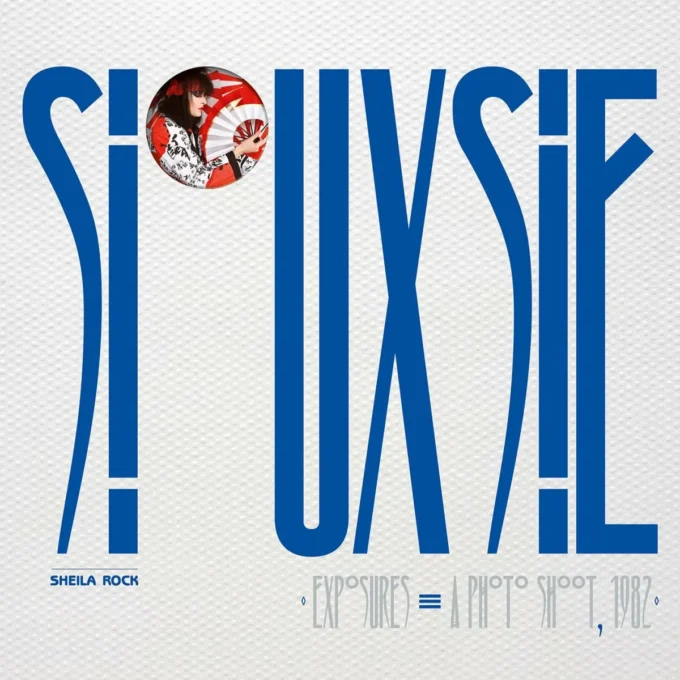
SIOUXSIE AND THE BANSHEES – (There’s) A Planet In My Kitchen (B-side of Dear Prudence – 1983)
Siouxsie And The Banshees are well known for their total creative control when it comes to everything they have released, refusing to compromise or play the game as long as it works in their favour and nobody else’s. Everybody remembers their first hit single from 1978 Hong Kong Garden and its infectious oriental-influenced guitar riff. However, how many people, on the other hand, can whistle the B-side from that same single – Voices? Not many I’d wager. If Voices as a B-side was as weird, oblique and impenetrable as the band could have got at that early point in their career, it never stopped them from getting ever more audacious and esoteric with future recordings.
Whilst Hong Kong Garden was their first top 10 UK hit, peaking at #7, their second – and only other – top 10 single was 1983’s Dear Prudence (yep, their shimmering psychedelic overhaul of the Beatles song) which went all the way to #3. Similarly, as with Hong Kong Garden, the B-side to Dear Prudence (well in this case the extra B-side on the 12 inch) was equally off kilter and bizarre. Mike Hedges is well known for his maverick and defiantly unorthodox studio processes when producing other bands. Most notoriously, he endangered the lives of not just himself but also the Banshees when, in 1982 whilst recording Fireworks as a single (prefacing the subsequent album A Kiss In The Dreamhouse), he and the band hit upon the idea of recording LIVE fireworks let off in a room to conclude the eponymous single’s extended 12 inch version. To say Hedges was bat-shit crazy for the sake of his art is putting it mildly.
On the flip to Dear Prudence, he happily allowed the band to indulge in all manner of tomfoolery, aided and abetted by his studio trickery and crazy sound effects: swirling water, loudly amplified buzzing flies, bangs and crashes, slamming doors, Siouxsie shouting through corrugated metal tubes (or somesuch), footsteps, jarring cut up sounds, lots of phasing, compression, stereo-panning, envelope filtering and electronic processing, in fact the whole shebang, following – or perhaps adhering to – the mantra that dictates ‘if it’s worth going the extra mile to make the track sound as insane as possible, then so be it, why the hell not?’. There’s A Planet In My Kitchen indeed sounds like the band are trying in vain to create a song from a chaotic studio jam whilst high on hallucinogens, whilst swatting aside all things jazz (the lingering aftertaste of an earlier Banshees album track Cocoon looms large here) to make everything even more disorderly. It’s completely unhinged and riotous, and all the more enjoyable for it.
As it transpired, a mere five years later, in August 1988, another deliberately ad hoc Banshees experiment which started life as B-side, utilising reversed loops and samples of brass from a previous album cut, saw a renewed lease of life when it was reconfigured into audaciously beguiling new shapes and became one of the band’s biggest hits: Peek-A-Boo. Who was the co-producer during this later session? None other than the inestimable Mike Hedges, again.
WAS (NOT WAS) – Hello Dad, I’m In Jail (from the album What Up Dog? – 1988)
Noted 80s-90s US dance duo Was (Not Was) may have been flirting comprehensively with the mainstream and scored a clutch of hits on both sides of the Atlantic, but the closing track on their 1988 album (and later the title given to 1992’s ‘best of’ compilation) Hello Dad, I’m In Jail was a complete oddity and red herring. It is a minute and a half long sketch comprising nothing else but a man’s distorted voice repeating the title over and over with various ad libs, in vocal tones that suggest he’s either completely unhinged or on the verge of insanity. This hysterical verbal barrage is set to a pulsing beatbox and synth driven instrumental backing track that itself gets more discordant with squawking freeform sax and other effects. It’s either mildly unsettling, totally hilarious or hugely irritating, depending on how the listener reacts.
The track also featured prominently in the film soundtrack to the 1990 coming of age teen movie drama Pump Up The Volume, (almost a who’s who of noted ‘alt rock’ artists such as Pixies, Soundgarden, Concrete Blonde, Peter Murphy, Bad Brains & Henry Rollins, Sonic Youth and Cowboy Junkies). However, despite being featured in scenes within the film, it was among a list of other artists (The Descendents, Beastie Boys, Leonard Cohen, Richard Hell, Stan Ridgway, Ice-T) that were not included on the actual OST album release.
PALE SAINTS – Untitled (aka Colour Of The Sky) (unlisted fifth track from the Half-Life EP – 1990)
Pale Saints (formed in Leeds in 1987) were one of the lesser-feted names of the so-called ‘shoegaze’ era, but were still nevertheless largely brilliant during their all-too-brief recording career, so their comparatively lower ranking in the ‘influential’ stakes is a tad unfair. They were a truly mercurial proposition that actually sat at odds with the rest of that genre in more ways than one, mainly because in their founder, bass player/vocalist Ian Masters, there was a sense of perversity and bullish awkwardness that also permeated their music and elevated their first few records above being just generic indie fare. That was what made them so alluring and fascinating to this writer. They may well have adopted their nascent sound from other bands and influences (e.g. C86 jangle pop, 60s Paisley and neo-psychedelic, 70s prog-pop) and were initially – soundwise at least – more aligned with the likes of fellow Leeds stalwarts The Wedding Present and The Edsel Auctioneer – the latter with whom they shared personnel – than they were with the (ethereal ‘sonic cathedral’) bands like Cocteau Twins, Slowdive, My Bloody Valentine et al.
During their seven year existence, all they had to show for their efforts was just five EPs and three albums, all on 4AD records. Despite such a paltry output, it was a case of quality over quantity. All of the EPs are uniformly excellent. Their first two albums (which featured Ian Masters before he quit in 1983) are also worthy inclusions in anybody’s record collections as they were fascinatingly multi-faceted creations likewise. Half-Life, their second EP, shows the band at their experimental and coruscating best – two tracks (Babymaker and A Revelation) feature huge waves of textured and broiling chainsaw guitars that sandblast the ears of the listener whilst angelic vocal harmonies float over the top, barely discernible among the vast swirling, churning maelstrom. The title track is loved-up jangly dream-pop set to a brisk baggy beat – replete with plenty of bongos by the finale. The unsettling sonic fog that is Two Sick Sisters sounds eerily disembodied with its unearthly rumblings and disquieting percussive effects. It’s like music you hear when you’ve been subsumed into some nightmarish subterranean womb.
The final unlisted fifth track however (included on the 12″ vinyl version only, it’s absent from the CD) is the most eye-opening showstopper of them all. It’s accessed via a locked groove so one has to nudge the needle a tiny bit to hear it play. It begins with a slow atmospheric bass figure, reverbed to almost cavernous extremes, accompanied by wordless vocal sighs, and features a monologue spoken by one of the band recounting a tale of walking with their pet dog and making a startling discovery. The opening line: ‘I can’t recall the colour of the sky, but that’s not important’ has since given the title to this un-named piece. But what makes this track intriguing – and alarming – is the jump scare that suddenly happens without warning three quarters of the way through the narrative. I won’t reveal what it is here suffice to say give the track a listen below and find out for yourself.
THE FIELD MICE – Humblebee (from the mini album Skywriting – 1990)
Sarah Records’ most successful and legendary band The Field Mice have run the gauntlet of many conflicting critical assessments over the span of their all-too-brief tenure between 1988 and 1991. Some writers absolutely adore and worship them, others have vilified them for being wimpy and overtly sensitive. The sad truth is, many people who don’t know any better probably find it easier to dismiss them and to then harbour preconceptions by sticking them in convenient pigeonholes (e.g. twee pop, anorak indie, C86 refugees, etc). Well they are of course perfectly welcome to basking in their own ignorance.
The Field Mice may well have started on a minimalist and tentatively lovelorn footing with a DIY approach to recording, but in that short period of time, they soon showed the world just how diverse their influences were. It wasn’t just Nick Drake or Jeff / Tim Buckley that shaped their muse – but also Scottish post-punk acts like Fire Engines and Josef K, Factory bands like New Order and The Wake (the latter also later becoming Sarah labelmates), prime era acid house, Kraftwerk, Cabaret Voltaire, Wire, The Cure, guitar noiseniks Loop … and so on. In their tidily compact and exquisite catalogue for Sarah Records (just six singles, one 10″ EP, one 10″ mini LP, one 12″ mini LP, one full studio album, one compilation), their sound never stuck to one identifiable template, but instead they threw in surprises that left critics scratching their heads in puzzlement on various occasions.
Nowhere was this sense of broad eclectism more pronounced and masterful than on their second mini LP issued in 1990 – Skywriting. Comprising just six tracks, each one was like the sound of a different band. No two songs were remotely alike in style or genre. The opener Triangle was an immense nine minute electronic sequencer-led dance epic with nods to Acid House and Kraftwerk, but still featuring jangling guitars. Perversely, it took up the whole of the record’s first side, with the other five songs squeezed onto the flip side! Canada which opened side two was their Byrds-ian Rickenbacker-drenched take on country ‘n’ western, whilst the brassy pop of Clearer owed a nod to Australian stalwarts The Go-Betweens, It Isn’t Forever was a glacial post-punk synth pulse but with a jagged Postcard (Josef K) edge to it which then climaxed in an astonishing explosion of distorted sheet metal guitars and rapid-fire machine gun drumming. Below The Stars – a gorgeous slow-paced nocturnal sky-gazing ballad – perfectly evokes that night time yearning lovelorn ambience through its beautiful twinkling arrangement.
The final sixth track Humblebee was something else altogether: the most unexpected about turn and without a doubt the single most baffling diversion from the band. Wrong-footing the listener from all directions, it’s a barrage of voice samples culled from films and radio and elsewhere, all piled on top of one another to form a nightmarish sound collage of musique concrète (again as with the album opener Triangle, jangling guitars feature, but this time almost like spectral remnants from another dimension – sounding haunted, distant and disembodied). The incessant throbbing and buzzing noises that form the backdrop sound like loudly amplified generators – heightening that sense of unease to the point of inducing a migraine. Among this suffocating, even claustrophobic, melee is a female voice ebbing in and out repeating mantra-like the same three words ‘Chocolate. Love. Sex.’ over and over again…. Other voices randomly add to the increasingly frantic bricolage. This is the sort of soundtrack that bad acid trips are derived from. But it’s by The Field Mice – who the fuck would have expected this ?
Amusingly enough, this very track soon inspired the biggest selling merch item in The Field Mice’s history – a T-shirt emblazoned with the three words ‘CHOCOLATE. LOVE. SEX.’ Available initially on the 1990 tour accompanying the release of the album, its limited run sold out so rapidly that you will never find it anywhere through Google on the internet or even Ebay. That is fact.
WIR – Naked, Whooping And Such-Like (from the album The First Letter – 1991)
For all their history and reputation, Wire have never been ones to repeat themselves. When their 1990 album Manscape was released and toured, the drummer Robert (Gotobed) Grey quit the band initially for a life of semi-retirement. The remaining trio of B.C. Gilbert, Graham Lewis and Colin Newman continued as WIR (dropping the E – geddit?) and pursued more oblique and electronic pastures which were already hinted at on their (brilliant and hugely underrated) Manscape album. Almost as expected, Wir carried on where Wire left off – with their trademark cryptic post-everything pop that was now shrouded in more experimental textures and knowingly strange quirks.
Among the several meticulously arranged sound constructions that made up this debut album (their only one to date as Wir), there were a couple of consciously strange moments. The second of them Naked, Whooping And Such-Like sat on side two and came in two distinct versions: the vinyl LP version was barely 90 seconds long and featured just the voice of contributor Claude Bessey* reading a surreal narrative written by Lewis, the much longer CD version on the other hand (see below) had a five-and-a-half minute appended section of sequencer, keyboard and drum machine patterns, creating an almost Teutonic trance-like coda to conclude with. But even here there are occasional interruptions where the voice comes back in without warning.
What also makes this bizarre track so notable is that it is probably the only piece ever released in the history of modern rock music that features two words that will in all likelihood never again be seen or heard anywhere else: blandiloquence and ooperzootics. But then that’s just typical of the erudite Lewis and his flamboyancy and fondness for flowery syntax (FFFFS!).
(*the French-born co-founder and editor of US publication Slash magazine before relocating to the UK and becoming Rough Trade’s press officer followed by a stint with Manchester’s Factory Communications in the 1980s.)
MEKONS (with Kathy Acker) – Into The Strange (from the album Pussy, King Of The Pirates – 1996)
Mekons are practically kindred spirits with Wire in the one respect that decades later, this enduring and veteran post-punk collective have continued to release new music to this day, and have built up quite a formidable body of work among their various projects taking in albums, art exhibitions, spoken word, films, multi-artist collaborations and everything else. One such collaboration, with highly esteemed US writer/punk poet/novelist, experimental artist, playwright and performer Kathy Acker, was Pussy, King Of The Pirates, a delightfully uncategorisable and genre-straddling concept album that allowed the latter full licence to exercise and exorcise her creative freedom of expression and demons respectively, to hopefully ensnare a new generation of listeners who would otherwise be unaware of her work.
The entire album is littered with spoken introductory interludes between each and every band track where Kathy speaks about the various escapades of the album’s fictional character Ange. No two tracks even sound remotely alike in terms of style or genre, as the Mekons collective push out the boat (literally speaking) to take in rabble rousing sea shanties, mutant trip hop, vaudeville, ragged celtic folk, electronic dance, punky thrash, cajun, and so on. Into The Strange is one such moment. And strange it most definitely is: opening in a rather subdued manner with an almost hushed murmur of a sea shanty sung by various Mekons protagonists. For at least a minute it meanders quietly and rumbles on with little energy or vitality, but nevertheless still sounding ominous as if something is afoot … until suddenly, after one lone voice yells out ‘YO HO HO HO HO HO HO!!!’, the track bursts into life and slams into full throttle industrial electropunk mode, knocking the listener off their axis with its furious tempo.
This abrupt change is as startling as it comes, the grinding bludgeoning sludge guitars insistently pounding against the cranium whilst a female voice – singing in a heavy northern European accent (its mock Scandinavian tones irresistibly bring to mind a downbeat Björk having a bit of a strop) intones lines about ‘Ten filthy girls on a dead man’s chest, doing what they like to do best’, and all manner of other depraved acts whilst ‘All that you own turns to scum, and the word begins to burn’. This sheer nihilism continues to rage and intensify until without warning it judders to a halt and we’re left with the smoking embers of the just-extinguished conflagration whilst the drifting hulk of the pirate ship – still with its dazed and spent occupants on board – rolls away into the sunset.
ASH – Sick Party (from the album 1977 (CD version only) – 1996)
Ash were barely of adult age when their debut album 1977 was released, but they certainly had a fuck load of fun recording it as much as all their legions of adoring fans had listening to it. One track was unlisted at the very close of the CD version after a gap following the final official track Darkside Lightside, and it turned out that it was simply a conscious indulgence on the part of the band to do something dumb, ridiculous and totally gratuitous purely for the entertainment value. What was it exactly? Just a load of vomiting sounds the three lads were making and putting onto tape, nothing more and nothing less.
Originally it was meant to form part of a track called The Scream – a completely OTT idea which the band, then just having left school, thought would be a laugh to do, so, having started experimenting with acid and other party stimulants, they set about with their engineer Owen Morris recording loads of voices, starting with quiet mumbles and moans then building up in volume to increasingly frenzied shouts and screams. Other sounds were of the lads – chiefly bassist Mark Hamilton – making themselves sick (purely through excessive drinking), gagging, belching, spitting, farting, pissing and snorting, and recording those sounds, with the intention of mixing them into the other noises to create this almighty wall of terrifying noise. In the end the recording was shelved as the lads didn’t know what to do with it. However, the vomiting/belching tracks were retained and instead used to create this other sound collage that ended up being the hidden track on the CD.
It might all be very puerile and adolescent and entirely typical of lads at that age for sure, but at least 30 years later, the trio could say in all seriousness, in their defence, that it was necessary to at least capture for posterity those tender years of wild abandon and their hedonistic misspent youth. So what better way of doing it than to have Sick Party immortalised on CD for eternity so that once Tim, Mark and Rick hit their fifties (which isn’t that far off, scarily enough) they can then play it back to their own teenage offspring and say….‘You know something kiddo? That was me that was!’
THE BOO RADLEYS – Nothing To Do But Scare Myself (B-side of C’mon Kids CD2 – 1996)
The Boo Radleys had their fair share of stellar pop moments, as much as they were consummate genre-straddlers too who – again – defied all expectations by not simply settling for one sound. The 1996 album C’mon Kids was a deliberate reaction against the more measured (but still eclectic) pop approach as heard on 1995’s massive breakthrough album Wake Up! But even the latter album had three singles whose B-sides ran the full gamut of head scratching weirdness at almost every turn. The Boos were evidently no strangers to the art of the flipside flummox syndrome (FFS for short) and even at this late juncture (they would turn out just one more album for Creation Records – 1998’s Kingsize – before calling it a day for at least the next two decades) their hunger for fucking around with people’s heads never left them entirely.
The electrifying noise assault of C’mon Kids (the song) is a masterfully belligerent call to arms for all the doubters to shut the fuck up and listen, as are some of the B-sides which were spread across 2 CDs (as was customary at the time – mid 1990s singles chart maximising era we’re talking about here), but the first prize has to be awarded to this track that’s found on CD2 among some remixes. Nothing To Do But Scare Myself must have been conceived title first if the sound of the terrifying vortex of distorted pitch-slowed vocals and nightmarish whirring throbbing noise is anything to go by….. Think back to Spun Around from their Giant Steps masterpiece of 1993. That track opens up the second half of the album and induces among the listener genuine queasiness, as if the floor is being warped and twisted from under their feet and their senses are left reeling. It’s a perfect encapsulation of what having a combined bad trip and a hangover must feel like!
Fast forward three years later and it’s virtually the same juddering Leslie-speaker vox effects that inform the menace that runs through this track…. indecipherable the lyrics may be, but it’s the overwhelming noise assault that hits the listener most. And yet…. things then completely transform without warning and the dissonant whirlpool promptly yields to a jaunty harpsichord-driven passage whose rhythm directly recalls Matthew Wilder’s 1984 hit Break My Stride. This continues for a few bars before we’re plunged back into the existential despair of the previous electronic mudbath….. only for the whole thing to repeat itself a second time with the jaunty passage returning again….. before a final kiss off when the track lurches into madness once more and seemingly self-sabotages and implodes in on itself in startling fashion with speaker panning stabs of sheer guitar noise that make out like an unseen enemy taking swipes at each ear in turn with a large machete. It’s the weirdest Boo Radleys B-side by a considerable margin – and that is saying something, given that it is up against some pretty strong competition as it stands.
And that’s your lot. Further reading on a similar theme can be found on this link to an article from another author which was published last year (Deviations: the strangest songs by 15 rock icons).
All words written and edited by Martin Gray
Further convoluted critiques and retrospective assessments can be found on his profile here.
A Plea From Louder Than War
Louder Than War is run by a small but dedicated independent team, and we rely on the small amount of money we generate to keep the site running smoothly. Any money we do get is not lining the pockets of oligarchs or mad-cap billionaires dictating what our journalists are allowed to think and write, or hungry shareholders. We know times are tough, and we want to continue bringing you news on the most interesting releases, the latest gigs and anything else that tickles our fancy. We are not driven by profit, just pure enthusiasm for a scene that each and every one of us is passionate about.
To us, music and culture are eveything, without them, our very souls shrivel and die. We do not charge artists for the exposure we give them and to many, what we do is absolutely vital. Subscribing to one of our paid tiers takes just a minute, and each sign-up makes a huge impact, helping to keep the flame of independent music burning! Please click the button below to help.
John Robb – Editor in Chief
PLEASE SUBSCRIBE TO LTW




Leave a comment