

Walter Afanasieff, Graham Lyle & Terry Britten and Christopher “Tricky” Stewart also tell the tales behind their Hot 100 smashes.

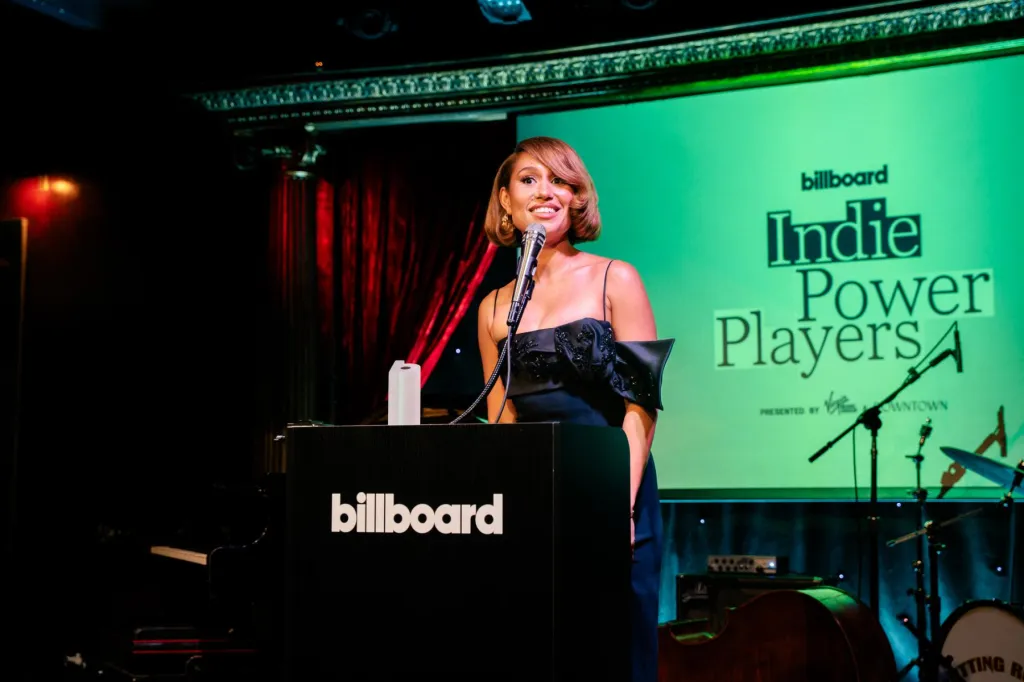
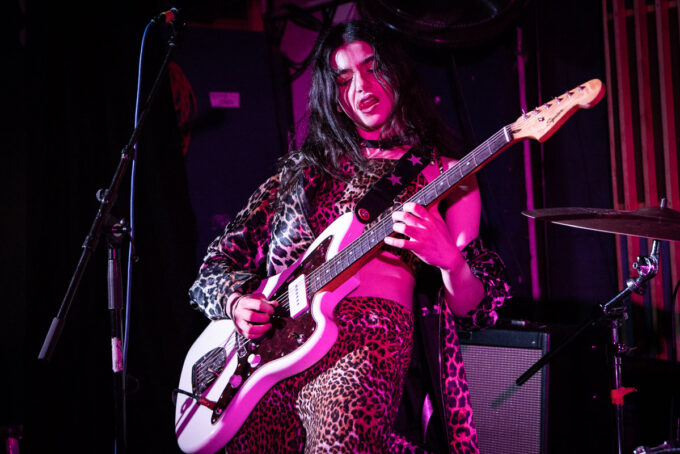
Raye at the Billboard Indie Power Players 2026 held at The Cutting Room NYC on June 09, 2026 in New York, New York.
Anna Downs/Billboard
Beyoncé’s four-week Billboard Hot 100 No. 1 “Single Ladies (Put A Ring On It)” may have literally missed a beat if not for some singular studio magic. KISS’ iconic anthem “Rock and Roll All Nite” came to life in a hotel room after a motivating mandate from the band’s label. “What’s Love Got To Do With It,” the song that revitalized Tina Turner’s career, originated from its writers’ love of Bob Marley.
John Fogerty’s mother introduced him to songwriting when he was just three years old, through the 19th century song “Camptown Races.” As the Songwriters Hall of Fame (SHOF) bestows on him the Johnny Mercer Award, its highest honor, he reflects on “Proud Mary,” the song that set the bar for all Creedence Clearwater Revival and solo hits to come. Billboard cover star RAYE, recipient of this year’s Hal David Starlight Award, which goes to a gifted young songwriter making a significant impact, attributes the juxtaposition of sincere and sassy vibes on her hit “Where Is My Husband!” to her innate “British-ness.”
The Songwriters Hall of Fame will honor the class of 2026 on Thursday (June 11) at a gala celebration in New York City where Taylor Swift, Alanis Morissette, Kenny Loggins, and Gene Simmons and Paul Stanley of KISS will be honored alongside non-performing songwriters Walter Afanasieff, Terry Britten & Graham Lyle and Christopher “Tricky” Stewart.
The SHOF was established in 1969 by Johnny Mercer, Abe Olman and Howie Richmond. Linda Moran was elected president of the organization in 2001 and has served as president and CEO since 2011. Nile Rodgers, a SHOF honoree in 2016, serves as chairman of the board.
Read on for the stories behind some of the greatest hits of all time straight from the writers’ mouths.
-
Walter Afanasieff, “Hero”
Co-written and recorded by Mariah Carey
No. 1 on the Hot 100 for four weeks in 1993-94Grammy-nominated “Hero” wasn’t a typical Afanasieff-Carey collaboration. As Afanasieff shares, then-Sony Music Entertainment CEO Tommy Mottola asked him to write a song for the film Hero, which Gloria Estefan was set to sing. Carey dropped by the studio when he was starting to work on it. “I said, ‘Let’s you and I write this song together.’ We got very deep into it and then Tommy came to the studio and said, ‘Let me hear what you got.’ We played what we had and he said, ‘This song is incredible. Mariah, you should record the song, and not for the movie. I’m telling you, it’s going to be a No.1 song for you.’ He just really felt strongly about the song being for her. And she fought him on it. She’s like, ‘It’s not my style of a song; I don’t want to do this schmaltzy ballad,’ she called it. The funny part is she wanted to put the Mariah [big runs and energy] into it instead of just the simpler version of ‘Hero’ we ended up with. Tommy was at the helm going, ‘This is perfect. I’m telling you.’ And sure enough, over the years it became a humongous song for her. It’s now one of her signature pieces worldwide. We’re all very lucky that she kept it for herself,” he says. “I think it helped Mariah not to be self-conscious about the fact that she’s singing these big power ballads,” Afanasieff opines. “Because then we went on to do a lot more ballads. And she was never really afraid to let that be a huge successful part of her repertoire and songwriting. This song gave her some very, very well-deserved security in that.” As for Estefan and the Hero movie? “Oh, well, when you have Tommy Mottola as the CEO at the company, he just waves his magic wand and says, ‘No, this is not something we’re doing.’ And that was it,” he says.
-
Terry Britten and Graham Lyle, “What’s Love Got to Do With It”
Recorded by Tina Turner
No. 1 on the Hot 100 for three weeks in 1984The song that reinvigorated Tina Turner’s career originated when Stuart Hornell, who ran Ronder Music in London in the ‘80s, had the idea to connect songwriters Lyle and Britten. “Terry lived on the other side of London, and I got in the car and halfway down the road I had this idea in my head, just that line—’What’s love got to do with it.’ I scribbled it down on a little piece of paper and stuck it in my pocket,” says Lyle. The writing session, he says, was “awkward. We sat down with two acoustic guitars and tried to get something going, and it wasn’t happening. In fact, I was ready to go home. We put the guitars down and started chatting and we realized we both loved Bob Marley and his music. And as a result, we plugged in two electric guitars and started playing a reggae groove. And then Terry had a melody idea. And I remembered the little note I had in my pocket. I pulled it out and said, ‘Do you think this might fit on the chorus?’ It was quite remarkable. When I got back home, the lyric came out of nowhere. It was written in half an hour. We both knew there was something special about it,” he says.
So did the publishers. “They came back within a week and said there’s about five bands that want to record your song, and Tina Turner was one of the names. As it was a first recording we as the writers had the option of naming who we would like to record the song. We said, ‘It’s got to be Tina.’ And there wasn’t a lot of enthusiasm for that idea because Tina at that time didn’t even have a recording deal, she was sort of out of focus. But we stuck to our guns, thank goodness. It was so different for Tina. Terry had to quiet her down, get her into the groove, that Marley feeling. I think she found it a bit difficult to get in terms with. And I know that she wasn’t keen on the song when she first heard it, but Roger Davies, her manager, was very keen. He was the one. He was the glue between Terry and I and Tina.”
-
John Fogerty (Johnny Mercer Award), “Proud Mary”
Recorded by Creedence Clearwater Revival
No. 2 on the Hot 100 in 1969Fogerty’s mother introduced him to songwriting, through Stephen Foster’s “Camptown Races,” when he was just three. As the SHOF bestows its highest honor on him — and he prepares to release Centerfield (Hall of Fame Edition), a newly remastered version of his iconic 1985 solo record, on Aug. 28 via Concord — he reflects on the song that gave him his confidence and set the bar for all to come. “I had just gotten off active duty from the military in the summer of ‘67 and was back on my home turf. And I thought to myself, ‘You’ve been kind of bumbling around with this songwriting thing—you need to get more organized.’ So I went down to the local drugstore and bought a little notebook to put my ideas in. A few days went by and the phrase ‘proud Mary’ comes to me; I don’t know what it is, but it’s the very first thing I write down in my little notebook,” Fogerty recalls. “Fast forward to the summer of 1968, and I get my honorable discharge from the Army. I’m overjoyed about this because I’d been hoping to figure out a way to be released honorably because it was certainly in competition with my budding musical career. I pick up my guitar and start strumming some chords and the first thing I said to myself was, ‘Left a good job in the city, working for the man every night and day…’ Obviously I was referring to just being let free from the Army but then I also start saying ‘rolling on the river,’ and I liked the way it sounded. I go to my notebook, I had several pages full by then, but I see ‘proud Mary’ and I go, ‘Oh my goodness. Proud Mary is the name of a riverboat.’ It just resonated. And in an hour’s time, the song was 90 percent, 95 percent done,” he says. “And I had an epiphany; there were no doubts. I think the most important thing I can say is, if you are an artist or any endeavor that you’re trying… you’re growing and learning, but even though you love it you never really know if you’re any good. You don’t know how you’re going to stack up in the world. When I wrote ‘Proud Mary,’ that was affirmation. I had already recorded one album, and that album had only been out for a couple of months. But suddenly with ‘Proud Mary’ I realized I really had it in me. It gives you conviction to fight for things and make yourself better. You’re upping your game because you have the conviction of finally having something you can see is really up in the clouds, which is where you’re aiming, of course.”
-
Kenny Loggins, “Footloose”
Co-written with Dean Pitchford
No. 1 on the Hot 100 for three weeks in 1984Unbeknownst to Dean Pitchford, who penned the film Footloose, Loggins was already all in to cowrite and perform the Oscar- and Golden Globe-nominated song when Pitchford showed up at his hotel room on tour to convince him. “He’d given me the screenplay and I didn’t know he thought that was a make-or-break meeting. I thought we were in. I had an up-tempo melody that was sort of based on the intro to ‘Devil With A Blue Dress On,’ and that’s where I went with it. I felt really good about what we had right from the beginning. It was based specifically on the scene we wrote the song for—the barroom scene where they leave town and they go dancing in the next town over. So I knew that we had to have something danceable. When we gave them a demo, I think they changed the tempo a little bit… but one of the advantages we had was they actually danced to the song itself and that [sense of freedom] is conveyed emotionally in the film,” Loggins says. “The most shocking moment to me was when the movie started with the drum intro and all of a sudden they’re playing ‘Footloose’ with those dancing feet. I had no idea it was going to be in the opening of the movie so that felt like a slam dunk. And the same thing happened to me when I went to see Top Gun and they put ‘Danger Zone’ in the opening scene. The moment where you know you’ve just dropped a three-point shot in from the line. You think about these films and how much the music was woven into the story, which in the best of cases, that is what film music does. I had never met Tom Cruise during the first Top Gun and years later when he decided to make Maverick, I was on, I think it was Fallon with him, and asked him, ‘So I hear you’re making the new Top Gun, do you think “Danger Zone” is going to be a part of it?’ He said, ‘It wouldn’t be Top Gun without “Danger Zone”.’ That was my seal of approval.”
-
RAYE (Hal David Starlight Award), “Where Is My Husband!”
Co-written with Mike Sabath
No. 11 on the Hot 100 (still on the Hot 100)The bones and chorus for RAYE’s retro-pop hit that packs a humorous, heartfelt plea for a partner came together on a writing trip with Sabath, her frequent collaborator, writer and producer. “Most times when we write, we throw paint and things come together quickly to form the skeleton. Mike and I usually both flow with ideas and melodies, and we bounce off each other beautifully to find the meat and the flesh of the songs. However, I like to take my time and thoroughly comb through using trial and error. I want the lyrics to be able to be read aloud with no melody and still move me, and be able to stand on their own,” says RAYE, who accepted Billboard’s Indie Spirit Award just days ahead of the SHOF. “The moment that perhaps was the most important was a separate day a few months later when I had decided to dedicate an entire seven-hour recording session to the bridge. I put myself in a little bubble with my engineer, Alex. We played with the stems, a cappella drums and recorded line by line, only writing the next line once I had recorded and fully stacked the line before. It was such a fun method to create the ‘I would like a ring’ section, and I am so glad I did.” RAYE attributes the song’s interplay of a serious post-breakup mindset with humorous lyrics to her “British-ness. We love to poke fun at our pain. I love sarcasm, wittiness and breaking the fourth wall. I hate the rules we feel constrained by sometimes. The most important thing to me is that it feels true and honest, and in my honest voice. I guess this is my personality coming through.” And that spoken-word cameo from her grandmother, Agatha? “My grandma is my best friend; we speak on the phone every day. She is my rock and it’s so funny how many times I’d be like, ‘Grandma, when do you think I’ll get married?’ and she would just reply, ‘Your husband is coming.’ (Laughs.) So it felt only right to have her in the song.”
-
Gene Simmons and Paul Stanley, “Rock and Roll All Nite”
Recorded by KISS
Live version reached No. 12 on the Hot 100 in 1976The year was 1975 and while KISS was killing it on tour, their first two albums weren’t keeping pace. Neil Bogart, the Casablanca Records founder who signed the band, called Stanley and Simmons into his Los Angeles office with a mandate: they needed an anthem. “He said, ‘You should have a song that embodies what you believe or what your fans believe,’” Stanley says. “So this one was done under a time crunch. I went back to the hotel and sat in my room with my guitar and very quickly came up with ‘I want to rock and roll all night and party every day.’ It came to me emphatically. I knocked on Gene’s door and played it for him.” Meanwhile, says Simmons, “I had started writing a song called ‘Drive Me Wild’—which was inspired by Stephen King’s book Christine, about a car—with the double entendre of ‘You drive me wild, I’ll drive you crazy.’ That was the hook I had. And we kind of looked at each other and said, ‘Hey, wait a minute. You put those two together and you got a pretty good song.’ And as soon as we started playing it, everybody started singing along.”
“I think ‘Rock and Roll All Night’ is a testament to two people coming together and being stronger than the individual,” says Stanley. But ironically, both writers agree the repetition of the word “I” in the chorus is the song’s crowning touch. “’‘I’ is the most powerful word and while it showed up more after, it was unheard of in rock n’ roll then,” Simmons says. “Nothing is as personal as ‘I.’ We went on to ‘I Was Made For Loving You’ and ‘I Love It Loud.’ But this was first.” Stanley grew up on Philly soul and Motown and cites Jerry Leiber and Mike Stoller as influences. Simmons tips his hat to Paul McCartney and George Gershwin. Both are keenly aware there is no KISS without the hooks and choruses. “You can’t package a smoke bomb,” Stanley says. “Even if the curiosity started with someone seeing a photo of us, it had to be backed up by music. I’ve never considered us or my writing to be jam band material. I’m far more Brill Building; that’s really my roots. Songwriting for me has never been about saying to somebody, ‘Well, you hear it on an electric guitar.’ If it doesn’t sound good on an acoustic guitar, it’s not good. And that was from day one for us.”
-
Christopher “Tricky” Stewart, “Single Ladies (Put A Ring On It)”
Co-written with Beyoncé, The-Dream and Kuk Harrell; recorded by Beyoncé
No. 1 on the Hot 100 for four weeks in 2008-2009The magic behind the hit that garnered Beyoncé three Grammys, including song of the year, is a testament to Stewart staying cool under pressure when his flight from L.A. to New York got diverted, leaving him hours late for a studio session.
“Beyoncé, Dream, Matthew Knowles… they’re all waiting, the tension is high, and I’m going through my process to get in the groove and shake off the nerves and just [came out with] what we know now is the ‘Single Ladies’ beat. I’m about to move on and Dream stops me and says, ‘That’s incredible, I have a whole song… open the mic and let me show you.’ And then he starts saying, ‘All the single ladies, all the single ladies, all the single ladies.’ So we’ve got him in the vocal booth and me with a sight line to him, and we’re writing the musical parts together live in tandem. Which is why the song has so many special nuances—like a six-bar bridge—because it was more based upon the type of chemistry Dream and I have,” Stewart says. Lyrically, Dream was inspired observing Beyoncé and Jay-Z’s relationship during the 2008 Heart of the City Tour co-headlined by Jay-Z and Mary J. Blige. “We’re watching them on tour, a couple that was crazy about each other, and Dream is such a wordsmith,” Stewart adds. Back in the studio, “Beyoncé walks in and immediately goes into the vocal booth and sings the performance we know and love today. It all happened very quickly and it was one of my best moments to not crack under that pressure. There was a lot of power and expectation there.” The kicker? Just before Stewart left L.A. he asked one of his producers to make a few new discs for his drum machine. “It’s not like there was an infinite amount of sounds like we have today on a laptop. I was getting stale on my sounds and needed some new creative. I got those drum discs that same day. And the moment I got done and we laid the song into Pro Tools, the drum machine cuts off and erases all the sounds I had made the song with. I’ve never been able to use those sounds again, they’re gone forever—so it’s truly a one-of-one song.”




Leave a comment