

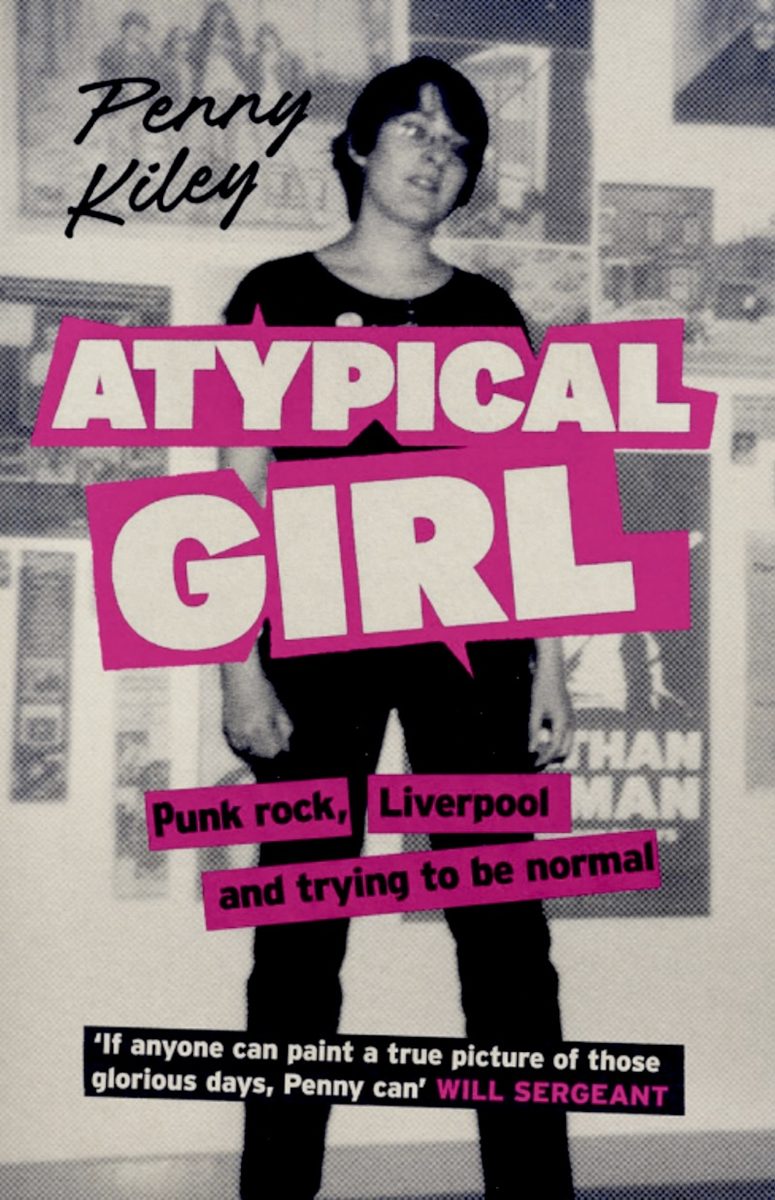
 Atypical Girl: Punk Rock, Liverpool and Trying to be Normal, by
Penny Kiley
Published by Polygon (an imprint of Birlinn Limited), March 5th 2026
290 pages
Penny Kiley hangs out with punk and post-punk wannabe luminaries, then writes about them. She becomes Melody Maker’s Liverpool correspondent, all while navigating a clunky, pre-Internet landscape. Throw in Thatcherism, the Winter of Discontent, and undiagnosed autism, alongside the incessancy of being asked, ‘Didn’t you used to write for the Echo?’ and marvel at the author’s resilience and humour.
On this very site, back in October 2023, Banjo wrote about the manuscript for this book, lamenting that, as the writer wasn’t a ‘name’, they hadn’t found a publisher. Yet to some of us, Penny Kiley was and is a name, because we’ve read her writing, whether it be in the Liverpool Echo, Melody Maker, Smash Hits, or indeed here on Louder Than War. Banjo’s piece wraps up by inviting potential publishers to get the book out ‘into the big wide world.’ That book is now out into the big, wide world on March 5th.
The young Penny is consumed by music. She listens to it, thinks about it, talks about it, makes and wears badges related to it, and crucially, writes about it. Atypical Girl is a Catherine wheel sparking up in 1976 and sputtering through punk, post-punk and beyond, Penny’s life being turbo-charged when she escapes the market town of Sittingbourne to attend university in the vibrant yet then down-at-heel city of Liverpool.
It’s publicised as a coming of age memoir, but is more meandering than that, with the author repeatedly attempting to come of age, often challenged by what is currently, and irritatingly referred to as ‘adulting’. She’s far from naïve, in fact she’s often razor sharp, but just seems to have been destined to endure periods of playing the game of life while it’s made up of short ladders stacked against lengthy snakes.
Anyone with any knowledge of the Liverpool scene of that time will be aware of the cornerstones of Penny’s story, for example, the legendary music venue, Eric’s, and the record shop Probe. I’ve apprehensively hovered outside on Probe’s curved steps, as Penny once did; the difference is, while I scuttled away, she went in and became a part of it all, despite noting it was ‘scarily hip’.
The word ‘scary’ litters much of the book, and rather than disappearing as the author ages, it morphs into the word ‘fearful’. It strikes me as not too short of miraculous that someone so scared and so fearful manages to so embrace life, but embrace it they do, albeit in their own idiosyncratic way.
There are always going to be names dropped in an account of music scenes, and Penny’s first is Pete Wylie, after which the occasional spottings of namedrops become torrential, but rightfully so, because Penny was in the thick of things when people such as Holly Johnson, Julian Cope, Budgie and Ian McCullough were still stellar nebulae with only the promise of becoming nascent stars.
For someone who may not have always been 100% in with the in-crowd, Penny engaged in some hardcore shoulder-rubbing, while remaining self-deprecating and doing so with dry humour. Describing a sweaty dancing-to- the-band session at Eric’s, she remarks that there was no desire to be a dancing queen when she could be content with being ‘a dancing pleb.’
She’d buy the music papers the night before they were readily available, which was possible if you were in the vicinity of a railway station, because if you loved music journalism and music, to wait another 24 hours was just too long to bear. When she became Melody Maker’s Liverpool correspondent, she had neither typewriter nor tape recorder. Her first review for the paper – XTC at Eric’s – was handwritten, and for her first-ever interview for it, with The Cramps, she’d had to borrow a tape recorder. She runs before she can walk and sometimes falters, which tends to happen with those who are a little ahead of their time. In 1990, as an early adopter, she would spend £1,000 on an Amstrad computer running MS-DOS, in a world of Letraset, manual typewriters, phone boxes, and uphill struggles.
In the run-up to Penny’s personal technical revolution, 1988 came as a turning point, and although the reader had been happily learning about her living a life, it’s only now that she says she needs to get one. Although she initially takes a Canute-like stance on the 90s indie-dance / Madchester scene, she eventually dips more than toes in the water. She moves with the times as best she can; she’s a journalist, so she has to.
Throughout the book, Penny is at pains to remind us that she’s not a ‘historian’, but it’s clear that what she is is a people watcher, something of a documentarian, a keen observer, and a laidback scrutineer. This approach results in the book being more of an entertaining than a scholarly read, yet still deserving of a place on academic reading lists.
Sociocultural aspects of life in the late 70s and early 80s are discussed in a palatable and engaging way, as the music scene’s vitality waxes and wanes to a backdrop of political interplay. This includes the Trade Union struggle for better working conditions for Merseyside workers, known as the ‘Winter of Discontent’; Thatcher’s plans for Liverpool’s managed industrial decline, and the subsequent mass unemployment; AIDS; Liverpool City Council’s coordinated fight back against Thatcher’s Government; Liverpool 8 Toxteth riots; Heseltine’s plans for Liverpool’s regeneration by planting thousands of trees, and let’s not forget the bread strike.
In 1989 came the Hillsborough disaster, and the death of 96 people. Penny reminds us that it is because of The Sun newspaper falsely laying the blame for the stadium crush at the feet of Liverpool F.C. supporters, that no self- respecting Liverpudlian would ever be seen reading the rag. She also reports that Wayne Hussey, Liverpool being his adoptive city – alongside Liverpool native Pete Wiley – were among the first to offer help, resulting in the benefit gig at the Royal Court Theatre.
Music is a constant in Penny’s life, but rather than merely a soundtrack, it’s more of an oracle or a co-pilot. She marries young, and years later, when considering the viability of her marriage, she listens to Hank Williams songs about lonesomeness, and concludes that she wants to avoid life turning into a ‘cheap country song.’
As with Viv Albertine’s first autobiography, the latter part of Penny’s memoir is just as engaging as the earlier chapters. Life doesn’t end with Eric’s diminishing in her rear-view mirror, but becomes interwoven with a string of evolutions, reinventions and mini revolutions as Penny tries to be ‘normal’ and, thankfully, doesn’t completely succeed.
In her blog ‘Older Than Elvis’, Penny writes that Atypical Girl’s subplot concerns ‘growing up with undiagnosed autism’, and although an important thread, in the book itself, the revelation is delivered with hindsight, literally as an afterword. Even without the spoilers on the book’s cover, it will be glaringly obvious – especially to fellow neurodivergents – that Penny is autistic / on the spectrum / whatever you prefer to call it. For example, her account of what was recorded as an accidental death in the family sees Penny feeling unsure as to whether she’d just not been told about it, or whether she’d blocked it out. There are clues like that, alongside periods of selective mutism.
Despite the moments of poignancy, this is by no means a misery memoir; it’s far too joyful, lively, and exuberant for that. So what is it? Referring back to Banjo’s original piece on the then unpublished manuscript, and I won’t paraphrase when they’ve said it so succinctly, Atypical Girl is ‘… a vital document of growing up during an era that was psychologically and culturally disruptive.’
~
Atypical Girl by Penny Kiley is available at all good bookshops, including Hive.from March 5th, 2026.
She’s undertaking a book tour, and currently has the following dates confirmed:
March 5th Liverpool
March 6th Chester
March 10th, London, Walthamstow
March 19th Oxford
You can read Penny’s blog here and her Substack writings here.
Words by Julianne Regan. See her Louder Than War author profile here, and her other writings on Substack.
A Plea From Louder Than War
Louder Than War is run by a small but dedicated independent team, and we rely on the small amount of money we generate to keep the site running smoothly. Any money we do get is not lining the pockets of oligarchs or mad-cap billionaires dictating what our journalists are allowed to think and write, or hungry shareholders. We know times are tough, and we want to continue bringing you news on the most interesting releases, the latest gigs and anything else that tickles our fancy. We are not driven by profit, just pure enthusiasm for a scene that each and every one of us is passionate about.
To us, music and culture are eveything, without them, our very souls shrivel and die. We do not charge artists for the exposure we give them and to many, what we do is absolutely vital. Subscribing to one of our paid tiers takes just a minute, and each sign-up makes a huge impact, helping to keep the flame of independent music burning! Please click the button below to help.
John Robb – Editor in Chief
PLEASE SUBSCRIBE TO LTW


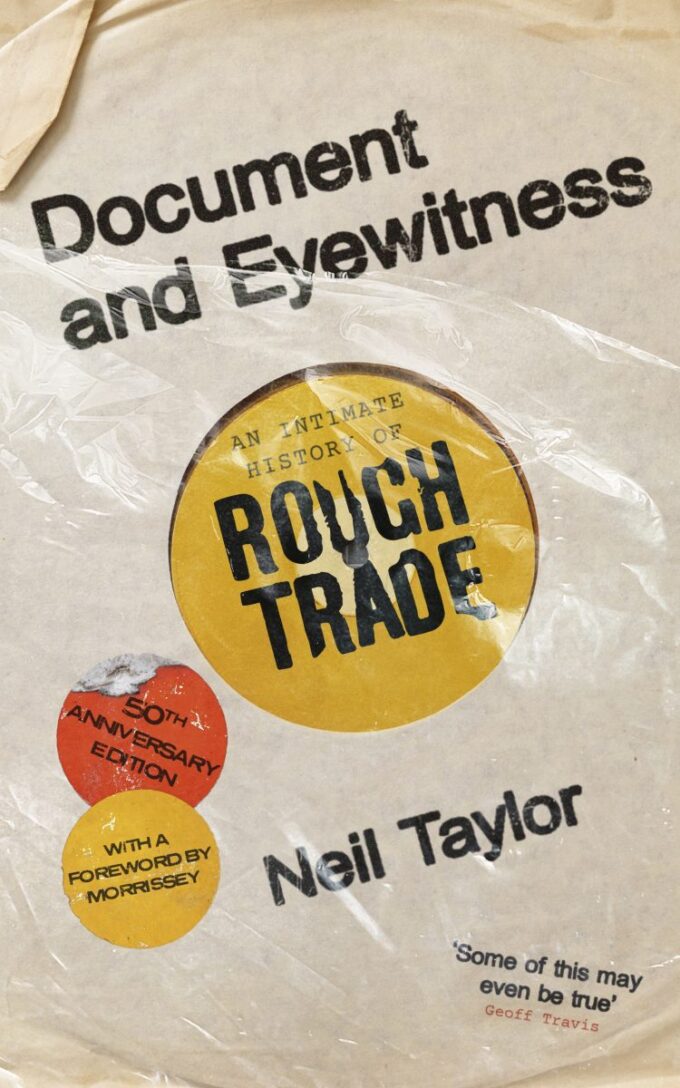
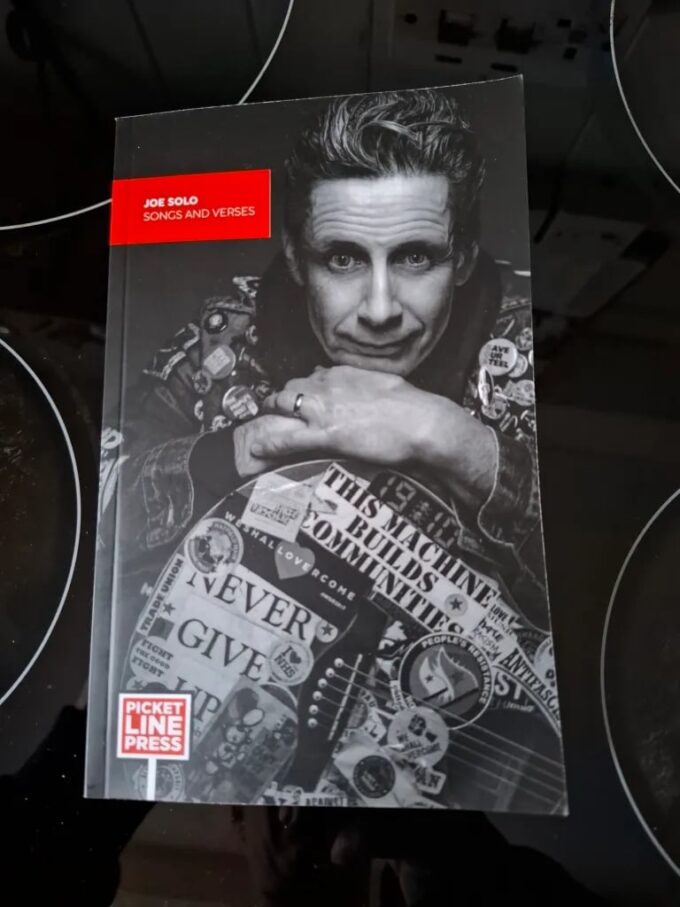

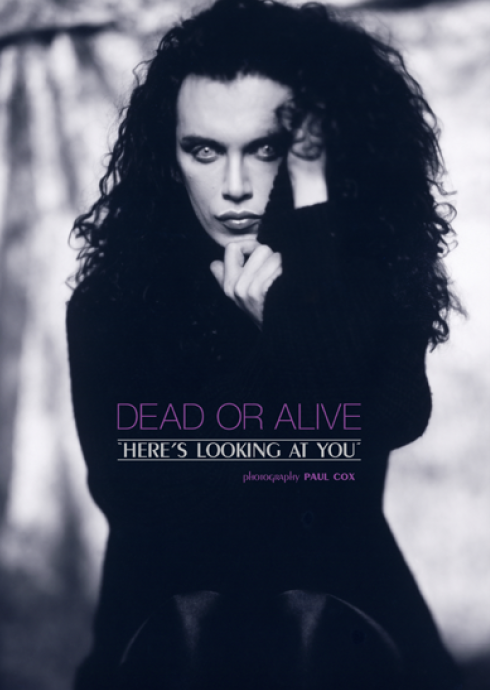


Leave a comment