
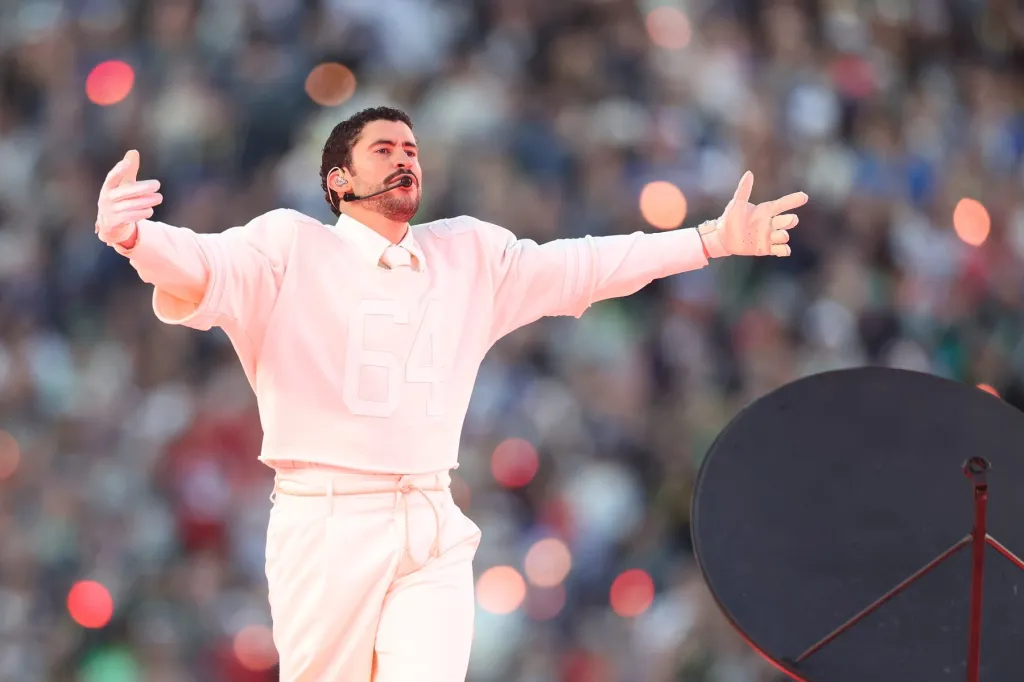
Bad Bunny’s first Australian concerts drew nearly 89,000 fans across two sold-out shows at Sydney’s ENGIE Stadium over the weekend, marking a record-setting moment for the venue.
Explore

See latest videos, charts and news
According to a social media post from Live Nation, the attendance marked the highest number of tickets sold for concerts at the stadium, formerly known as ANZ Stadium.
Hans Schafer, senior vice president of global touring at Live Nation, told the Australian Financial Review that the promoter’s decision to book stadium dates was driven by streaming and engagement metrics rather than population statistics.
“We do not book stadiums off census data,” Schafer said, referencing Australia’s relatively small number of native Spanish speakers.
Instead, Schafer pointed to consumption patterns and digital engagement as the indicators that demand existed beyond language barriers. He told the publication that streaming density and cultural engagement showed the audience was already present in Australia.
The shows formed part of Bad Bunny’s expanding global touring footprint. Schafer previously upgraded the Puerto Rican artist to stadiums in the United States in 2022, marking the first time a Spanish-language act had made that leap outside predominantly Latin markets.
The Live Nation executive also told the Financial Review that fans travelled to Sydney from across Australia and New Zealand for the concerts. Demand accelerated following Bad Bunny’s Grammy win for best album and his Super Bowl halftime performance earlier this year.
“When the biggest act in the world plays on this side of the world, demand concentrates,” Schafer said.
The Sydney production reflected the scale of the tour, with Bad Bunny alternating between pop-leaning material performed alongside a dozen-piece Latin band and trap-focused segments delivered from atop a pink house stage set known as “La Casita,” according to the Financial Review.
Schafer attributed the artist’s success primarily to his authenticity and connection with audiences, telling the publication that production enhances — but does not create — that connection.
The result reframes what a viable stadium market looks like in 2026 — less about language, more about audience intensity.




Leave a comment