
In 2022, singer-songwriter Atlus had already been building a name for himself with indie projects including 2021’s Low Expectations, and earning millions of streams with songs such as “I Wish I Had Cheated” and “OH NO!,” but when he got a call from Jelly Roll, Atlus wasn’t in a recording studio or playing a show.
Explore

See latest videos, charts and news
He was working his day job at the time, driving commercial semi-trucks.
“I remember being like, ‘Yo, Jelly, I only got 30 minutes, I’m on my lunch break,’” Atlus tells Billboard. “And he was like, ‘Dude, you’ve got millions of streams. What are you doing driving trucks?’ But I’m very cautious like my mom, so when the music thing started happening, I was like, ‘I’ll just keep working.’ He flew me out to Nashville, and I started meeting people, writing with people.”
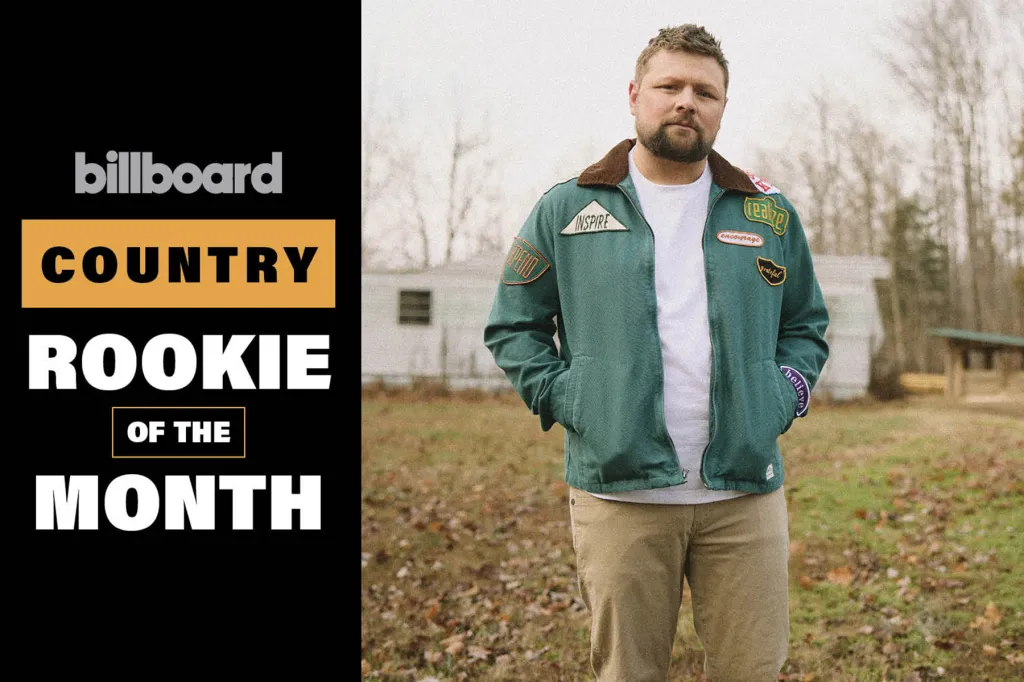
Atlus also performed alongside Jelly Roll at Colorado’s Red Rocks Amphitheatre in 2022. Fast forward to 2026, and Atlus is driving hits instead of trucks. Atlus turned a story about stinging infidelity into an RIAA-certified Platinum single in 2025 with “You’re a F—king B—ch Hope You Know That S—t.” In August, he announced he’d inked a deal with BBR Music Group/BMG Nashville. His debut single for the label, “Devil Ain’t Done,” is at No. 54 on Billboard’s Country Airplay chart.
Managed by Range Media Partners’ Shawn McSpadden and Riot Management Group’s Andrew Perlowich, Atlus will release his 15-song BBR Music Group/BMG Nashville debut, Art of Letting Go, next month on March 20.
For Atlus, who grew up in Denver in a single-parent home marked by poverty, the album marks not only a career triumph, but also a way of sharing his story of overcoming adversity, and inspiring others to prevail over their own obstacles.
“If you came from somewhere like how I grew up, then maybe you can use it as a way to help you chase your dreams,” Atlus says. “If can do it coming from where I came from, other people can, too.”
As Billboard’s February Country Rookie of the Month, Atlus spoke about his upcoming album, his inspirations, and the importance of writing about his journey.
You released your first indie album back in 2021. How have you grown as an artist in that time?
The first album was pretty rap-centric. I was in a rock band growing up with friends in high school, but we never really took it serious. It got to the point where me and my guitarist got in a really toxic part of it, before the band broke up. He was basically blaming me for the reason why the songs weren’t sounding good, saying I couldn’t sing. I got insecure about singing for a bit and ended up rapping, because I was like, “If I can’t sing, maybe I can rap.” I started rapping, and really loved NF because of his vulnerability, and then I went down the Jelly Roll rabbit hole.
But eventually I was like, “What am I doing?” and started singing again. I went into a real studio and heard my voice, and was like, “Okay, I just needed an engineer and the right equipment.” I had been singing into a drum mic and we had no money. There was stolen software that had beeps and watermarks in it and to me, it just sounded terrible. I was trying to be NF on my first album, but then got back to my roots, just singing and then started writing. I was driving semi-trucks and I wrote in the truck. There was no structure to them, just freestyling. I had 10 hours a day [while driving] to figure it out.
Your real name is Sean Haywood. What is the story behind the name Atlus?
In seventh grade, we had a creative writing project on Greek mythology. I was flipping through the book and I have ADHD, so I have this thing where if I’m not passionate about something or can’t connect to it, I have to fight myself hard to do it. My mom was like, ‘Find a way to emotionally connect to the homework.’ I landed on Atlas, where the titan holds the world on his shoulders. I saw that and thought, “That’s my mom.” I wrote the paper about how my mom is like Atlas. When I split from the band and went solo, I thought about that name and how I want to be that for her.
Is that a large part of what drives you?
The goal was hopefully to make it as a musician and be able to hold that weight for her. The good news is I got to help her retire two years ago because of the success of music. I finally got to be ‘Atlas’ for her. Now, it’s like every day I want to be able to hold that weight no matter what. I don’t think it’s just a me thing. We all have to carry weight. We all have our own problems, no matter where you’re at in life or how you grew up. The music lets people know they are not alone.
What music did you listen to growing up?
My mom was always working and when she listened to music it was like K-LOVE and this religious music that made her feel close to God. My dad would listen to country, like Rascal Flatts, Phil Vassar, Mark Wills. Rascal Flatts had a hold on me for a long time. I felt like I could hit every note when I was younger, and I wanted to be [Rascal Flatts’ lead singer and high tenor] Gary [LeVox] so bad. And then puberty hit, and I lost my dream of being Gary forever.
“Secondhand Smoke” is another of the standout titles on this new album. What sparked the idea for that?
I had a bunch of ideas and I told the writers I wanted to write a song with that title, but I didn’t want it to be negative. I view it as therapy for my mom to carry through the hardest part of our life. She was a single mom, raising her kids and working three jobs. The cigarette was the only chance she had to really have some “me time.” So secondhand smoke always seemed positive to me.
What kinds of jobs did your mother work when you were growing up?
She’s done a ton of them. We used to wake up early before school and help her with a paper route, and then she would work at the gas station at night. At one point she became a teacher, so she would do the paper route, take us to school, work at the school, then take us home and go work at the gas station.
The album’s title track “Art of Letting Go” is also very personal for you, about your sister’s struggle with addiction, and ultimately, her passing. What do you recall about writing and recording that song?
She passed away three years ago. Usually when I have a problem, I just run straight to the studio or I’ll go write. That song for me was the first time I didn’t want to just run to the studio, because I didn’t want to face it. I remember one of the writers, Lou [Ridley], called me the night before the writing session and told me how she had lost a close family member. I told her about my sister. And she’s like, “We should write about loss.” I knew I was just avoiding it, but it felt like the perfect time when she called. It was like, “Oh, we should just both try to deal with this. ” And then we could have each other when we’re writing it. We cried a lot in that session. That was a tough one.
When did you start writing for this project?
I’m always just writing songs, just to keep sharp with it. Once we signed with BMG, we had some stuff already. “Art of Letting Go” was already written. I think after signing, the first month of January, I think I booked 60 writes. I was like, “I don’t want to do anything but write, and make sure we have a good project.” I had so many things I wanted to talk about, in terms of childhood and growing up, that I hadn’t dived into yet.
You have some more uptempo songs on this album, too, like “Spare Key.” What sparked the idea for that?
I don’t want to do a whole album of just ripping people’s hearts out. I think if you’re a consumer and you’re listening to an album and it’s just “Art of Letting Go” 15 times, that’s going to be tough to get through.
My producer was throwing out names of song titles and he said, “Spare Key.” I had just bought my first house in Tennessee and had given a spare key to my girl. I remember thinking this could be a fun love song, but then my brain is like, “But what if she gave the key back?” I should have just done a little love song, but I love it because it spirals and people might not expect that twist to it.
Who would you love to collaborate with?
Adele, Jessie Murph — and when it comes to rappers, Drake or NF, Jelly Roll.
What was the first concert you ever went to?
It’s like an extreme metal band, August Burns Red. I wasn’t much of a concertgoer, because we didn’t have much money. But my brother was super into heavy metal, so that was the first one I went to.
What is one song you wish you had written?
Lately, “Orange Juice” by Noah Kahan.
What podcasts are you into right now?
I love motivational ones, or ones where they’re just talking and getting to know people. So, Joe Rogan, anything kind of like that.





Leave a comment