

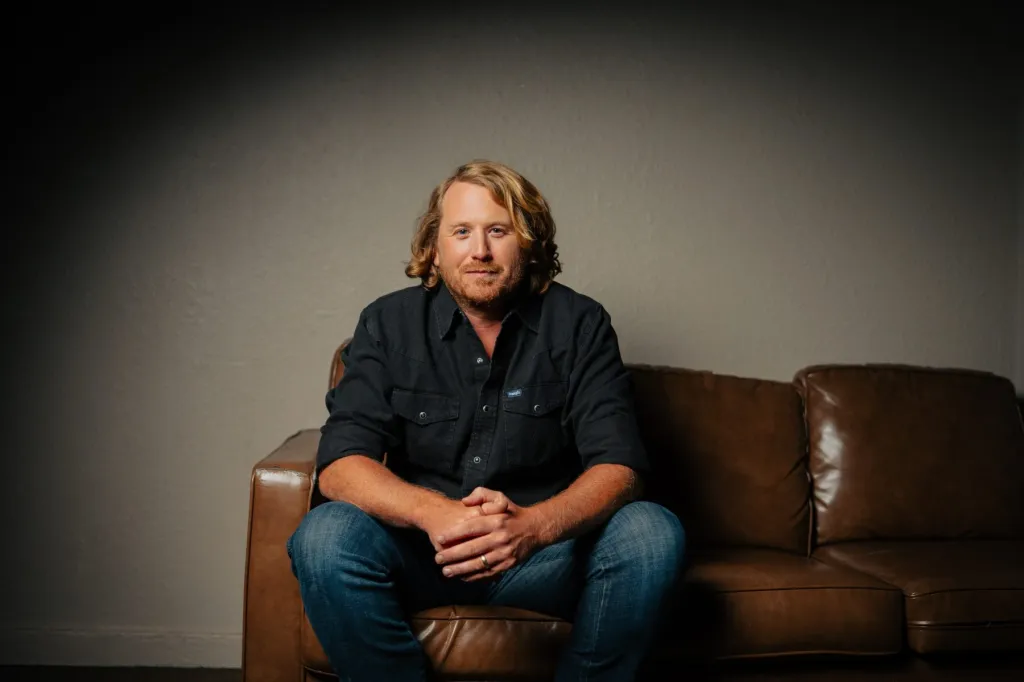
For over 15 years, William Clark Green has been a mainstay on the Lone Star State’s Red Dirt country music scene and beyond, thanks to his unrelenting dedication to songcraft on songs such as “She Likes The Beatles,” “Sympathy,” and “Ringling Road,” and albums such as Rose Queen and Ringling Road.
Explore

See latest videos, charts and news
But when it came time to begin writing for his seventh studio album Watterson Hall, out today (March 6) on his own Bill Grease Records, Green found his current stage in life had matured beyond some of his formerly tried-and-true song narratives of college-crowd partying and alcohol-soothed heartbreaks. Over the past five years, Green has gotten married, and he and his wife are parents to two sons, and are expecting a daughter this year.
“Like every record I’ve done, this record is a biography, but it doesn’t have breakup songs or first-love songs, because that’s not where I’m at,” he tells Billboard. “The biggest hurdle to get over when I started writing for this record, was that I had been writing breakup songs and the formula that’s worked in the past for me. But I couldn’t connect to that. My mom always said, ‘Follow your heart and you’ll never go wrong,’ so I just wrote what I know. My fanbase has grown with me and we’re all going through the same stuff.”
That’s not the only marked difference on the new album. He began working with producer Logan Wall, and used all studio musicians on the album, working in top-flight Nashville with musicians including Rob McNelley, Sam Hunter, Lex Price and Bryan Sutton.
“When you have guys that talented, it’s like having six producers in the room. I was learning from them,” Green says. “It was a cool experience and I definitely wasn’t used to the 10 a.m. to 5 p.m. I’m used to the 4 p.m. to 2 a.m., get a bottle of whiskey out and try new things. So that was the only thing that was a bit weird for me was just the timecard, definitely different on Music Row and the way they do it.”
Green’s growing family inspired him to write the tender “Where the Wild Things Are,” which he says was initially going to be the album’s title track. But when a different song with the same title released soon after, Green debated on whether to record his song.
“When I found out we were having a boy, I thought, “The next record is going to be called ‘Where the Wild Things Are.’ That was my favorite book growing up. I wrote the song with the guys from A Thousand Horses. Before I flew to Nashville to write the song, I texted [A Thousand Horses guitarist] Billy and said, ‘This is the song I want to write tomorrow.’ It turned out, when I sent that, he was reading that book to his son. We wrote the song and we were really proud of it. Then two months later, Luke Combs out with his song, also called ‘Where The Wild Things Are.’
“And that just happens in this business, it’s coincidence ,” he continues. “Writers will be going through the same part of life at the same time. But that happened, and I was like, ‘I can’t release this.’ But then my Dad passed away and after his funeral, I listened to our song a bunch and thought, ‘It’d be a shame if I had this, a gift to my kids, and they weren’t able to hear it because I was too afraid of being called a “copy” or whatever.’ I released it and haven’t had any backlash from it. They are two completely separate songs. I’m so proud of the song and the production on it and it means a lot.”
Elsewhere, multiple songs on the album, such as “Hawks Don’t Fly With Chickens” and the stunner “Stubborn and Remains,” nod to resilience and commitment.
“Travis Meadows, man, what a brilliant f–king songwriter,” Green says of Meadows, his co-writer on “Stubborn and Remains,” along with Wall. “I’m a fan of his solo stuff, too. [Meadows’ 2011] Killin’ Uncle Buzzy record is phenomenal. When I write with him, I really just shut up and listen. He had the title, we wrote the chorus first and went from there. After the write, he was so excited, and was like, ‘This is a big song.’ He just felt it. It’s maybe my favorite song on the record. I think it’s a blue-collar song. And it’s about commitment, not boastful or braggish, just honest and true.”
Of course, that’s not to say that this album’s songs are all completely somber narratives and profound reflections. The album ends with the golf-centered “Drinkin’ and Drivin,’” for which Green also spent a day on a golf course to shoot the song’s hilarious video.
“It was a fun day. We weren’t acting, but we were definitely drinking,” Green says of the video shoot. “When we wrote the song, I had played golf a few weeks before at a course in Fort Worth and a guy recognized me. He walked up to me — didn’t say hello or anything, just said, ‘I come out here every week, and no songwriter’s ever written a song about golf,’ and he walked away. I told my buddy about it, and he said, ‘You know, he’s right.’ I get in the writing room and Jack [Rauton] had the title ‘Drinkin’ and Drivin’,’ and I thought that was the perfect title. Not everything has to be so serious all the time.”
One thing he does take seriously is his dedication to having creative control of his music. He’s recorded each of his albums independently, with the bulk of them released under his indie label Bill Grease Records.
“The plan has always been to be independent,” Green says. “I’m very content with what I’ve created and where my career is. I would never sign a record deal that wouldn’t give me creative control. I would never sign a record deal that would take a percentage of my touring that I’ve built. Why would I do that? So I just don’t see how, business-wise, it would make sense for a label.”
Like Green, artists and groups forged and rooted in the Texas country scene have seen career surges in the past few years, such as Treaty Oak Revival. Green co-wrote and was featured on the title track to that group’s 2025 album West Texas Degenerate, but their friendship stretches back for years.
“It’s been fun to watch with Treaty Oak,” Green says. “I have the music festival in Lubbock called Cotton Fest, and they were fans in the front row in like 2018, 2019. They went every year, and then ended up d—n near headlining it in 2022 or 2023, and now we can’t afford them. I think that’s amazing. Their music is incredible and they are the real deal.”
This year, he will launch a headlining Spring tour in support of his new album, and is opening shows on Treaty Oak Revival’s West Texas Degenerate Tour. Similar to his approach to making Watterson Hall, Green is approaching touring in a way that honors both his career and his personal life.
“The last five years, I’ve kept it under 90 shows per year, which is manageable for me and my family. But it’s all opportunity-based,” he says. “I was planning to take April and May off for our daughter, but then we had the opportunity to go on the road with Treaty Oak Revival, and I can’t say no. Around 90 shows is about as hard as I want to push it. The band’s all on salary and that keeps everybody in good shape. This is my 18th year of touring. I’ve done 160 days a year and dedicated the majority of my younger life to that. My son’s starting t-ball, and I don’t want to be a musician that misses his kids growing up. It’s just trying to find a good middle lane.”





Leave a comment