

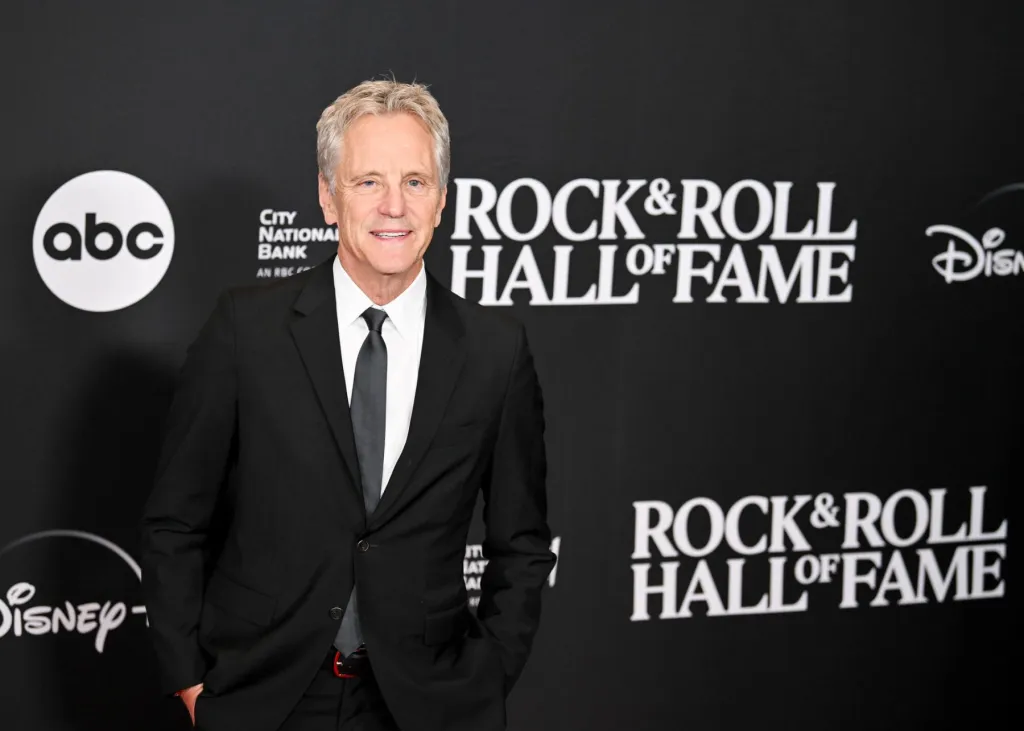
This year’s Rock & Roll Hall of Fame induction class, announced on Monday (April 13) is the largest in nearly 40 years. There are 18 honorees, the most since 1987 – the Hall’s second year – when there were 22. This year’s total includes eight inductees in the Performer category, a record five in the Early Influence category, a near-record four in the Musical Excellence category and one in the Ahmet Ertegun category.
This is the sixth year in a row that there have been 13 or more honorees. In the eight years before that, it was in single digits every year.
John Sykes, who has been chairman of the Rock & Roll Hall of Fame since 2000, has pushed for the larger class sizes. “We’re still playing catch-up,” he explained in a conversation with Billboard on Wednesday (April 15).
Sykes, who also has a day job as president of entertainment enterprises at iHeartMedia, Inc., readily concedes that his Rock Hall duties entail more work than he envisioned when he signed on, but he clearly relishes the gig. “This has been an incredible, full opportunity for me to hopefully help some of these deserving artists finally get recognized. If that’s what I get out of this job, it’s something that money couldn’t buy.”
Sykes especially enjoys working with the experts on the Rock Hall’s four nominating committees – the main one that selects the nominees in the Performer category and smaller sub-committees in Early Influence Award, Musical Excellence Award and Ahmet Ertegun Award categories.
“I am just in awe of their talent,” he raves. “To be able to just oversee it is a gift.”
Here are highlights of our conversation, which has been lightly edited for length and clarity.
The size of the induction class has gotten larger since you became chairman. Is this at your direction?
Yes, it is my direction, because there’s a backlog of deserving candidates – artists, not candidates – who were long overdue. We try to look at the ones that are glaring omissions, and that really, in many cases, should have been in a long time ago. Some of them are new, but for the most part, we’re still playing catch-up. So, I don’t think we’re putting too many artists in, because if you look at the track records of these producers, writers and performers, it’s remarkable. And so, I just think it’s time to honor it.
Sadly, we’re honoring many of them after they’ve passed away. After a while, we will catch up, and it’ll probably balance out. But for now, there’s just so many that haven’t been recognized. And I felt that it was time to honor them.
Combining all four categories, this is your largest class since 1987. This year you had five Early Influence Award honorees, the most you’ve ever had in that category.
In addition to the [main] nominating committee, which consists of 30 people that give us the performers that go out to the general voting group to be voted in, I also set up three special committee groups of six people, and I’m the tiebreaker for each one of those. These are highly accomplished music executives and artists themselves, and they’re the ones who decide and nominate, and then eventually vote in these categories. When you have this incredible group of committee members with such deep knowledge of music, it’s amazing the names that they bring up.
When do you get the list showing how your voters voted in the Performer category? I guess that’s the start of the process, and then, your committees meet and pick the other honorees to bring balance.
There is a little look at the balance, but these artists really are chosen on their own merits. It’s primarily on their own merits. [That said,] it’s very important to me that we always have that balance of all the sounds and genders that made rock & roll – rhythm and blues, gospel and country – and men and women. So, I do try to look at the final group, to see how balanced it is, because that’s the core of how rock & roll was created. There is no one sound or one look of rock & roll. So that’s what we try to we try to remind fans and the industry alike that rock & roll has always been a diverse group of artists and sounds.
In past years, some people who didn’t get voted in in the Performer category went on to receive one of these other awards.
If you’re nominated in the performing category, then you’re not considered in one of the special committees [that year]. In future years, though, they could be considered for the special committee categories, because those look at not only their relevance and their power as a performing artist and songwriter, but their influence on other artists and the genres included.
Do you call all the nominees in the Performer category and give them either the good or bad news?
I try to speak to everyone, to really congratulate them on even being nominated. It’s so hard to even get nominated. For many artists, that’s the beginning of the process of hopefully getting inducted – getting on the ballot, and like Cooperstown or Canton, Ohio for football, it takes some artists years to finally get inducted, but they’re in the conversation. Many artists who have been on the ballot but have been unsuccessful being inducted eventually do get voted in.
So, nobody finds out whether they got in or not in USA Today.
Well, we try to [contact everybody], and for most of them, we do. We reach out and listen. It’s like everything, it’s like the government – there’s leaks everywhere, and so some of the artists know before I know that they know, because someone has told them. Especially the ones with good news, it somehow finds its way to them.
But with the artists that are not inducted, what we try to say to them, is, “You’re now in the running, you’re now in the conversation.” There’s between 45 and 60 artists whose names are brought up in that nominating committee. Only 16 [17 this year] make the ballot [in the Performer category]. So just to get on that ballot is really a mark of success — and the beginning, hopefully, of being inducted.
I was surprised that Sade got in on their first nomination. Great artistry, of course— but how is that rock, even with your new, expanded definition of rock?
I’m old enough to remember when we were starting MTV [in 1981] when I was 25 years old. Sade was one of our biggest artists on MTV. I firsthand remember how powerful she was for us at MTV, putting us on the map. Her music was loved by young people watching. That’s when we were playing Duran Duran, The Police, Michael Jackson. It was a young channel, and Sade fit in beautifully.
I’m sure you see lists of snubs and surprises.
Every year, and you see them in the Baseball Hall of Fame and the Football Hall of Fame, and we see him in the Rock & Roll Hall of Fame. There are always surprises. There are ones that surprised me.
What surprised you this year?
I really believed that Mariah Carey should have, would have been inducted this year, because I think she’s deserving. But I don’t run this by myself. It’s a democratic system of voters. There’s no backroom politics in the Rock & Roll Hall of Fame.
This is the third year in a row she has been nominated and failed to get in. What do you think the resistance to her is rooted in?
I have no idea. I think she’s a genius artist. She’s written [18] No. 1 songs [on the Billboard Hot 100]. She’s moved a generation of young people. I just think she’s incredible.
I think her enormous success, in this case, works against her. Maybe there’s a sense that she doesn’t need it; that other people could use it more.
Well, like I said – please, please write this – I think every single one of those nominees is deserving. If you ask me for one that really stands out, I think because her first record was put out in 1990, 36 years ago, I think that she’s deserving. But again, we have a very open voting process and it’s determined by committees of music executives, writers, artists, and they make the decision, not me.
Have you talked to her since the voting?
I talk to her all the time.
How is she handling it?
All I can say is, I spoke to her about it, as I would speak to others. That’s part of the process, and many artists have taken years to get in. AC/DC [Class of 2003] should have gotten in earlier than they did. Neil Diamond [Class of 2011] should have gotten in earlier than he did. But that’s the beauty and the credibility of the Rock & Roll Hall of Fame. It really is a group of your peers.
Is it her decision whether to compete again in the Performer category next year? I assume she could be in line for a Musical Excellence Award. Do you present that as “Here’s a choice you have?”
This process is so grueling and so time-driven, exhausting, you don’t even think of anything till the following year. I’m so happy that this group was announced – all 18. I’m so proud of these names. I wish other artists could be included. But that’s the way we run the Hall. We just have a certain number.
It’s a process, it’s a journey. And for many of these artists, getting on the ballot gets you in the game. And every single one of these artists, and that’s what makes me most proud, deserves to be in and whether it’s today, or five years from now, or 10 years from now, these are deserving candidates. I really believe that most of these will eventually get in, because this nominating committee takes this very seriously.
They prepare for this meeting for months, and they only have two choices a piece to present in that room. And you’ve got to go into that room, and you’ve got to sell it hard. You’ve got to convince 29 of your peers why your two names deserve to be on the list. I always say it’s a combination of intelligent conversation and WWE, because they go at it in these meetings. So just getting on the list is an incredible accomplishment.
Would you ever release the names of the other people who were considered that year in the other three categories?
No, that’s private. I have to respect the people who vote on those committees, because they’ve worked hard to make choices. And sometimes there’s a disagreement. This whole thing is democracy. They fight it out and the majority rules. It’s very much like the performer category. If you don’t make it in one year, you’re not forgotten the next.
Gram Parsons and Ed Sullivan both died in the 1970s; Linda Creed in the ’80s; Fela Kuti and Jimmy Miller in the ’90s. Why do you think they got in now?
I think we’ve got to play catch-up. There’s some glaring omissions over the past 25 years that we need to rectify. They came up with the names. I may come up with a couple names a year with these meetings, but I really leave it up to these committees, which are top publishers, record company executives, journalists, artists themselves. These people are very, very aware and have a very, very deep knowledge of music. It’s amazing the names that come up, and when some of them come up, I go, “My gosh, how do we miss this one?”
I thought Sullivan was a smart choice. I assume that was due to the Netflix documentary, Sunday Best, which reminded people of his significance.
Yes, it reminded people, but we were going to put him in last year before the documentary was released. But for many reasons, we wanted to wait for this year. We were going back-and-forth. He was going to go in last year, but because he had passed [in 1974], I think we were thinking we’d like to get many of these inductees while they were still with us. [Editor’s Note: Last year’s Ahmet Ertegun Award recipient was Lenny Waronker.]
It seems to me that your main legacy in the six years you’ve been in charge is broadening people’s view of rock & roll.
I really don’t think I’ve widened the aperture of rock & roll. What I hope I’ve done is to return to the original ethos of what rock & roll is, how rock & roll was created, which was a collision of rhythm and blues, gospel and country. Somewhere along the line, rock & roll became rock and it became like white guys playing guitars. I’m not putting that down at all, but that’s one cornerstone of what rock & roll was.
You had Hank Williams, you had Brenda Lee, you had Mavis Staples. You had this wonderful amalgam, this wonderful collision, all the sounds. All I tried to do was to remind people of [that] when I took over. I wasn’t expanding. I was reminding people of the breadth and the width of artists that were part of the genesis of rock & roll. A lot of people said like, “Wow, you’ve really gone beyond rock & roll.” I go, “No, we haven’t. We’ve actually gone back to look at the original incarnation of rock & roll, which was this wonderful amalgam of races, sounds and genders that created this this sound that is alive and well 70 years later.”
Do you think Frank Sinatra could get in as an Early Influence? I remember Bono’s speech when he presented Sinatra with a Grammy Legend Award on the Grammy telecast in 1994: “Rock & roll people love Frank Sinatra, because Frank Sinatra has what we want – swagger and attitude.”
That’s why I’ve got a great committee of 30 people. They could take that – they could take any name that they believed in – and sell it in that room. I leave it up to this team. Attitude is one of the cornerstones of rock & roll. If you look at Merle Haggard – who is also not in the Hall of Fame, by the way – talk about being a rebel.
Andrew Unterberger wrote a great piece for us in which he said that one trend he saw this year is the ’80s taking over. He mentioned Billy Idol, Phil Collins, Iron Maiden, New Order, Sade and Luther Vandross as examples of artists who really hit their commercial and artistic stride in the ’80s and concluded “It seems that after a long period of being treated as not as weighty for rock history as the decades that preceded it, the ’80s has finally assumed default status as the Rock Hall’s decade of choice for new inductees.” Do you see that too?
Yeah, but that’s what happened, because we had Rick Krim [chair of the Rock Hall’s nominating committee] coming in, overseeing the nominating committee and working on the general voting committee. We basically, we modernized the fleet, and we put some younger voters in — because it was time we felt to shine a light on the ’80s and these great artists, because we had spent a lot of time in the ’60s and ’70s and some artists in the ’90s. We had kind of leapfrogged over the ’80s. So, I think this year reflected the fact that we had some younger voters on the general voting committee that put in some of these artists that maybe would have not gotten in five years ago.
And if we do this, right, when you and I are speaking in five years, you’ll be saying, ‘Wow, the ’90s are really shining.’ Because my goal, my vision, for the Hall of Fame, is that the nominating committees and the voting bodies all evolve with the music that’s eligible, because that way we continue to remain relevant. The moment we stop dead, we become the Old Person’s Hall of Fame.
Andrew also wrote that “The induction of Queen Latifah and MC Lyte as early influences — after Salt-N-Pepa’s entrance in 2025 — suggests that the Rock Hall wants to make sure these bedrock women rappers get in, without waiting for the voters to make it happen.”
Some of these artists were responsible for the spark of hip-hop that changed the world, they changed the game. We just thought about the importance of hip-hop, the importance of rhythm and blues, and who are the artists that really inspired those that followed. Queen Latifah and MC Lyte, just like Salt-N-Pepa last year, really sparked a generation of artists.
I have to give credit to the committees that I’ve assembled now, because they thought just that way, let’s start putting artists in while they’re alive, while they’re still young, relative to others. While we’re not going to forget those that have overlooked in the past, like Gram Parsons [who died in 1973], like Celia Cruz [in 2003] – that there are some still living that have been around doing this for 30-plus years, that have impacted culture. So again, I think that’s a credit to the committees we have now that are not just thinking about the deep past, but those artists who are still with us, who sparked a generation of those that followed.
Billy Idol’s guitarist Steve Stevens is being inducted alongside Billy?
Yes, he was part of the original Billy Idol band. He was only one to stay with Billy the whole time. So, Steve will get a statue, and he will be there.
This is only the second time that a collaborator has been inducted alongside a solo artist, after Neil Giraldo, alongside Pat Benatar.
Pat Benatar was very vocal that Neil was her partner in that band. I think that we’ll be looking more towards that in the future, to look at [collaborators]. Their names may not have been on the album, but if they stayed with the artists for 40 or 50 years, I think, I think we would recognize them well.
So, you might be doing more of this.
Everything is open for conversation. We’ve got committees, and they fight it out. And sometimes I join the fight. Sometimes I watch. Because they’re so smart, these committee members are so good and so convincing. It’s amazing to hear them, hear them debate.
You have had seven or eight inductees in the Performer category in each of the last five years. You have a little more flexibility in where to draw the line in each of the other categories. This year, you have five Early Influence Award recipients, four Musical Excellence Award recipients and one Ahmet Ertegun Award recipient. I assume you could tinker with those numbers and get to your 18 total in various ways.
You know, it changes every year. I have no idea when we enter into the special committee meetings how many we’re going to have. There are certainly names that come up. It all depends on the committees. They can outvote each other. They can argue against certain names or add names, but these are the ones that came out of the meetings. And so, there is no there’s no quota, there’s no number.
Is this class your favorite of the time you’ve been in charge?
Well, the greatest thing about being a chairman the Rock & Roll Hall of Fame is I’m a fan. I’m a fan of all of these artists and so many that are not inducted yet. So, it’s hard for me to choose my favorite year, but there’s always parts of each year that I go, “Well, finally, they’re getting their flowers.” But there’s never one year better than the other. This has been an incredible, full opportunity for me to hopefully help some of these deserving artists finally get recognized. If that’s what I get out of this job, it’s something that money couldn’t buy.
Is this more work than you envisioned when you signed on?
Yes, but, but you know Bob Pittman [chairman and CEO of iHeartMedia, Inc.]. We have worked together, on and off, since we started MTV. Together here at iHeart, my day job, he has been incredibly supportive of me taking over [the Rock Hall job]. He’s on the board of the Hall of Fame, and I couldn’t do this without his support and without Rich Bressler [president and COO of iHeartMedia, Inc.] and the rest of the company that allows me to do this. When I told him about the offer in 2020, he said, ‘You can’t turn this down. You got to do this.’
Anything we didn’t touch on that you’d want to add?
I would just like to make sure that it makes it in the story that we really walk into every year with an empty page. There’s no backroom politics at this place. It’s these committees that fight it out. So what happens is not me sneaking a name in there. I may suggest someone, but this is really a group of experts that I am just in awe of their talent, and to be able to just oversee it is a gift.






Leave a comment