

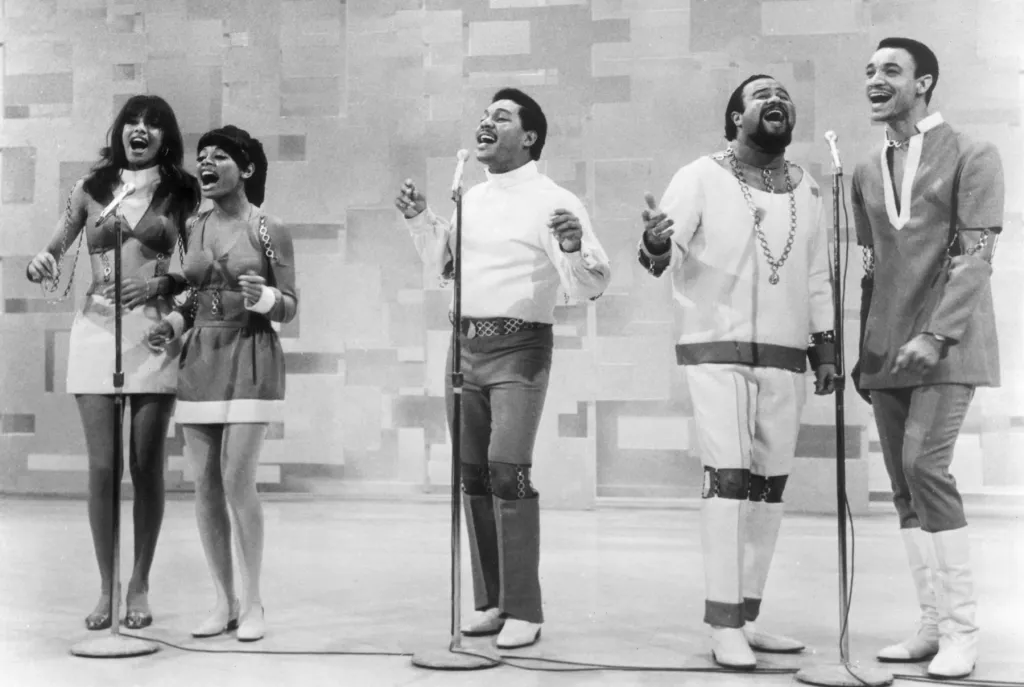
The death on Tuesday of LaMonte McLemore, a founding member of The 5th Dimension, has led fans to revisit hits by that vocal group, which made some of the best pop records of the late 1960s and early 1970s. The group was hugely successful, putting 20 singles in the top 40 on the Billboard Hot 100 between 1967 and 1973 and winning two Grammys for record of the year, for “Up – Up and Away” and “Aquarius/Let the Sunshine In.”
And yet, they have been underrated in recent decades – ignored by the Rock & Roll Hall of Fame because they were so pop. Fortunately, the 5th Dimension got their flowers in 2021 with the release of Ahmir “Questlove” Thompson’s Oscar-winning documentary Summer of Soul (…Or, When the Revolution Could Not Be Televised). The group, along with Sly & the Family Stone, Nina Simone and Stevie Wonder, performed at the 1969 Harlem Cultural Festival, which is chronicled in the documentary. Seeing footage of the group in 1969 – the peak year of their career – reminded people how truly great they were in their prime. It was also a useful reminder that you shouldn’t let a group’s image (in their case, perhaps a tad too pat and perfect) get in the way of your enjoyment of their music.
The 5th Dimension, which also included Marilyn McCoo, Billy Davis Jr., Florence LaRue and Ron Townson (who died in 2001), went by the name The Versatiles when they recorded their first two singles. The name was apt. The 5th is best known as a pop quintet, but their music also incorporates other styles, including soul, jazz, rock and even light opera (thanks to Townson).
There were many reasons for the 5th’s success, but a big one was their choice of material. The 5th had a close relationship with two of the most gifted songwriters of their era, Jimmy Webb and Laura Nyro. Webb wrote four of their A sides and four of their B sides. Nyro wrote five of their A sides – all of which became major hits.
Johnny Rivers, who topped the Hot 100 as an artist in 1966 with “Poor Side of Town,” co-produced the 5th’s debut album with Marc Gordon. Rivers also wrote the album’s liner notes, in which he told fans what he saw in the group: “In the music world you see and hear a lot of singers, groups and sounds. Some good, some average, some bad. But just once in a great while a group comes on the scene that not only has that hit sound, but also strong visual appeal. That something that says we’re gonna be around for a long time…”
Here are the 5th Dimension’s 15 best Hot 100 hits.
Grein wrote the liner notes for the 2016 compilation The 5th Dimension: The Complete Soul City/Bell Singles 1966-1975 on Real Gone Music, which he drew on in compiling this new ranking.
-
“Flashback”
Hot 100 peak: No. 82
Peak Date: Jan. 26, 1974
Songwriters: Alan O’Day, Artie Wayne
Producer: Bones Howe
Notes: This song sounds a bit like Cher’s highly commercial singles of the period. Co-writer Alan O’Day wrote Helen Reddy’s “Angie Baby” and co-wrote The Righteous Brothers’ “Rock and Roll Heaven,” both 1974 smashes. In 1977, he topped the Hot 100 as both artist and writer with “Undercover Angel.”
-
“Sweet Blindness”
Hot 100 peak: No. 13
Peak Date: Nov. 9, 1968
Songwriter: Laura Nyro
Producer: Bones Howe
Notes: This was the group’s second consecutive single release written by the great Laura Nyro, following “Stoned Soul Picnic.” The 5th teamed with Frank Sinatra to perform the song on his TV special Francis Albert Sinatra Does His Thing, which aired on Nov. 25, 1968. (I told you they were big!) Sinatra, wearing a groovy Nehru jacket, performs as if he’s the sixth member of the ensemble.
-
“Light Sings”
Hot 100 peak: No. 44
Peak Date: June 26, 1971
Songwriters: Gary Friedman, Will Holt
Producer: Bones Howe
Notes: This vibrant piece came from the Broadway musical The Me Nobody Knows, which received five Tony nods in 1971, including best musical, best original score and best lyrics. Davis’ vocal solo has the same fire he brought to “Aquarius,” which also originated in a Broadway musical. (It’s coming up.)
-
“Save the Country”
Hot 100 peak: No. 27
Peak Date: July 18, 1970
Songwriter: Laura Nyro
Producer: Bones Howe
Notes: This was the group’s fifth big hit written by Nyro in two-year span. Nyro died of cancer in 1997 at age 49, but was inducted into the Songwriters Hall of Fame in 2010. This song had a strong social message, with its references to “We Shall Overcome” and its allusions to Martin Luther King Jr. and the slain Kennedy brothers.
-
“(Last Night) I Didn’t Get to Sleep at All”
Hot 100 peak: No. 8
Peak Date: June 17. 1972
Songwriters: Tony Macaulay
Producer: Bones Howe
Notes: This light and lilting song became the group’s fifth platinum seller, following “Stoned Soul Picnic,” “Aquarius,” Wedding Bell Blues” and “One Less Bell to Answer.” The golden-throated Marilyn McCoo sang lead on three of the five.
-
“If I Could Reach You”
Hot 100 peak: No. 10
Peak Date: Nov. 25, 1972
Songwriter: Randy McNeill
Producer: Bones Howe
Notes: McCoo was also featured on the second single from the Individually & Collectively album. The torch ballad is like a mini-movie, with a beginning, middle and end.
-
“Never My Love”
Hot 100 peak: No. 12
Peak Date: Nov. 13, 1971
Songwriters: Don & Dick Adrissi
Producer: Bones Howe
Notes: The Association had had a No. 2 Hot 100 smash with this song in 1967, but the 5th found new meaning in it on this lush live recording. They transformed it from a touching, midtempo ballad to a highly dramatic torch song.
Fun Fact 1: Howe produced The Association’s version as well as the 5th’s remake. Fun Fact 2: The Addrisi Brothers, who wrote the song, had a pair of top 30 Hot 100 hits as artists, “We’ve Got to Get It On Again” in 1972 and “Slow Dancin’ Don’t Turn Me On” in 1977.
-
“Ashes to Ashes”
Hot 100 peak: No. 52
Peak Date: Sept. 22, 1973
Songwriters: Dennis Lambert & Brian Potter
Producer: Bones Howe
Notes: This catchy and warm-hearted song about nostalgia should have climbed far higher. The song’s writers, Lambert & Potter, had written The Four Tops’ recent top 10 Hot 100 hits “Keeper of the Castle” and “Ain’t No Woman (Like the One I’ve Got).” Nostalgia was in; witness the recent success of American Graffiti and Elton John’s “Crocodile Rock.” The 5th’s streak was winding down – it happens to everybody eventually – but this record should have kept it going at least a little longer.
-
“California Soul”
Hot 100 peak: No. 25
Peak Date: Feb. 8, 1969
Songwriters: Nick Ashford & Valerie Simpson
Producer: Bones Howe
Notes: “California Soul” is an apt description of the 5th’s music of this period. The song was covered by such other artists as Marvin Gaye & Tami Terrell, The Miracles and Marlena Shaw. Neither Ashford & Simpson nor McCoo & Davis were married at the time this song was a hit, but both couples would eventually tie the knot.
-
“Stoned Soul Picnic”
Hot 100 peak: No. 3
Peak Date: July 27, 1968
Songwriter: Laura Nyro
Producer: Bones Howe
Notes: This was a very important record for the group. It was their biggest hit to that point. Also, it marked the group’s first appearance on Billboard’s R&B chart, then called Best Selling R&B Singles, where it climbed to No. 2. The progressive blend of pop and soul elements was highly influential.
-
“The Girl’s Song”
Hot 100 peak: No. 43
Peak Date: May 9, 1970
Songwriter: Jimmy Webb
Producer: Bones Howe
Notes: This Jimmy Webb gem was inexplicably passed over as a single from the 5th’s 1967 album, The Magic Garden, but it was finally released as a single in 1970 when the group moved from Soul City to Bell Records. There was a glut of 5th product on the Hot 100 owing to the label change (the group charted with eight singles that year, not counting their 1969 holdover hit “Wedding Bell Blues,” which was still in the top 40 as the new year began.) Even so, this shimmering song made the top half of the Hot 100. It’s one of Webb’s most gorgeous melodies and one of the group’s best tracks.
-
“Aquarius/Let the Sunshine In”
Hot 100 peak: No. 1 (six weeks)
Peak Date: April 12, 1969
Songwriters: Galt MacDermot, James Rado, Gerome Ragni
Producer: Bones Howe
Notes: This smash is a medley of the opening and closing songs from Hair, the off-Broadway hit that became a blockbuster. The single builds from a sleek and polished opening to a rousing, gospel-tinged finish with vocal ad-libs sung by Davis.
The members of the group liked “Aquarius” as soon as they heard Ronnie Dyson sing it in the show. “We thought we could make it a hit,” McCoo told me. “We called Bones [Howe, their producer]. We said, “We’ve got to record this song. ‘He said, ‘I don’t know. It’s been done a couple of times and nobody’s had a hit.”
Howe felt the song needed something more to put it over the top. He flew to New York to see the show for himself and found his big finish in “The Flesh Failures (Let the Sunshine In).” Howe, Bill Holman and Bob Alcivar came up with the Grammy-nominated arrangement that married the two songs.
The single reached No. 1 in April 1969, despite its long (for the era) running time (4:49). It remained on top for six weeks, the longest reign by any single that year.
In March 1969, the record brought the group two more Grammys – record of the year and best contemporary vocal performance by a group.
Ronnie Dyson, who sang “Aquarius” in Hair, had a top 10 Hot 100 hit of his own in 1970, “(If You Let Me Make Love to You Then) Why Can’t I Touch You?.”
-
“Up – Up and Away”
Hot 100 peak: No. 7
Peak Date: July 8, 1967
Songwriter: Jimmy Webb
Producers: Johnny Rivers & Marc Gordon
Notes: Webb, who was just 20 at the time, composed, arranged and conducted this smash, which blends “sunshine pop” with classy jazz accents. Marty Paich (father of Toto founder David Paich) wrote the horn and string arrangements. The group loved it upon first hearing. “We thought it was a good-feeling song and we really wanted to record it,” McCoo told me. But Davis added, “When they started talking about releasing it as a single, we thought it was just too pretty to be a hit.”
The group needn’t have worried. The song made the top 10 and went on to win four Grammys – record of the year, best performance by a vocal group, best contemporary single and best contemporary group performance (vocal or instrumental). The song also brought Webb a Grammy for song of the year – even though he was competing with himself. The prodigy also wrote the sublime Glen Campbell hit “By the Time I Get to Phoenix,” which was also nominated in that category.
-
“Wedding Bell Blues”
Hot 100 peak: No. 1 (three weeks)
Peak Date: Nov. 8, 1969
Songwriter: Laura Nyro
Producer: Bones Howe
Notes: Bones Howe brought this song to the group. When they recorded it, Marilyn McCoo and Billy Davis Jr. were going together. By the time it was released, they were married.
The song was a solo showcase for McCoo, who had blossomed into a first-rate lead vocalist. She isn’t always given the credit she deserves, but she ranks with Dionne Warwick, Gladys Knight, Dusty Springfield and Karen Carpenter as one of the finest female pop singers of the era.
-
“One Less Bell to Answer”
Hot 100 peak: No. 2
Peak Date: Dec. 26, 1970
Songwriters: Burt Bacharach and Hal David
Producer: Bones Howe
Notes: This song first appeared on the group’s Portrait album in April 1970. Amazingly, the group didn’t get around to releasing it as a single until October. It’s an exquisite track, with a captivating lead vocal by McCoo. Keely Smith, best known for her partnership with Louis Prima which included the classic “That Old Black Magic,” had introduced the song in 1967.
“When Bones Howe brought the demo to us for recording, we couldn’t even believe that there was a Burt Bacharach/Hal David song that hadn’t been recorded by Dionne [Warwick],” McCoo told me. “The demo was actually Dionne singing the song. And we thought, ‘Why didn’t Dionne record this song?’ And then we thought, ‘We’re not going to look a gift horse in the mouth.” I’ve always loved torch songs and this to me was the definitive torch song.”







Leave a comment