
 BEYOND THE SAZ
Turkish psych rock has been widely praised in the past few years and many new bands with similar sounds have emerged. Here we present the other side of the recent Turkish alternative music scene. What other music is happening in Turkey? One of the most respected bands from the local alternative scene is Buyuk Ev Ablukada. Their new record will also be released in the UK and EU on vinyl.
First came the diggers. The crate hunters, who uncovered the 60s and 70s Anatolian psych rock gems that had long remained unheard outside Turkey. Then came the record labels and reissued albums from that era. Imprints like Finders Keepers and Pharaway Sounds played a key role in bringing some of these milestone records back into circulation.
Soon after, DJs picked up the sound, carrying it to dance floors across the world. As the momentum grew, some of the original artists returned to the stage after years of silence. A new wave of bands followed, reinterpreting the Anatolian sound for a global audience. International acts such as King Gizzard & the Lizard Wizard, Glass Beams, and Khruangbin have openly cited Anatolian rock as an influence. Meanwhile, artists like Amsterdam based Altın Gün, Hamburg based Derya Yıldırım, London based Kit Sebastian gained worldwide recognition with their reinterpretations of the genre.
Back home, local acts in Turkey who carry the Anatolian psych spirit also found new audiences beyond the country. Acts like Gaye Su Akyol and Baba Zula have spent years touring internationally and gaining success abroad. Baba Zula was one of first names of the new psych era to make a name, starting in early 2000’s. Gaye Su Akyol’s global recognition started with her debut album “Develerle Yaşıyorum” in 2014. She even won the best artist award from UK world music magazine Songlines in 2019. While a newer generation, including Lalalar and Islandman continues to expand the scene.
This recent global journey of Anatolian psych has now spanned roughly two decades. Yet the alternative music scene in Turkey offers a much wider and much diverse landscape. One that is appealing to listeners seeking new sounds beyond Anatolian psych, regardless of language.
As Bant Mag., a publication focused on music, art, and film since 2004, we have been documenting Turkey’s underground and alternative music scenes for years, and curating a no-record-label festival called Demonation, in support of independent artists across genres since 2010.
With that in mind, here is a humble attempt to highlight some of the various artists and take a closer look at the scene. A selection of acts that reflect the diversity of alternative music scenes in Turkey today. Beyond the Anatolian psych vibes, these artists explore different directions and offer a wider picture of what’s happening right now.
A SHIFT IN THE SCENE
To better understand the current dynamics of alternative music scene in Turkey, it’s important to look back at a relatively recent turning point.
In the mid-2000s, there was a remarkable surge of international interest in Istanbul. Fatih Akın’s documentary Crossing the Bridge helped introduce the city’s sound to a global audience, while increased cultural exchange, funding, and media attention positioned Istanbul as a key stop on international touring circuits. From major acts to more niche and alternative names, a wide range of foreign artists began regularly including Istanbul in their tours. For a while, Istanbul felt fully plugged into the global music network.
That momentum, however, was interrupted. Beginning with the Gezi protests in 2013 and extending through the turbulent years that followed, culminating in the 2016 coup attempt, the country went through a period marked by political tension, security concerns, and an increasingly unstable atmosphere. A series of attacks and a general sense of uncertainty led many international artists and promoters to step back. Tours were cancelled, and Istanbul gradually disappeared from many global itineraries for a while.
Yet this withdrawal created an unexpected shift. As international bookings declined, local promoters, venues, and festivals began to focus more heavily on local acts. After years of being seemingly happy and content with international acts dominating their stages, venues suddenly started to value local talent the moment those stages went empty. What initially felt like a limitation turned into an opportunity: local bands gained visibility, audiences became more engaged with local talents, and a stronger sense of scene began to take shape.
Today, international artists are returning, and the city is once again trying to find its place on the touring map. But the impact of that period remains. The infrastructure, audience awareness, and confidence that developed around local music have endured, leaving behind a more self-sustaining and resilient alternative scene.
THE RAW NERVE: PUNK, ART-PUNK & POST-PUNK
It wouldn’t be wrong to start with the blooming underground punk scene. From proto-punk to pop-punk, a new generation of bands has been actively exploring and reshaping the sound. Istanbul’s independent venues, often precarious, short-lived, and constantly shifting, have become the natural habitat for these acts. Some have already begun to move beyond the underground, finding their way onto bigger stages and wider audiences.
Punk has existed in Turkey since the late 80’s, sustained by small but committed circles. And today, it doesn’t feel any less visible or urgent, if not more.
In a city shaped by massive economic pressure, rapid urban transformation, and shrinking cultural spaces, punk operates less as a genre and more as a reaction. It absorbs the tension of everyday life in Istanbul, the noise, the density, the unpredictability. The result is music that feels restless, direct, and deliberately unpolished.
At the same time, the current political climate, where expression can feel increasingly constrained, has shaped how this scene speaks. Rather than always being overtly confrontational, many bands channel their perspectives through abstraction, irony, or sonic intensity. The resistance remains, but often in subtler, fragmented forms.
Within this landscape, Goblin Daycare -the lo-fi egg punk quartet- has managed to attract attention beyond the local scene, even earning praise from Henry Rollins. Meanwhile, acts like Frozen Clouds and Robin approach punk as an open-ended framework, blending it with surrounding influences and pushing its boundaries in unexpected directions.
Alongside them, bands such as Haossaa, Hav Hav!, Second, Parham AG, Cheap Genes, and Emaskülatör keep the punk flame alive. Although it’s not possible or necessary to define a unified movement, a fragmented yet fruitful and ever-inspiring ecosystem is there. Acts like Yangın and Mojave also stand out, crafting post-punk driven tracks built on sharp guitar hooks and an infectious sense of melody.
TURKISH HIP-HOP
Last year, we watched our Japanese DJ friend Moppy play a one-hour set of contemporary Turkish hip-hop in Tokyo. The reaction from the crowd was immediate and intense. The rawness of the beats and the distinct rhythm of the language cut through instantly, no translation needed.
We’ve witnessed similar moments elsewhere. Turkish hip-hop carries a certain directness, an urgency that travels well. Much like punk, the underground scenes have developed their own languages, shaped by different local realities but also resonating beyond them.
Since the release of the Cartel album in 1995, hip-hop has had a strong presence in Turkey’s mainstream. But a new underground wave has emerged in recent years. Artists like Ezhel, AgaB, Ağaçkakan, Rinxlaya, Da Poet, Ethnique Punch and Kamufle have redefined the hip-hop space through layered lyricism.
Themes of alienation, identity, and urban existence surface throughout these lyrics. Sometimes quietly, sometimes with intensity. There is a poetic density to their language, open-ended and referential, inviting listeners to engage beyond the surface.
FROM UNDERGROUND TO GLOBAL
Some artists operating outside the Anatolian psych framework have also gained recognition abroad. Synth-pop act Jakuzi was picked up by City Slang, releasing two albums and touring extensively in Europe. The duo Kim Ki O released albums on European labels and toured with bands like Moon Duo and The Radio Dept.
Perhaps the most internationally recognised of them all is darkwave outfit She Past Away. Without switching to English, the band has built a global following through relentless touring and a distinct sonic identity, becoming a staple of the international darkwave circuit. Lalalar, releasing their albums from respected label Bongo Joe, craft a dark, driving sound that merges post-punk attitude with electronic grooves and fragments of Turkish musical heritage, channeling the pulse of Istanbul’s streets. Islandman, from Danish label Music For Dreams, blend electronic music with Anatolian and Middle Eastern influences, creating hypnotic, groove-driven compositions that feel both organic and expansive. These bands tour heavily in Europe creating a their own fan base.
REACHING THE BIGGER STAGE
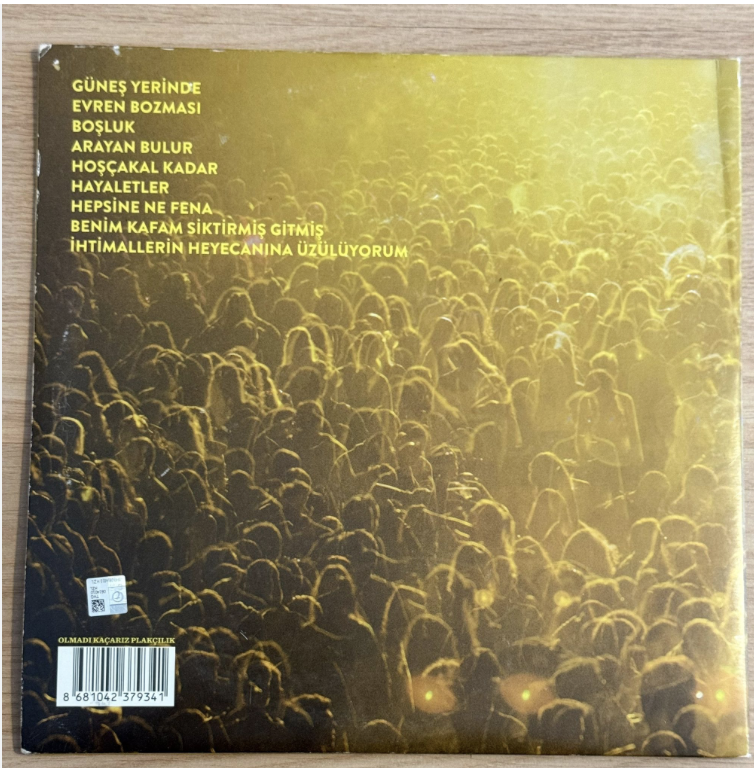
The rise of the alternative scenes in Turkey has also seen underground artists reaches wider audiences. One of the most striking examples is Büyük Ev Ablukada. Emerging through word-of-mouth practices and the perks of early internet culture, the band developed a unique blend of art-rock and leftfield pop, shaped by their theatre background and unconventional live performances.
They never followed mainstream formulas yet went on to headline festivals and sell out major venues. Their latest record “Defansif Dizayn” has recently been reissued on vinyl in Europe and the UK.
Vocalist Bartu Küçükçağlayan describes the spirit of the scene: “Underground music always takes me back to being young and fully obsessed with it. In 1999, I was lying to my mum and sneaking off from Eskişehir to Istanbul just to catch bands like Baba Zula and Duman, back when they still felt properly underground. Now they’re nearly mainstream, but when I go and see a young artist’s first gigs, like Ezhel back then, or when I come across someone like Cerahat 40K on YouTube, it gives me that exact same buzz. It still reminds me of blagging my mum and jumping on a train for something I really cared about.”
WEIRD, DERANGED AND BEAUTIFUL
It’s impossible to fully capture the scale and diversity of the current alternative music scene in Turkey in a single article. There are too many different names to mention, too many directions taken.
And still, the music keeps coming. So, dive into the playlist we’ve put together. An entry point into a constantly shifting landscape of sounds from Turkey. And if you’re wondering what might follow Anatolian psych, we’d place our bets on a renewed interest in 80s and 90s Turkish pop. But that’s a whole other story.
A Plea From Louder Than War
Louder Than War is run by a small but dedicated independent team, and we rely on the small amount of money we generate to keep the site running smoothly. Any money we do get is not lining the pockets of oligarchs or mad-cap billionaires dictating what our journalists are allowed to think and write, or hungry shareholders. We know times are tough, and we want to continue bringing you news on the most interesting releases, the latest gigs and anything else that tickles our fancy. We are not driven by profit, just pure enthusiasm for a scene that each and every one of us is passionate about.
To us, music and culture are eveything, without them, our very souls shrivel and die. We do not charge artists for the exposure we give them and to many, what we do is absolutely vital. Subscribing to one of our paid tiers takes just a minute, and each sign-up makes a huge impact, helping to keep the flame of independent music burning! Please click the button below to help.
John Robb – Editor in Chief
PLEASE SUBSCRIBE TO LTW



Leave a comment