

Andy Clark : a eulogy to legendary musician, bon vivant and stepfather by Jerome Alexandre
King Clark: Maverick Maestro, Music Hero, My Dad.
By Jerome Alexandré with Nikki Payne
The phone call
The phone rang at 11.36 pm. In younger years, when half-eleven was the mere shank of the evening, a phone call at this hour would hold the promise of entertaining shenanigans of one sort or another. Tonight I have a good reason to dread a late-night call; Andy Clark, legendary musician, bon vivant, and the most important man in my life, is in hospital. Again. Reluctantly, I pick up the phone; it’s my mother, Isobel, and before she utters a word, I know exactly what is coming next; the words I had dreaded all my life.
Life and death
Only 24 hours ago I’d been with Andy singing songs, alongside my uncle Al and Andy’s close friend and neighbour Baz. The location for this singalong was Andy’s bedside in Lewisham Hospital, an increasingly familiar venue for Andy over the past years, but this time was different. This time he had internal bleeding and couldn’t keep down food or water; the medical staff had informed Andy’s sister Shiela that his organs were shutting down. Even with such a prognosis, I was still in denial – if cats have nine lives, then Andy had a least a hundred. This was a man who’d survived car wrecks, drug addiction, overdoses, and sojourns at several of the UK’s more rarified gentleman’s clubs: Brixton, Pentonville, and the Scrubs. One way or another he always came up smiling. His attitude to death, like his attitude to life, was deeply irreverent. A few years back, whilst sitting in the front pew at the funeral of a friend, he turned to me amid the solemnity of the service, and hissed: “don’t have any of this shit at my funeral – just pick me up and chuck me in a skip.” Our mate Aaron, who was in the back row, heard him distinctly.
The home front
Andy had been my mother’s partner since she was 20 years old; for reasons unknown – to me at least – he always referred to her as Beasley. In 1971 they set up home in a flat in Greenwich and when I was born, Andy raised me as his own. By this time, they were no longer romantically involved, but they still lived together and remained as close as close can be. So, when I made my debut on this earthly plane one chilly day in February 1978, my biological father wasn’t there – I wouldn’t meet him until I was 27 – but Andy was. Andy was the first person to hold me as I emerged into the world, and whilst our father/son relationship was far from conventional, that didn’t mean he loved me any the less; if anything, our bond was all the more special as a result. It was a bond that would never be broken.
Musical pedigree
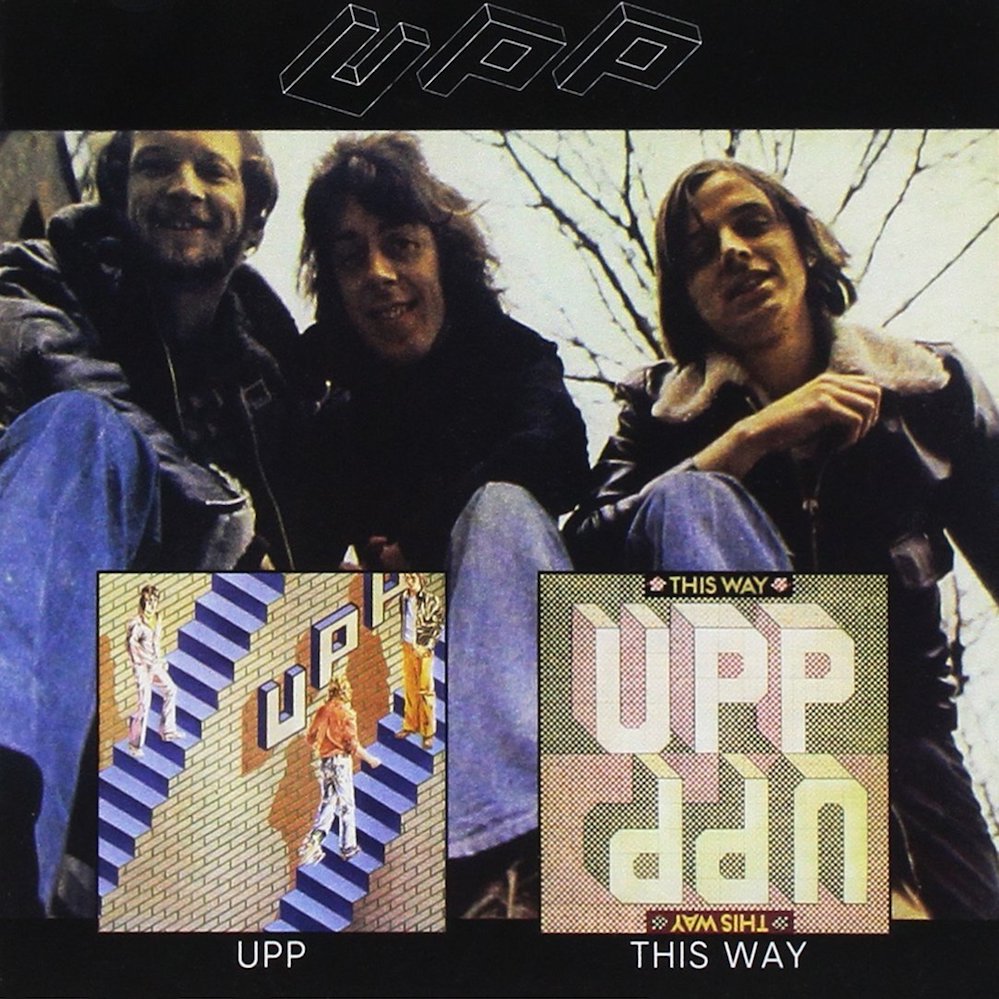
Andy Clark was a man who had it all: effortlessly charismatic, fantastically talented, a man who played the keyboards as if he were wrestling a rattlesnake, a multi-instrumentalist with a chameleonic voice that was uninhibited and soulful. Remember the iconic, symphonic, synthesizer textures on David Bowie’s 1980 hit ‘Ashes to Ashes’? That’s Andy. He shared stages with Jimi Hendrix, Desmond Dekker, Gary Holton, Phil Lynnot, Glen Matlock, Jimmy Cliff, Sam Gopal, Nico, and of course his close friend Jeff Beck. Beck also produced Andy’s band Upp, taking them all over Europe and the US. In the late 1960’s Andy and legendary guitarist Mick Hutchinson formed the eponymously named Clark-Hutchison with drummer Del Coverly, signing to Decca records in 1969 with their fusion of raga-rock, psychedelic acid blues, jazz, and Indian classical music. Their first album A=MH² epitomises Andy in multi-instrumentalist mode, providing vocals, organ, piano, saxophone, flute, and percussion. Enthusiasts often remark that their work, specifically on their second album Retribution, provides the missing link between British blues and the ‘menacing, doomy’ sound that mainstream American bands would later adopt. The similarity between ‘Death, the Lover’ (1970) and ‘L’America’ (1971) is uncanny. Given that Andy had met The Doors, one has to wonder if the influence flowed both ways. Clark-Hutchinson captured that hypnotic, pounding ‘death-march’ energy while The Doors were still transitioning out of their psychedelic pop phase.
Father figure
Some fathers take their kid fishing, or cycling, or to the football; whatever the old man is into. Andy took me to his gigs, where, as a very young child, I’d curl up and nap on the top of speakers or be perched on a chair at the back of the stage for the duration of the gig, so he knew I was safe. As I got older, I’d dance like a happy lunatic at the front, skirting the frenetic, slamming bodies of the mosh pit, the denizens of which were always careful not to lamp me as threw themselves around. Whilst Andy might be best known for his work with Upp and Jeff Beck, I saw him play live with many brilliant groups including The Tony Patience Band, and Andy Clark’s Living Art Treasures. In 1992 when I was 14, Andy helped me to assemble my first band, a five-piece called Love’s Ugly Children, featuring Andy on keys and me on lead guitar.
Hectic Brothers
But by far the most thrilling childhood experience for me was racing home from school at the age of 11 and getting ready for a Hectic Brothers gig. Hectic Brothers was one of the last great gangs of South London; they sounded like a cross between The Clash, The Doors (or, Clark-Hutchinson) and The Psychedelic Furs and inspired a die-hard and enthusiastic following. Travelling with them in the van to venues like The Powerhaus was an absolute trip for me. The set opened with Andy alone onstage, playing the intro of ‘The Legend of Micky Fish’ on a Vox Continental through a fuzz box, plugged into a fender twin reverb stack, an amp so big that I could be smuggled into venues within its capacious interior. The resultant sound was not unlike a cathedral organ on steroids and resonated with electric adrenaline. Producing this tsunami of noise was Andy; black hair, black coat swaying back and forth, looking as though he was possessed, every eye fixed on him. Keith’s conga playing entwined its rhythmic way around the keys, then Craig’s guitar joined in, followed by Ian’s bass. Finally, Uncle Al would lope onstage, announcing “We are The Hectic Brothers from Deptford fun city; this is a true story …The Legend of Micky Fish!” And bang on, Andy would trigger the drum machine, and they’d slam into the song with everything they had. It was theatre and rock n roll combined, and after a few months they were selling out every venue they played. The afterparties were legendary in their excess, but Andy never let me see him consume drugs or alcohol. At least not until I was an adult. It was important to him that whilst I was a minor I was kept out of harm’s way and that our father/son relationship retained some sense of normality. At Christmas for example, Andy always came for dinner; he loved Mum’s roast chicken, and they would often reminisce about their early years together when she’d conjure up a delicious roast on a diminutive Baby Belling cooker. On New Year’s Eve we’d visit Andy’s side of the family, his sister Sheila and husband David, and his brothers Steven and Michael. Family meant a lot to him, he always made sure he looked his best for them, and for family events. And he missed his mother Muriel, whom he always remembered as a warm and loving woman.
MacDonald’s and Johnny Thunders
For me, Andy was a conduit to a more exciting, sometimes forbidden, world. It was Andy who bought me my first ever McDonald’s, putting an end to the macrobiotic diet that he and my mother painstakingly raised me on. On a trip to Peter Perret’s one evening, a guy who looked a cross between an Italian hood and a vampire, bounded out of the house, nodded, acknowledging us with a quick, “Yo!” and jumped into a waiting black cab. “That’s Johnny Thunders,” Andy whispered to me. I was 11 and Johnny Thunders was a god to me. Andy also gave me my first shot of heroin. By this time, I was nineteen, signed, and back home following a stint of living in LA and touring the US. I’d followed in Andy’s footsteps and was part of an industry where narcotics are more readily available than a cup of tea. It remains my belief that Andy felt if I was going to do it, it would be safer if he administered the shot than some random sycophant or careless scumbag. I trusted him implicitly and vice versa.
King Clark
Towering above everyone at six foot four, with jet black hair, and invariably clad in a long black coat and sunglasses, Andy was impossible to miss. For those of you who haven’t witnessed the spectacle of Andy’s 1977 Top of the Pops appearance with The Rah Band, playing ‘The Crunch’ attired in a bin liner, balaclava, fingerless gloves, and shades; I can only suggest you do yourself a favour and check it out. Andy could charm anyone; male, female, young, old, animal, or extra-terrestrial. Whenever he set foot into a pub Andy was given a hero’s welcome, particularly at our local, Skehan’s, where the drinks were on the house and the patrons hallooed his arrival, happy in the knowledge that they were now guaranteed a good night. Installed at Skehan’s elderly piano, he’d have the entire pub singing along to favourites like ‘Blueberry Hill’, ‘Light my Fire’, and ‘Heatwave’. At The Hawley Arms in the early noughties, I introduced him to Amy Winehouse who fell in love with Andy instantly. Whenever she spotted him, she’d run over and link arms, asking in her distinctive voice, “When are you going to marry me?” Amy’s moniker for Andy was ‘King Clark’, and she loved to quiz him about his musical virtuosity – how he was able to play bass with one hand and lead with the other, and his stint as Desmond Dekker’s keyboard player. For Amy, a Dekker devotee, Andy was a portal to one of her greatest musical influences. If there is a musicians hang out in the spirit realm, they are most likely together, sharing drinks and reminiscing about the old days.
Peter Doherty and Jaz Coleman
It was around this time that I introduced Andy to our longtime friend and musical collaborator, Peter Doherty. Peter would often drive over to Andy’s flat in Deptford and the two grew very close discussing film, poetry, and fashion well into the early hours. It is for this reason that Deptford is name-checked in Peter’s anthemic homage to a mythical England, Albion. In 2017 Andy and I drove up to visit Peter at The Albion Rooms in Margate and Peter asked Andy to tour with him as keyboard player for The Puta Madres. Though touched by the offer, Andy’s health issues obliged him to decline it, and as it worked out, this was the last time the two would meet. That same year I took Andy to the Columbia Hotel to meet Jaz Coleman who was an Upp devotee and had seen them perform live back in the 70s. Andy was never short of admirers.
Deptford Daze
Andy’s Deptford flat was my home between 1998-2000. This was the venue for many memorable parties, but tales of rock n roll excess are ten-a-penny, instead I’ll tell you about bedtime chez Clark. Implausible as it sounds, we slept in an arrangement not unlike bunk beds; Andy at ground level and me in a loft bed, like a vertically stacked Morecombe and Wise, or perhaps more accurately, Fletcher and Lennie Godber. Ensconced in our beds, he’d often tell me stories before we both fell asleep – one of which was the tale of Charles Shaar Murray’s bad trip. For the uninitiated, Mr Murray is a legendary music journalist and biographer who wrote his despatches from the frontline. On this occasion the ‘frontline’ was Glastonbury, and, as Andy arrived at Somerset’s most famous field, he spotted Murray, sat alone in a clearing, in the throes of what was clearly a very bad trip. Whilst lesser men might have passed by and left him to his sufferings, or attempted to console the suffering journo, Andy jumped out of his car yelling “Bleaken blarken blorken!” in the startled man’s face, causing Mr Murray to hurtle off into the field, most likely to have an embolism. Andy’s use of language was always inventively idiosyncratic. One thing that truly amazed me was just how strong Andy could be: ‘I’m giving up cigarettes,’ he announced to me one morning in the early 2000’s; and sure enough, despite my scepticism, I never saw him touch another cigarette ever again. Then in 2006 he finally beat his addiction to heroin, something that still blows my mind, as it was such a massive part of our lives.
Len Stiles Music
As I grew older, Andy regularly came to see me play with a variety of groups, and he’d often introduce me to people that I’d become close with, especially at our local muso pub Skehan’s. It was Andy who introduced me to Sienna, one of my closest friends, and the vocalist of Black Bordello. Andy had a knack for knowing instinctually which musicians would complement each other. There are so many stories I could tell – but we’d be here forever – so I will leave you with this one, as it is most precious to me. When I was 10 years old, Andy and I were at a party, in Penge of all places, and I remember someone had a beautiful 1950’s Gibson red 335 hollow body guitar, much like the one played by Chuck Berry and Keith Richards, and Andy was showing me some Hendrix-style licks on it. Midnight came and went and we decided we’d better get home, but when we got into the car it wouldn’t start, and it was way too late to call for a ride. So, we decided to walk back instead. After tramping four and a half miles in the chilly early hours, we reached Lewisham and found ourselves outside Len Stiles Music, with its display of beautiful vintage guitars, lit up with Christmas fairy lights. As I stood mesmerised, gazing reverently at the exquisite instruments in Mr Stiles’ Alladin’s cave, Andy said: ‘I’m so glad you picked music – I was dreading having to take you to the football or something , but you’ve really connected to playing the guitar; I tell you what son, stick at it – it’s a healer, music, and it will never let you down.’ I then turned to him and said: ‘watching you made me want to do it – it’s because you’re my hero.’ Andy will always be my hero – the man has taught me more than anyone else on this planet. It’s my absolute pleasure and joy to have had such a close connection to such a rare human being; there is and will only ever be one Andy Clark.
A Plea From Louder Than War
Louder Than War is run by a small but dedicated independent team, and we rely on the small amount of money we generate to keep the site running smoothly. Any money we do get is not lining the pockets of oligarchs or mad-cap billionaires dictating what our journalists are allowed to think and write, or hungry shareholders. We know times are tough, and we want to continue bringing you news on the most interesting releases, the latest gigs and anything else that tickles our fancy. We are not driven by profit, just pure enthusiasm for a scene that each and every one of us is passionate about.
To us, music and culture are eveything, without them, our very souls shrivel and die. We do not charge artists for the exposure we give them and to many, what we do is absolutely vital. Subscribing to one of our paid tiers takes just a minute, and each sign-up makes a huge impact, helping to keep the flame of independent music burning! Please click the button below to help.
John Robb – Editor in Chief
PLEASE SUBSCRIBE TO LTW




Leave a comment