

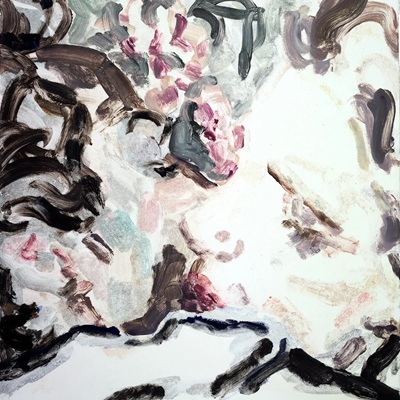
 Iceage: For Love of Grace & the Hereafter
(Mexican Summer)
LP | CD | DL
Out now
Iceage return with album six, a fantastic ride through a myriad of wonky post-punk grooves. This could just be their best album to date.
4.5 out of 5.0 stars
As a band that have constantly developed and expanded their sound across their previous five albums, the arrival of For Love of Grace & the Hereafter sees Danish post-punks Iceage hark back to the more stripped-down urgency of their debut. However, where New Brigade fuzzed with the urgency of youth, 15 years on, the band have honed their craft through constant twists and turns on their sound. Their restlessness was already in full flow by the time their third album, Plowing Into the Field of Love, landed, and has been brought back around here on an album that, at times, simply dazzles. It is their first in five years, and the freedom that singer Elias Rønnenfelt found through his solo album, Heavy Glory, has clearly impacted the band as a whole. While there is still a bleakness to the lyrics, the eschewing of the constant post-punk barrage of their debut for a more varied palette, at times surf-tinged, dashes of shoegaze, and a flutter with wonkier grooves, makes for an uplifting ride.
It is something that comes out right from the off, on opening song Ember, skirting between the post-punk urgency that they so confidently, barely out of their teens, made a name for themselves with, and the kind of underground-rock pop hook-leaning sensibilities that the likes of Dinosaur Jr did so well. They double down on it all immediately with the absolutely glorious Match Head Girl. It is here where the band are at their most playful. The rhythms jut and strut, Rønnenfelt’s vocals spirited, dancing across the track. It is the perfect representation of how he wraps lines of pure poetry in the immediacy of the song, something the band have achieved on this album like they never have before.
Only hitting track three, The Weak, and suddenly we are thrust into a raucous faux-country riot, something more akin to The Black Lips. This one-two-three blast, barely ten minutes through, highlights the total liberation they have had to go where they want. No expectations, just that they are, and, it seems, they are here to drag us to the dancefloor. Nowhere does it feel clearer than on the swinging mother-of-pearl. The jaunty drums flit and spark as the pure post-punk guitar lines surface and tumble, the bass pumping a constant with the beat as the vocals transmit sheer joy. It is a real skill to craft such a dance to a song that lyrically leans hard into a kitchen-sink misery – prostitution, unwanted pregnancy, addict fathers. Out of a crumbling world comes pure abandon.
Tender Blades brings a more louching groove to things. Baggy and loose, it lumbers while maintaining a funkier backing, elegantly wasted as it seeps to a close. That more relaxed vibe is maintained as they trip into 1835. Anyone who remembers the brief light of Seafood, their full-length debut Surviving The Quiet, will recognise that clash of post-punk and 80s American underground, an eye set firmly across the ocean, at decades past. The guitar switches between swarming and gently sitting back; equally stirring and sweet, discordant and melodic. The music adds an almost nonchalant turn as Rønnenfelt ruminates on the transience of life. That baggy vibe continues on Star, a song that drips in cool, combining effortlessly their post-punk sound with a more wonky dizziness. It is this shift specifically, a conscious move towards the groove evident in the back half of the album, that really stands out, more so given it is the vehicle for such lyrics, words never simply thrown away as filler, but rather to be poured over. It is a shift that is completed with the wonderful Lifetime. Sharp and to the point, the songs hits like a lost highlight of all those sharp-suit post-punks that raised their heads in the early 2000s, except they would never have hit this height.
Shaking off the excess, Holy Water is a spritely ride that will no doubt have had those at last night’s London gig rioting. Yet, for all the seriousness of the lyrics across the album, the song really revels in the band’s playful side, the inclusion of a toy piano backing behind the snaking and hypnotic riff that wraps itself around that disco-beat closed hi-hat rhythm underlining the point.
Having taken us on a spinning Wurlitzer waltzer across the previous eleven songs, they sign off with True Blue. Things slow down, colours merge, legs buckle, and the song guides us gently to a close. The pitch-bending guitars surge and fall as they revel in a short dose of shoegaze to round off what just might be their best album to date.
BANDCAMP | WEB | FACEBOOK | INSTAGRAM
~
All words by Nathan Whittle. Find his Louder Than War archive here.
A Plea From Louder Than War
Louder Than War is run by a small but dedicated independent team, and we rely on the small amount of money we generate to keep the site running smoothly. Any money we do get is not lining the pockets of oligarchs or mad-cap billionaires dictating what our journalists are allowed to think and write, or hungry shareholders. We know times are tough, and we want to continue bringing you news on the most interesting releases, the latest gigs and anything else that tickles our fancy. We are not driven by profit, just pure enthusiasm for a scene that each and every one of us is passionate about.
To us, music and culture are eveything, without them, our very souls shrivel and die. We do not charge artists for the exposure we give them and to many, what we do is absolutely vital. Subscribing to one of our paid tiers takes just a minute, and each sign-up makes a huge impact, helping to keep the flame of independent music burning! Please click the button below to help.
John Robb – Editor in Chief
PLEASE SUBSCRIBE TO LTW



Leave a comment