

Who are the “Big 4” of ’70s rock bands?
It’s not an easy proposition. Building upon the foundation laid in the previous decade, the ’70s found rock ‘n’ roll flourishing as countless bands vied for the crown. It was a decade of hard rock, prog, blues, country-rock, disco, punk, AOR and a myriad of other subgenres. Bands packed huge venues and shattered sales records left and right, proving that rock music — once thought to be a frivolous and ephemeral fad — had staying power.
Although this golden age of rock music minted plenty of stars, a few towered over the competition. We’ve taken album sales, hit singles, artistic achievements and overall cultural impact into consideration in our quest to find the rock bands that absolutely dominated the decade.
READ MORE: Who Are the ‘Big 4’ Bands of Heavy Metal?
Keep reading to see our picks for the Big 4 of ’70s rock bands.
The ‘Big 4’ of ’70s Rock Bands
Eagles

Eagles were as big as God and twice as vengeful by 1976. The country-rock superstars had already netted several hit albums and Top 10 singles, reaching a new plain with 1975’s chart-topping One of These Nights (whose title track also topped the Hot 100). It signaled the band’s move toward more mainstream rock — and it set the stage for one of the most staggering one-two punches in rock history.
The band kicked off 1976 on a high note with Their Greatest Hits (1971–1975). The compilation soared to the top spot on the Billboard 200 and ultimately sold an astounding 40 million copies in the U.S., becoming the first album to earn a quadruple diamond certification from the RIAA and ranking as the highest-selling LP in U.S. history.
Eager to outdo themselves, Eagles followed up Their Greatest Hits (1971–1975) with Hotel California, another double-diamond smash that spawned several of rock’s most enduring anthems, including “Life in the Fast Lane” and the title track. With co-lead singers and songwriters Don Henley and Glenn Frey at the helm, backed by the incendiary twin-guitar team of Don Felder and Joe Walsh, Eagles seemed invincible.
Alas, they weren’t. Burned out from the exhausting Hotel California tour, Eagles took three years to release The Long Run. The album sold 7 million copies and won a Grammy for chart-topping single “Heartache Tonight,” but it marked a creative decline. Eagles broke up the following year, but their red-hot ’70s run guaranteed them a rapt audience when they reunited in 1994, and it’s kept them a top draw through the present day.
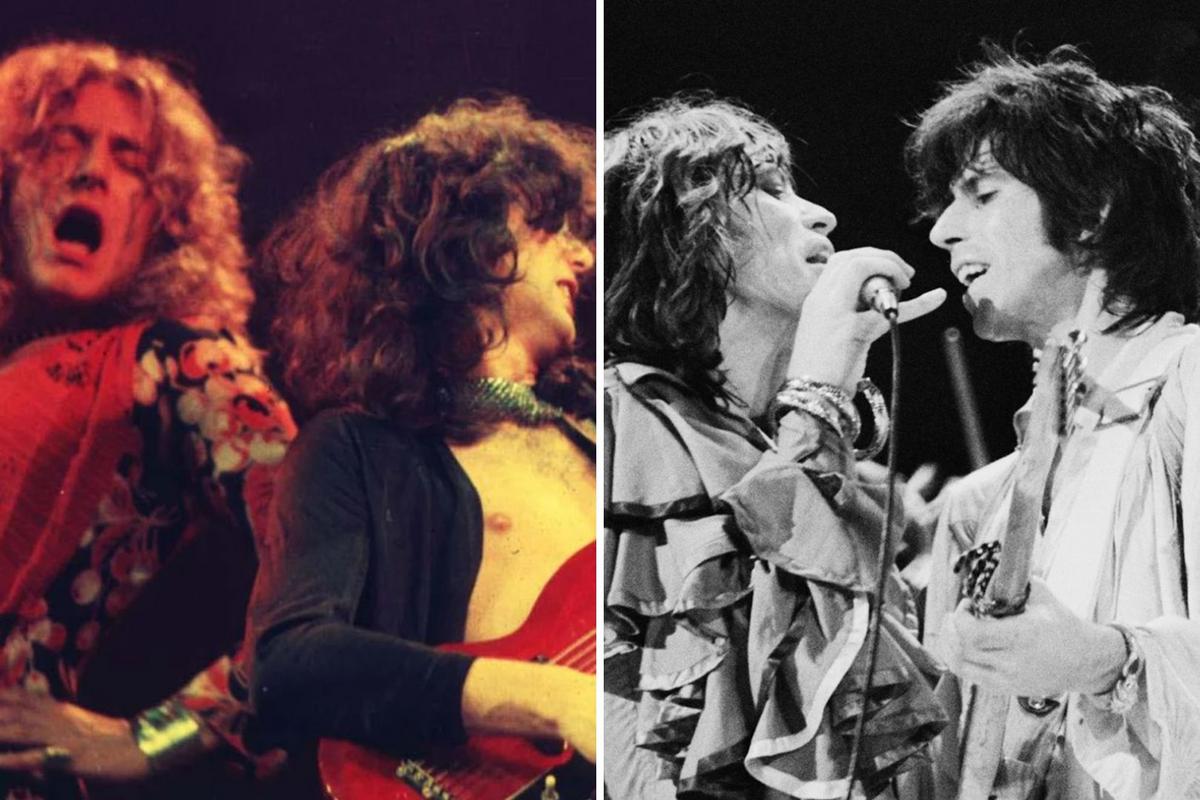
Led Zeppelin

Just as the Beatles soundtracked the ’60s, Led Zeppelin was the definitive rock band of the ’70s. They pushed the boundaries of heavy, guitar-driven music, repurposing decades-old blues staples into titanic long-form jams and muscular stadium-rock anthems. They dabbled in folk, psychedelia, country, funk, reggae and more, writing and rewriting the hard rock playbook with each successive album.
Ironically, shortsighted critics considered Led Zeppelin dead in the water at the beginning of the ’70s. Following their instant-classic debut and gargantuan sophomore album, the acoustic and folk excursions of Led Zeppelin III were seen as a misguided blunder. (History has vindicated the album.) But all doomsday proclamations were promptly swallowed with the release of the band’s untitled fourth album, colloquially known as Led Zeppelin IV. “Black Dog,” “Rock and Roll” and “When the Levee Breaks” live in the pantheon of hard rock classics, while the epochal “Stairway to Heaven” became one of the most requested songs in radio history despite never being released as a single. With over 24 million U.S. sales, Led Zeppelin IV‘s legacy is unimpeachable.
And it was far from the end. Houses of the Holy and the double album Physical Graffiti sold like hotcakes and found Led Zeppelin traversing exciting new sonic terrain. Simultaneously, they became the biggest live band in the world. The beleaguered Presence yielded one of their greatest epics in “Achilles Last Stand,” while 1979’s In Through the Out Door almost single-handedly revived the floundering U.S. record industry.
The untimely death of drummer John Bonham in 1980 cut Led Zeppelin’s career tragically short. Save for a few one-off performances, they wisely never reunited. Some fans will always wonder what they would have achieved in the ’80s and beyond. Instead, they’ll have to content themselves with a decade- and genre-defining run that’s never been repeated.
Pink Floyd
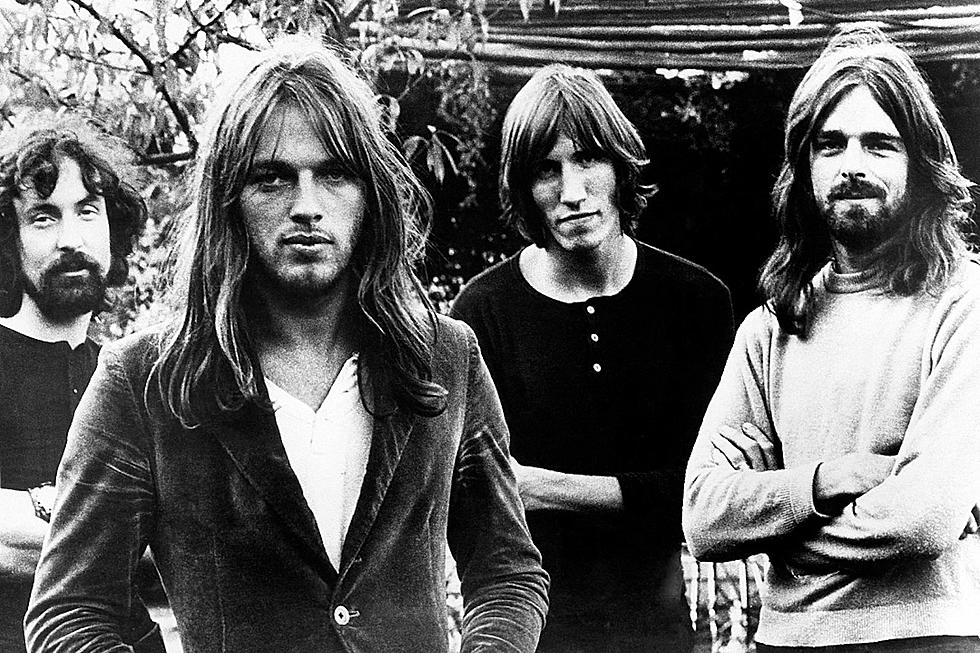
Progressive rock bands were bountiful in the ’70s, but none of them came close to the commercial success of Pink Floyd.
After years of toiling, the British rockers struck gold (and platinum, and diamond) with their eighth album, 1973’s The Dark Side of the Moon. The LP sold more than 15 copies in the United States and an estimated 45 million worldwide, and it’s the longest-running album on the Billboard 200 ever. But Dark Side‘s commercial achievements hardly tell its whole story. The heady quasi-concept album addresses the toils of being in a band and the mental health struggles of former bandleader Syd Barrett, mixing esoteric art-rock with catchy hit singles. It was a revelation then and remains so today.
The Dark Side of the Moon kicked off a nearly unprecedented hot streak for Pink Floyd that lasted through the end of the decade. Wish You Were Here and Animals were sprawling, uncompromising, multi-platinum triumphs that found the band shattering the expectations set by their 1973 opus. Their ’70s run culminated with 1979’s The Wall, a double-album rock opera featuring some of their biggest and best songs, including “Comfortably Numb,” “Hey You,” “Mother” and the chart-topping “Another Brick in the Wall, Part 2.”
By the end of the 20th century, The Wall was certified by 23-times platinum by the RIAA, making it the bestselling double album in history. Pink Floyd eked out more album, 1983’s The Final Cut, before Roger Waters left the band. A Momentary Lapse of Reason and The Division Bell sold handsomely, but they were mere reminders of Pink Floyd’s dizzying ’70s reign.
The Rolling Stones

The Rolling Stones were in the middle of arguably the greatest four-album run in rock history at the dawn of the ’70s. Hot off the boundary-pushing Beggars Banquet and Let It Bleed, the Stones traipsed boldly into the new decade with Sticky Fingers, a cocksure record full of sizzling riffs and hip-swiveling grooves. A No. 1 single in the form of “Brown Sugar” didn’t hurt either.
Sticky Fingers‘ long-form blues jams and tender ballads foreshadowed Exile on Main St., a sprawling double LP that augmented the Stones’ signature raunch-rock boogie with elements of country, gospel music and their deepest Delta blues influences yet. It was a staggering artistic triumph made even more impressive by the circumstances of its creation, as the band was mired in addiction and interpersonal dysfunction.
After Exile, the Stones stumbled. Goats Head Soup, It’s Only Rock ‘n Roll and Black and Blue found the band running on fumes, yet still propelled by hit singles and massively successful tours. 1978’s Some Girls marked a return to form, revitalizing the group’s sound for the punk and disco eras. The latter influence was abundant on the chart-topping “Miss You,” which became one of the Stones’ all-time biggest hits and set them up to conquer the ’80s — or at least survive them.
Dive deeper into the decade with the Top 100 Rock Albums of the ’70s:
Top 100 Albums of the ’70s
The decade where music hit its groove.
Gallery Credit: Michael Gallucci




Leave a comment