

(SOUNDBITE OF SONG, “B R E A T H E”)
DUA SALEH: (Singing) Do you feel me…
AILSA CHANG, HOST:
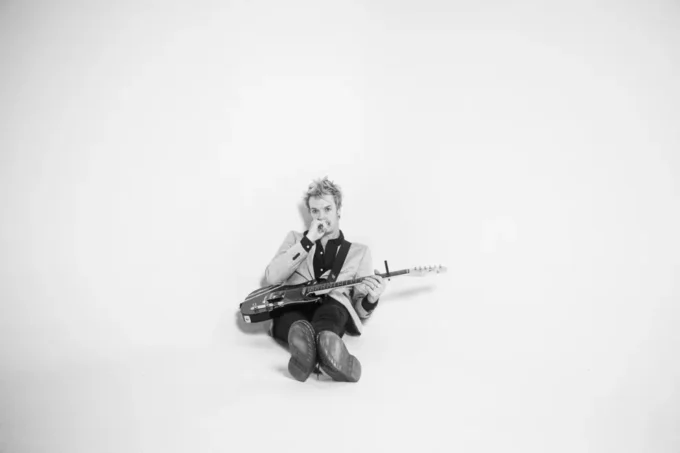
When musician Dua Saleh set out to make an album about a fictional, postapocalyptic world, they didn’t have to look very far for inspiration.
SALEH: I was born into a pool of bloodshed, so it constantly feels like my world is deteriorating before me. It feels like it’s the end of the world to me.
(SOUNDBITE OF SONG, “B R E A T H E”)
SALEH: (Singing) Breathe in and breathe out now. Yeah, we outside. What if I can’t falling through the sky? Are you feeling the air around me? Are you feeling the breeze?
CHANG: Saleh was born in Sudan during a civil war, and early in their childhood, their family fled to Eritrea before eventually settling in the U.S.
SALEH: A lot of Sudani people have just been inundated with just an onslaught of violence throughout their life.
(SOUNDBITE OF SONG, “FLOOD”)
BON IVER: (Singing) Well, you wouldn’t know if it wasn’t water.
CHANG: On their new album called “Of Earth & Wires,” Dua Saleh is grieving for Sudan as the country enters the fourth year of its current civil war. They’re also grieving members of their own family who have died during the country’s ongoing conflict.
(SOUNDBITE OF SONG, “FLOOD”)
SALEH: (Singing) …You’ve emerged. Oh, but this grief inside me growlin’ at the Earth.
Losing a grandmother, losing an uncle, and being shot, like, in front of his family at the door because of political affiliation, just because they’re trying to do what’s right – I’m grieving actively right now.
CHANG: I sat down with Dua Saleh at NPR West to talk about channeling that grief into music. Their new album follows two fictional lovers navigating life on Earth after the planet’s destruction. It’s a meditation on the meaning of home. And so I asked Saleh, what was it like to try to find a new home in the U.S. when they arrived here at the age of 5?
SALEH: The first place we went to was Fargo, North Dakota. It was, like, very jarring, just witnessing people interact with my mother in a specific way. And my mom is treated and regarded in high regard in Sudan.
CHANG: How did they treat her in Fargo at the beginning?
SALEH: It was basically, go home, N-word. You know what I mean? Like, the monkey stuff or – it was just, like, strange.
CHANG: Wow.
SALEH: Catcalling, too – we all felt what was going on, and so – I don’t know – she decided to move. She’s just like, oh, no, we’re not going to be here (ph).
CHANG: And that’s when your family decided to go to Minnesota?
SALEH: Yeah. I moved probably, like, 17 times, not because of military family but just because of, like, personal things that were happening in my family. So…
CHANG: Well, being someone who has moved so many times early on in life, how did that shape the way you think of home as an idea? What is home to you? What does that represent to you then?
SALEH: Yeah. I mean, home is this beautiful Earth. This is, like, Mother Gaea. You know what I mean? A lot of the album, you know, talking about this queer love, is influenced by divine feminine or influenced by, like, how I perceive the Earth as a sacred – you know, like, and she offers us water. You know what I mean? That’s sustenance. That’s life. She offers us the air in our lungs.
(SOUNDBITE OF SONG, “FLOOD”)
SALEH: (Singing) You caught the flood.
IVER: (Singing) Well, you wouldn’t know if it wasn’t water.
CHANG: You know, I have heard your music described as shape-shifting. I hear R&B. I hear electronic, and there are bits of Sudanese music, too, right?
SALEH: Yeah.
CHANG: Tell me about some of your influences musically. Like, how you brought all of those influences together into a unique sound.
SALEH: Yeah. When I was younger, my mother used to play a lot of Sudani music, just blasting the satellite TV, like, DISH TV channel for Sudan. So I heard a lot of traditional, like, Sudani music or folk music, some of it operatic, and some of it orchestral.
(SOUNDBITE OF MUSIC)
UNIDENTIFIED MUSICAL ARTIST: (Singing in non-English language).
SALEH: So I wanted to bring in – usher in the sound that, like, my mother kind of guided me into listening to when I was younger. So we brought in Malik, who is an oud player.
CHANG: And for people who don’t know oud is – it’s a stringed instrument kind of like a lute.
SALEH: Yeah, exactly that. And he played, like, beautifully, like, for hours, and Billy Lemos, the executive producer of the project, extracted the sound and used the strings in “I Do, I Do”…
(SOUNDBITE OF SONG, “I DO, I DO”)
SALEH: (Singing) Didn’t you know? Ain’t no cure for the sun. So let it beat down on you.
…Which is also a song that is culturally related to Sudan because of the colloquialisms, like, Sudanese colloquialisms that I’ve added to the song, just overall.
(SOUNDBITE OF SONG, “I DO, I DO”)
SALEH: (Singing) He who makes some poison licks their fingers.
I also brought in a young Sudani woman named Gaidaa. I needed that kind of energy, grounding energy, that kind of cathartic vibe that Gaidaa brought in. It was just like, pure Sudani soul in a way.
(SOUNDBITE OF SONG, “I DO, I DO”)
SALEH: (Singing) I don’t peg you as the type to ever forget. But I know I grind…
CHANG: It’s so funny. You and I have been talking for several minutes now, and I can just tell how your brain shoots into so many different directions when I ask you a question. Like, your brain is constantly working on overdrive. And then I saw on the press release for this album that one of your challenges is how to rein in overflowing ideas.
SALEH: Yeah.
CHANG: I want to hear more about that. Like, when you’re making new music, when do you have to say to yourself, OK, you’re doing too much – save this idea right now for the next album; do not do this now? Like, how do you know where to draw the line?
SALEH: Yeah, I’m not greedy with songs. It’s always, like, nice to make new music for me. So it’s always good to just create and create and create because it makes you better. Like, whenever I’m, like, being forced to be in the studio, it’s like, two sessions a day, three sessions a day, which is insane. It’s just, like, a lot, like, of thinking. It’s a lot of thinking. But I feel like that’s when I’m at my best.
CHANG: When you’re in overdrive, when you’re thinking intensely?
SALEH: I think so because I have so – I’m such a ball of energy that if I…
CHANG: Yeah.
SALEH: …Don’t do that – like, I literally – for this album, I wrote a book. I have a book written at home that I’m, like, editing and processing.
CHANG: Really?
SALEH: But it’s just, like, a personal book. It’s a poetry book. It’s about Afrofuturism.
CHANG: So making music, the process of it, spawns all these other creative stories and pursuits.
SALEH: It’s helpful. They’re in flow state together, if that makes sense. The first song, “5 Days,” actually, I wouldn’t have been able to do kind of the hyper-pop screamo vibes that they have.
(SOUNDBITE OF SONG, “5 DAYS”)
SALEH: (Singing) …Tryna beg. I ain’t coming back. I ain’t falling for it.
I was writing poetry, kind of feeling in my feelings about, like, some gay stuff. I don’t know. And then I was like, this actually makes sense for me to pour into the song. There’s something that’s kind of missing out of it. And what was missing was rage (laughter), so anger, rage, grief – you know what I mean? – all these things that are so petrifying sometimes. I feel like you need some of that to encapsulate what actual divine feminine is, what the Earth is. And she’s angry, honey. So…
CHANG: She’s angry, honey.
SALEH: I know.
(SOUNDBITE OF SONG, “5 DAYS”)
SALEH: (Singing) Been five days since I saw you lately.
CHANG: Dua Saleh – their new album is called “Of Earth & Wires.” Thank you so much for coming in to NPR West and talking to me.
SALEH: Thank you. I really appreciate being here.
(SOUNDBITE OF SONG, “5 DAYS”)
SALEH: (Singing) Been a while since I touched your face. Hazy as it is, just a couple days, just a couple hours – feels too real. Even if here…
Copyright © 2026 NPR. All rights reserved. Visit our website terms of use and permissions pages at www.npr.org for further information.
Accuracy and availability of NPR transcripts may vary. Transcript text may be revised to correct errors or match updates to audio. Audio on npr.org may be edited after its original broadcast or publication. The authoritative record of NPR’s programming is the audio record.



Leave a comment