

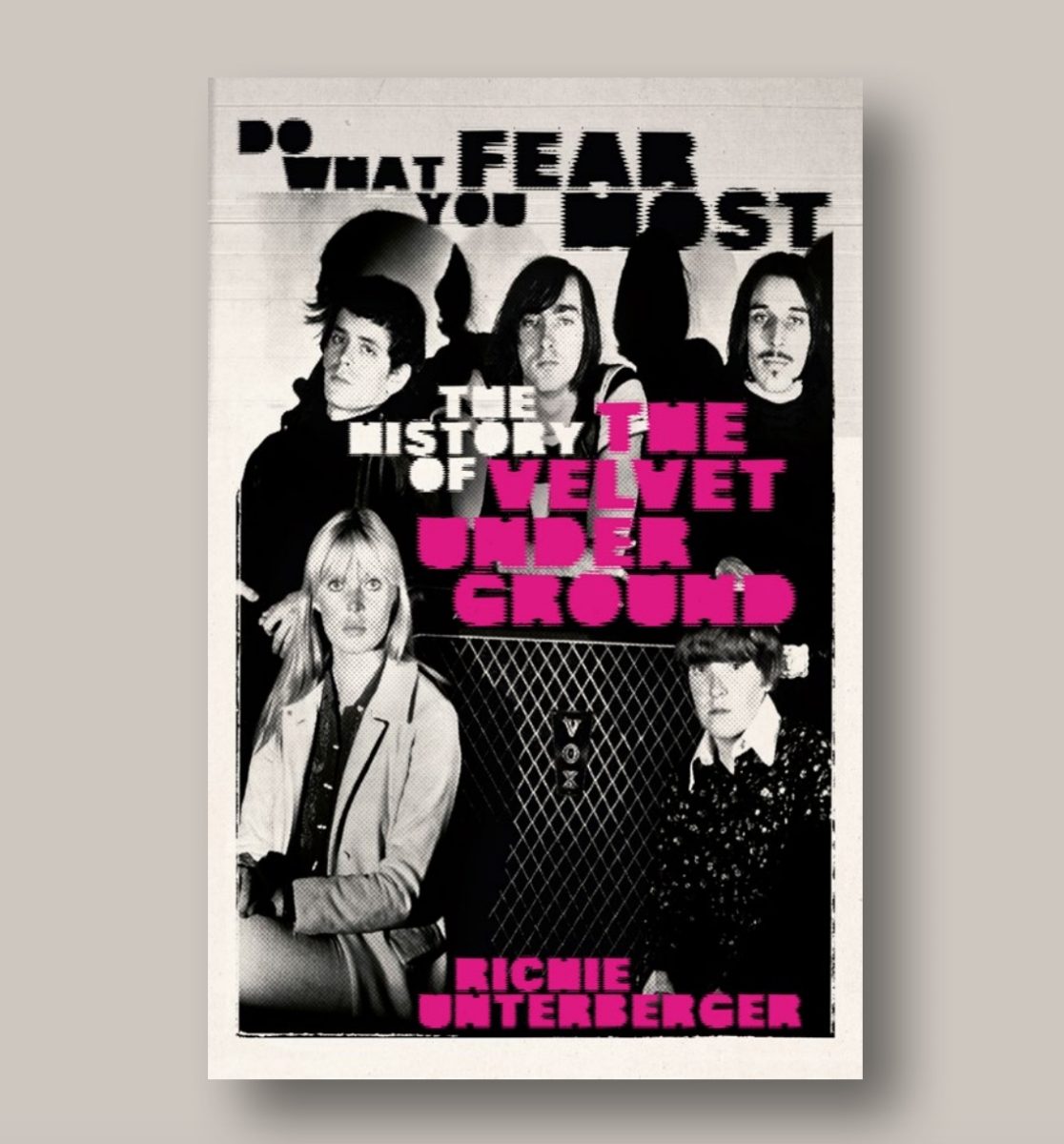
 Do What You Fear Most: The History of The Velvet Underground by Richie Unterberger
Published by Omnibus Press
Release date: 14th May 2026 (Buy it here)
With Do What You Fear Most, rock historian Richie Unterberger attempts something ambitious: not a straight batted retell of the Velvet Underground’s rambunctious story, but an unthreading and untangling of the myths that have grown like weeds over the bands history over the last 50 years. The result is a substantial, deeply researched history that manages to feel both authoritative and refreshingly grounded.
Some bands seem to exist simultaneously as fact and myth. Few occupy that strange cultural space more completely than The Velvet Underground. Their story has been told so many times that the mythology is almost inseparable from the music: the misunderstood art-rock pioneers who sold no records but influenced everyone, the house band of Andy Warhol’s Factory, the group that introduced taboo subjects into rock with fearless abandon.
Right from the off, the author lays out their central mission for the book. The Velvet Underground’s influence is undeniable, but the myths surrounding them often obscure the truth. As he notes, “too many mini-myths have sprung up around the band that, if enhancing their mystique, are too often misleading and sometimes inaccurate”. The book aims to set the record straight, drawing on years of interviews, archival research and press coverage. This approach immediately gives the book a sense of weight. Rather than leaning on well-worn anecdotes, Unterberger reconstructs the band’s history through the voices of those who were actually there. It makes the story feel less like a legend and more like a complicated, messy reality.
The early chapters chart the separate paths of Lou Reed and John Cale before their eventual collaboration. Reed’s background in songwriting and the New York music industry contrasts sharply with Cale’s avant-garde training and classical influences. When the two finally meet, the clash of sensibilities becomes the spark that drives the band’s earliest work.
What the book does particularly well here is show how unlikely the Velvet Underground were from the start. Reed wanted to write brutally honest songs about urban life, drugs and sexuality; Cale was interested in pushing sound itself into new territory. That combination produced something entirely different from the psychedelic pop dominating the mid-1960s.
Warhol encouraged Reed’s songwriting and reinforced the band’s uncompromising approach. He “gave the group enormous artistic encouragement, helping instil the courage to be uncompromising at a time when their vision was hardly in vogue”. In other words, Warhol’s influence wasn’t all about the aesthetic; it helped legitimise the band’s refusal to compromise.
That refusal is evident throughout the book’s depiction of their early live performances. The Velvets were hardly the sort of act designed to win over casual club audiences. One memorable story recounts their brief stint at Café Bizarre, where they played for little money and little appreciation. Reed later recalled earning just five dollars a night plus “a hamburger and a milk,” adding that the band ate so much that the club eventually rationed the food.
Needless to say, the relationship didn’t last long. After the club owner warned them not to play the abrasive Black Angel’s Death Song again, the band promptly opened their next set with it. As guitarist Sterling Morrison remembered, “if we played ‘Black Angel’s Death Song’ one more time, we were fired. So we led off the next set with it”. Unsurprisingly, it was their final night at the venue. Moments like these highlight what made the Velvet Underground so compelling: a stubborn commitment to doing things their own way, even when it made commercial success almost impossible.
One of the book’s most valuable contributions is its effort to challenge the long-standing myth that the band were completely ignored in their own time. While they certainly weren’t chart stars, the idea that they played to empty rooms and sold only a handful of records is exaggerated. The band did build a dedicated following during the late 1960s. Guitarist Sterling Morrison even insisted years later, “We actually did have an audience, though we never did have airplay”. The distinction is important. They weren’t invisible, but they did exist outside the mainstream music industry’s mechanisms. Much to their benefit in the eyes of history.
The book also carefully explores the tensions within the band itself, particularly between Reed and Cale. Their partnership produced some of the most adventurous music of the era, but it was never easy. Cale later reflected that their creative relationship had become strained: “We weren’t working on the songs…the product wasn’t interesting, and it wasn’t satisfactory to Lou or me”. When Reed eventually pushed Cale out of the band, it marked a turning point. Many critics have treated that moment as the beginning of the end, but Unterberger takes a more balanced view.
The post-Cale version of the band produced more melodic work that some fans consider their finest. In fact, the author points out that the third Velvet Underground album is often regarded as a masterpiece in its own right. By approaching the band’s history with this kind of measured perspective, Unterberger avoids the trap of turning every internal conflict into a bigger narrative of their decline. Instead, he presents the Velvet Underground as what they really were: a group of highly creative individuals navigating the pressures of art, ego and survival.
Another strength of the book is the way it situates the Velvet Underground within the broader musical landscape of the late 1960s. They were often portrayed as outsiders, but they were still part of a vibrant network of musicians and scenes. The band’s influence on contemporaries becomes clear through anecdotes and small details scattered throughout the narrative. For example, the book reminds us that major artists were paying attention to the Velvets even if the charts were not. Figures such as Leonard Cohen and Jimi Hendrix admired their work, while bands like The Yardbirds even covered their songs (I’m Waiting For the Man, 1968). These connections complicate the familiar image of the Velvet Underground as completely isolated pioneers.
Of course, the story ultimately leads to the band’s dissolution. Reed’s decision to leave in 1970 effectively ended the classic Velvet Underground era, though various line-ups continued for a few years afterwards. As with much of the band’s history, the breakup was less dramatic than later retellings might suggest. At the time, it barely registered in the music press. Looking back now, however, it’s clear that the Velvet Underground’s legacy has only grown stronger. Their music has been endlessly rediscovered by new generations of listeners, critics and musicians. What once seemed too strange or abrasive for mainstream success now sounds prophetic and lightyears’ ahead of their time.
Unterberger captures this irony perfectly when discussing the band’s later recognition. Albums that once struggled to find buyers now sit comfortably near the top of “greatest records” lists, and their catalogue has sold millions of copies worldwide. The cult that once surrounded them has effectively become part of the rock canon. For readers already familiar with the Velvet Underground story, Do What You Fear Most offers something valuable: depth and nuances. It doesn’t just repeat the usual highlights but digs into the details, contradictions and lesser-known episodes that shaped the band’s trajectory. More importantly, it restores a sense of human reality to a group that has often been mythologised beyond recognition. Behind the iconic imagery and legendary songs were musicians dealing with creative disagreements, financial struggles and the constant challenge of staying true to their vision.
It’s easy to see why generation after generation of musicians return to this band. From punk and post-punk to indie and noise rock, the Velvet Underground cast a long shadow across decades of alternative music.
In the end, the book succeeds precisely because it respects the complexity of its subject. The Velvet Underground were never just one thing: not just avant-garde experimenters, not just cult heroes, not just Warhol protégés. They were all of those things at different times. And perhaps that’s why their story remains so compelling. Even after decades of retellings, there are still new angles to explore and old assumptions to question.
With Do What You Fear Most, Richie Unterberger has produced one of the most detailed and thoughtful histories yet written about the band. For anyone interested in the strange, fascinating journey of the Velvet Underground, it’s essential reading.
~
Words by Thomas Sidwell, his author profile is here:
A Plea From Louder Than War
Louder Than War is run by a small but dedicated independent team, and we rely on the small amount of money we generate to keep the site running smoothly. Any money we do get is not lining the pockets of oligarchs or mad-cap billionaires dictating what our journalists are allowed to think and write, or hungry shareholders. We know times are tough, and we want to continue bringing you news on the most interesting releases, the latest gigs and anything else that tickles our fancy. We are not driven by profit, just pure enthusiasm for a scene that each and every one of us is passionate about.
To us, music and culture are eveything, without them, our very souls shrivel and die. We do not charge artists for the exposure we give them and to many, what we do is absolutely vital. Subscribing to one of our paid tiers takes just a minute, and each sign-up makes a huge impact, helping to keep the flame of independent music burning! Please click the button below to help.
John Robb – Editor in Chief
PLEASE SUBSCRIBE TO LTW





Leave a comment