

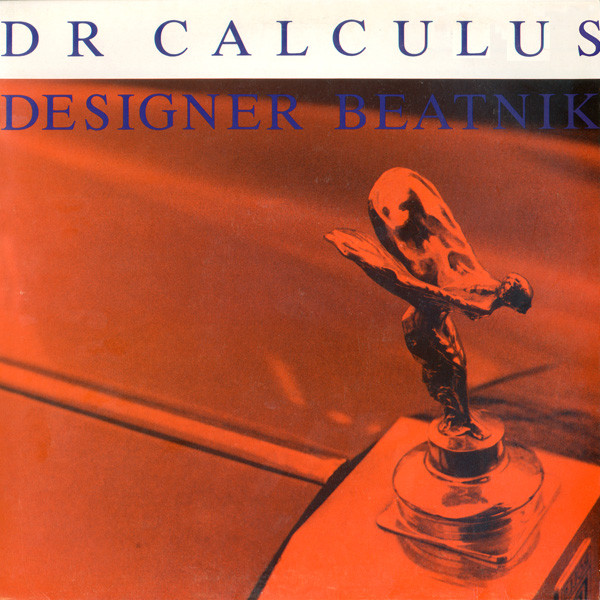
In an ongoing series looking at albums that have seemingly disappeared off the critical radar, Martin Gray revisits the curious one-off project from the intriguing collective that went under the name Dr. Calculus, and their sole album of 1986, Designer Beatnik.
Who was Dr. Calculus?
Dr. Calculus mdma – to give it its full name – was a short-lived mid-80s venture founded by Stephen Duffy, who fleetingly enjoyed a couple of big chart hits in 1985 under the Stephen ‘Tin Tin’ Duffy soubriquet (Kiss Me, Icing On The Cake) but later became better known as the main man behind the acoustic country folk rock combo The Lilac Time: that most under-rated of bands who garnered respectable critical acclaim for the main part and who have since released a slew of albums on and off between 1987 and 2023 but who have sadly never really enjoyed any real magnitude of commercial success.
Featuring Duffy and his then partner-in-crime, trombonist Roger Freeman (formerly of the seminal post-punk funk/jazz collective Pigbag), Dr. Calculus took a wildly divergent and experimental path, one that baffled and intrigued many, creating a strange disorientating brew of beatbox dance rhythms coupled with unruly trombone fanfares, sampled TV voices and all manner of weird noises. The group name Dr. Calculus was yet another knowing nod to Herge’s iconic Tintin storybook character Professor Calculus, despite Duffy confessing that he didn’t possess any partiality to either (‘It just seemed a fun name to adopt for what we were doing’).
Dr. Calculus may be the brainchild of core conspirators Duffy and Freeman with artistic assistance from Stephen’s brother Nick (responsible for the album art and photography) as well as engineer and fellow co-producer Paul Staveley O’Duffy, but also featured on the album were a multitude of guest musicians and collaborators, a couple of further Pigbag ex-pats (Chris Lee on trumpet and Olly Moore on tenor/baritone saxes), together with various female fashion models and contributors who swung by to add spoken word sections or recount some bizarre passages in a foreign language, usually French.
With the array of studio equipment that was available then: DX7 synth, Juno 60, Roland Jupiter, Emulator Fairlight, Linn Drum, etc, the resultant album clearly sounds of its time. But what makes this recording so out of step with everything before it and immediately surrounding it at the time of its release in 1986 is its playfully chaotic ad hoc approach utilising a grab bag of seemingly disparate ideas all thrown together randomly into an eclectic mix-and-match of clashing styles. Paradoxically, that was exactly what made the recording sound fresh and innovative, as sampling technology had still yet to make much of an impact.
Of all the mid-1980s artists that used film dialogue and incongruous samples to form integral components to their music, only Colourbox had already forged their own distinctive path at this point in time. The Art Of Noise, arguably, could be regarded as the only other contemporary to Dr. Calculus – with their beat-box and sampling / Fairlight-heavy productions (that act’s J.J. Jeczalik previously remixed Stephen Tin Tin Duffy’s Kiss Me single which finally breached the top 10) pre-dating by two years. But, aside from those two, Designer Beatnik by Dr. Calculus remained a pretty unique and distinctive beast.
Going vehemently against the ‘Pop’ grain
According to the creators, Dr. Calculus was fully intended as a bit of a playful diversion, without even seeking permission from their record company (Virgin): they just went ahead regardless. Its rambunctiously schizoid sprawl comes across like the musical equivalent of a crazy hallucinogenic trip (tellingly, the duo’s imbibing of the recreational drug ecstasy only came after the album’s recording, and not during it!).
Furthermore, Duffy and Freeman cared little about how this foray into far more wildly esoteric terrain would go down with the radio pluggers and indeed the general public, adamant that they were going to pursue this project irrespective of what the critical reception would be, such was their audacity and irrepressible sense of total creative freedom. Dr. Calculus was going to be a purely stand-alone entity, one that would be based on unshackling the rigid straitjacket of pop sensibilities in favour of something more riotously colourful and unpredictable.
After all, Freeman’s previous band Pigbag were the ultimate square pegs in round holes. That seven (or eight) piece sprawling post-punk collective defied all pigeonholing to do whatever the hell they pleased, singular in their mission to sidestep any genres that they may have ended up being lumped in with. For example, scoring one massive fluke chart/dancefloor hit Papa’s Got A Brand New Pigbag may have initiated a so-called tribal-jazz-punk-funk trend among imitators, but their next recordings flirted with completely different ethnic styles such as calypso and Afrobeat to deliberately wrong foot the public expecting more of the same.
Thus was the modus operandi by which Dr. Calculus adhered to, and the end results were surprisingly refreshing because nothing like this recording has ever been heard since. It really is a true one-off freak of nature that retrospectively is often seen as the first ever album that fused programmed electronics and dance beats with ethnic and ambient sounds – both urban and rural, random TV film and cartoon samples and even rapping (yes, KLF and The Orb, we’re talking about you!). For that alone, it can be argued that Duffy and Freeman had subconsciously created something that was so ahead of its time that very few realised it back then.
Designer Beatnik effectively pre-figured the arrival of (acid) house music, despite none of the actual dance-influenced tracks on the album coming across remotely like the typical 4/4 house rhythms that later became so widespread (there was a complete absence of the soon familiar and signature TR-808 beats for a start). Perhaps ’embryonic proto-house-cum- ambient’ would be closer to the mark, but even that unwieldly phrase still doesn’t accurately reflect the sheer idiosyncratic peculiarity of much of it.
Critical Indifference vs Artistic Bravery?
Reviews from many of the music papers and magazines at the time of Designer Beatnik’s release were mostly mixed and lukewarm. Very few of them enthused about – or were overly convinced – that what they were listening to was indeed the sound of the future. Put simply, many critics just didn’t know what to make of it. Many dismissed the album – and Dr. Calculus – as self indulgent incoherent twaddle and not worth repeated listens. How wrong they were! Maybe they were too blindly in thrall to all of the big widescreen be-mulleted stadium rock that was so ubiquitous at that time (without naming any of the main culprits).
This writer first came across the album on cassette tape in the cheap bins at Newcastle upon Tyne’s HMV Store in 1986, three months after its release, reduced to a SALE price of just £1.99 for good measure. I couldn’t possibly refuse, so I picked it up (along with Kraftwerk’s also criminally undervalued Electric Cafe cassette album for only £2.99. A double bargain!). And as things would transpire it ended up being one of my most played tapes ever, such that I nearly wore it out from repeated listening. Now 40 years later original UK issue cassette copies of Designer Beatnik are as rare as rocking horse shit and I feel truly vindicated. The album has yet to be reissued in any physical format since.
Accentuating the album’s sheer genre-defying eclectism, all eleven tracks are segued together into a continuous suite that explores wildly contrasting sonic territories. Rather like taking a walk from one end of the city to the other, you’d be met with a jumble of sound systems blaring out some dance music, then the sound of honking car horns and the noise from passing trains, followed by a respite of relative peace and quiet as you amble through a park – ambient birdsong or whatever. Then once back on the streets be ambushed by yet more music from a different place emanating from another house, followed by somebody’s television throwing out some crazy film dialogue or wild cartoon chase scenes, then the sounds of more random voices talking incoherently, or an Italian couple having an argument in full earshot of their neighbours, then even more music….and so on.
Coming across like the brave new sound of London in some ways, Designer Beatnik really is a gloriously multi-faceted and mind-bending musical travelogue of pan-global aural delights, and it’s all distilled into one brilliantly offbeat and disorientating whole.
The album : track-by-track
Kicking off with some ethnic wailing and a boisterous metallic-sounding snare drum salvo (played and treated in the studio using some unorthodox recording filtering techniques), we hit the ground running with the aptly titled opener Blasted With Ecstasy – an impossibly infectious bass synth-and-trombone-driven romp, set to an almost Afrobeat rhythm, with a repeated deadpan spoken refrain from one of the guest female ‘vocalists’ (curiously, any actual singing is virtually absent from this album, bar the final closing track – of which more later). The snare drum sound is particularly noteworthy because – in Stephen Duffy’s words – it was later deployed on Swing Out Sister’s debut smash hit Breakout which followed just months later (Staveley O’Duffy was also the producer so that explains it!).
Even more intriguingly, the album’s accompanying inner sleeve transcribes literally every single little spoken word sample and random bit of dialogue, along with what surreal stream of consciousness lyrics there are written for the tracks that feature them*. Perusing it whilst the music plays provides a seriously amusing headfuck of sorts!
*A fair number of the words are actually quoted from various French writers and poets, as well as Shakespeare…but all cut up and juxtaposed as to render them out of context. This also accounts for why Duffy opted for contributors who were either French or spoke in Gallic accents! ‘It’s our attempt at French New Wave!’, as he once proudly boasted.
As Blasted With Ecstasy concludes with a grand-standing brass fanfare, we hear a voice: ‘We continue this block transmission with Programme 7‘ and we’re straight into the second track titled, yup, Programme 7 – the first Dr. Calculus single of 1984, given a bit of a brush up and included here. It follows a similarly off-kilter path to its predecessor but with an even more surreal kick: its massed horns all parping in unison make it resemble a modern Pigbag track (hardly surprising there then!) playing along to Linn Drum beats, with mirth-inducing wordless exclamations and totally meaningless non-sequiturs from guesting female voices which are then sampled repeatedly for comic effect. It’s wonderfully bonkers and only makes sense when you’re presumably off your face on some sort of stimulant or other!
At its end (‘And Radio 4 is now closing down…’) the wordless exclamations burst in again as a sort of surreal punchline before the album completely changes course and in fades a gorgeous synthesised orchestral passage that sounds like it’s shimmering in the heat haze in the distance as it drifts in and out, wow and flutter-like. This is track three: Moments Of Being (Interlude) and lasts just over a minute, providing some welcome respite from the preceding beatbox insanity. Its dreamy pastoral ambience evokes images of a late evening soujourn in the city park lounging by the lake, watching the sun setting.
This track, and its accompanying sequel – track five, Moments of Being (Reprisal) – feature the same orchestral sample which was actually taken from the closing track (Julie Christie) on Stephen Duffy’s second album Because We Love You (1986). It was simply isolated and reversed, thus forming a suitably blissful aural backdrop to the dialogue which features on the Reprisal version: that of Roger Freeman and a fashion model (Caroline Dodd) having an impromptu conversation about the tedium that often comes with having to wait around interminably to strike poses for photo shoots (‘No…it’s boring enough as it is, I don’t need to get myself drunk!’).
Both versions sound beautifully idyllic and serve as ethereal bookends to the fourth track that sits right in between: Killed By Poetry, which itself is another brash foray onto the dance floor, with staccato drum machine beats, sequenced bass, waywardly squiggly piano / keyboard fills and, of course, more rousing trombone capers. Stuttering cut-up samples repeating the title, and further cod-French accents intrude intermittently: ‘Les enfants, c’est le break de Dr. Calculus! Qui est le premier homme? Le Docteur Calculus!….OK mes enfants, go to bed!!‘.
Side one’s closer, Man, which hooks itself onto the fading strains of Moments of Being (Reprise), is a complete high tempo riot by comparison: an unhinged rampage of relentless Linn Drum machine gun fills, a repeated four-note ascending sequencer motif and smatterings of crazy demented jazzy piano runs and stabs, overlaid with all manner of mad voices taken from films (Japanese TV apparently) uttering words completely at random whilst total mayhem rages on in the background. It evokes images of a Keystone Cops-type chase scene stampeding through a house with all the pandemonium that entails. Squawking, honking and screeching sax and brass merely add the icing to this preposterous cake (pun intended!).
Listen to the whole of Designer Beatnik (including bonus alternate mixes) on YouTube:
Side two is just as out there and audacious. Dream Machine opens with the muted sound of children’s voices, footsteps walking on gravel and distant steel pans that briefly create a sense of ambience before an ominous ascending orchestral rumble comes in only to abruptly crash and yield to more ambient sounds and a lone trumpet. It then promptly shifts into a strident dance track with the same treated snare and bass synth sound as heard on the album opener replete with cowbell and the usual trumpets and trombones. This time there’s a strange monologue spoken in a deadpan voice by another female guest : ‘Get into my dream machine, and make me come / get into my dream machine and go faster, faster, faster!‘ The rest of the random phrases make no real sense whatsoever. It’s as if the vocals exist in a totally different space/time continuum to the actual music, and that’s what makes it all so offbeat and compellingly oddball!
The track then spills into the next one via some disquieting atonal crashes. Candy Floss Pink is the weirdest and most fractured ambient piece on here, filled with all kinds of incongruous speaker-panning noises: passing trains, revving car engines, detuned bells, a lonesome sax playing improvised notes, people shouting, deep synthesised wobble-board effects, crunching glass, occasional rumbles and disquieting spaceship whooshes (it’s worth listening to all this on headphones). The track’s disembodied womb-music feel and total lack of any discernible rhythm or beat clearly pre-empts the sort of free-floating spaced-out sonic adventures that The Orb and KLF would undertake just a few years later.
After three minutes of this and we’re straight into track nine, Just Another Honey – another expertly deranged dance track that combines random female spoken phrases (‘Here is someone I can trust! … We’re flying through space! / The Universe has control … We gotta get on down / Go-go dancing’) with a bolshy beat-box groove topped with synth chimes, more cowbell, Pigbag chorus horns which practically hint at singing the title, cut-up voice samples (‘Hello honey, I’m home!‘), and even salsa-influenced brass and a twin bass attack (both sequenced and fretless) before a demented breakdown of sampled clattering chaos from 1:50 that sounds like a clockmaker’s factory being ransacked.
The dance beats once again drop out of view to make way for the beautiful languid bliss-out of the title track – featuring nothing but kalimba, tongue drums and other African percussion, finger cymbals, hand bells and the sounds of lonely plaintive trumpets playing an airy motif (occasionally rendered fractured with some studio panning and filtering effects). The sounds of laughing and giggling also weave themselves in and out of the mix, creating an impression of accidentally wandering through a rural village.
Almost everything that is most kooky about this album is inevitably saved for the finale – Perfume From Spain. Released previously as the second single just before the album’s arrival, it ushers itself in among a fusillade of wacky samples filched from international TV stations, with static bursts that punctuate creating the impression of switching channels, before a bass synth riff that – hilariously – recalls Sigue Sigue Sputnik’s Love Missile F1-11 (and just about every other song they released that year) bursts in and we’re off on a dance trip to la-la-land, with hands aloft in the air as the dumb lyrical couplets provided by the female guest make out almost like a rap: ‘Almost every day from San Francisco Bay / I receive a card from the Doctor’s holiday / Wish you were here / The sky’s really clear / The food’s not so hot but a groovy atmosphere‘. And then immediately following this is the chorus where something remarkable happens – the first instance of proper singing on the whole album: ‘Perfume from Spain again / And all I want is eggs for tea!‘**, sung to an exotic eastern siren melody.
With all kinds of shit going on in the background – comic voices, snatches of dialogue of various foreign languages, people shouting, screaming, punches, kicks, cartoon ricochets and other sound effects – you’re left wondering when the kitchen sink actually makes its appearance too. Most readily identifiable are some Warner Bros Looney Tunes character voices (Bugs Bunny et al) as well as a cameo from Curly from The Three Stooges. It’s all very over-embellished and goofy as hell but, god damn, it’s nigh on irresistible thanks to the nagging chorus as well as the daft rap which comes in around the two minute mark before everything lurches manically into a series of quick-cut false endings to finish off with.
**The words ‘eggs for tea’ are a thinly-veiled disguise for ‘Ecstasy’ – consider the band name’s suffix at the end: mdma. Then check the image of the album’s front cover – showing an image of the Spirit Of Ecstasy on the bonnet of a Rolls Royce. Everything thus assumes significance!
A couple of years later, in 1988, this same track would be granted a new lease of life and gain a much wider audience when it was re-worked with new lyrics, re-titled Full Of Love and included in the motion picture soundtrack to the John Hughes-directed film She’s Having A Baby released that year.
Very few other albums released in 1986 sounded quite as carefree and wilfully eccentric as this one (whose style and execution recalls a lot of those cut ‘n’ paste / scratch ‘n’ dub TV show idents like those in short-lived ‘yoof’ music/culture programmes at the time such as Channel 4’s Bliss [1985] and Network 7 [1986]), and it’s arguably to Dr. Calculus’ credit that they created something that, whilst virtually ignored and rendered almost obscure thanks to mass public indifference, paved the way for what lay ahead, when judicious sampling and combining obscure eastern influences and other ethnic motifs with dance beats would soon become the new big thing, as countless neo-house and hip hop releases from 1987 onwards would readily attest.
To reiterate then, Designer Beatnik truly is a lost and forgotten treasure. But be forewarned, it’s still very much one of those ‘Marmite’ albums: if you enjoy it, you will probably love it once it sinks its insidious claws into your brain. If you don’t, you will very likely end up loathing it and never want to hear it again. Let’s hope that those who do belatedly (re)discover it fall into the former category.
Dr. Calculus music on Soundcloud
For more on Stephen Duffy’s recollections of recording the album, check this article published last year on the Classic Pop website.
Designer Beatnik reappraisal essay by Martin Gray
All other articles in this series can be found on his profile
A Plea From Louder Than War
Louder Than War is run by a small but dedicated independent team, and we rely on the small amount of money we generate to keep the site running smoothly. Any money we do get is not lining the pockets of oligarchs or mad-cap billionaires dictating what our journalists are allowed to think and write, or hungry shareholders. We know times are tough, and we want to continue bringing you news on the most interesting releases, the latest gigs and anything else that tickles our fancy. We are not driven by profit, just pure enthusiasm for a scene that each and every one of us is passionate about.
To us, music and culture are eveything, without them, our very souls shrivel and die. We do not charge artists for the exposure we give them and to many, what we do is absolutely vital. Subscribing to one of our paid tiers takes just a minute, and each sign-up makes a huge impact, helping to keep the flame of independent music burning! Please click the button below to help.
John Robb – Editor in Chief
PLEASE SUBSCRIBE TO LTW




Leave a comment