
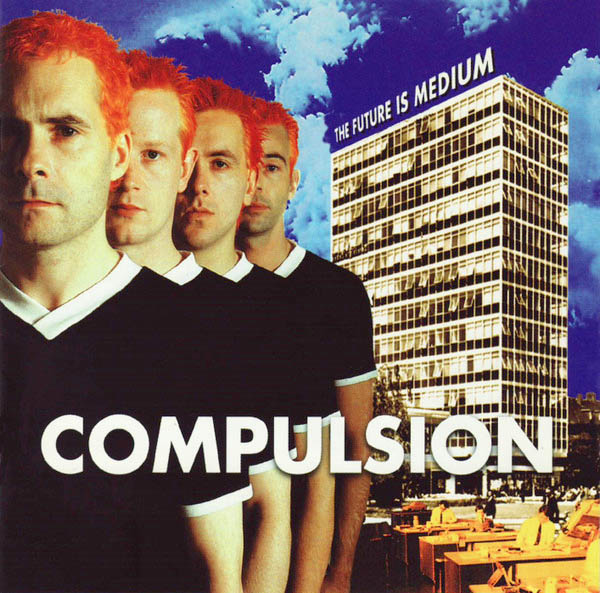
Compulsion: The Future Is Medium
(One Little Indian)
Originally released in 1996 
Martin Gray revisits the blistering second album by London-based Irish/Dutch agit-punk quartet Compulsion, The Future Is Medium, and ponders why it was criminally ignored on release, whilst the rest of the masses chose to large it with tepid lad rockers and opportunistic Britpop bandwagon chasers.
Hindsight can be such a bitch sometimes. In the mid-1990s, among the plethora of incredible albums released by certain artists which embraced some truly innovative new genres and sub-genres, this country chose to take a huge retrograde step backwards and champion some of the drabbest, most derivative and downright conservative guitar-based music around. It all started in earnest in 1994, and peaked the following year in 1995, during one of our all too fleeting (back then still) gloriously long hot summers. The fall out continued to inflect – and infect – a lot of what happened for much of 1996 too. We’re talking about Britpop of course (or Britplop / Britpoop as I used to alternately call it).
Mercifully, not all music critics were as enthusiastic or as hopelessly in thrall to that whole hedonistic circus, most notable among them being one of UK’s most astute and underappreciated writers of his generation – Neil Kulkarni, who sadly passed not too long ago in early 2024 at the tragically young age of 51. Neil made his name mostly writing for the Melody Maker at the time for much of the 1990s but also contributed to many other music magazines, and later regularly wrote for The Guardian as well as online publications The Quietus and Drowned In Sound. His utter disdain and contempt for the short-sighted, jingoistic, narrow minded parochialism of Britpop is well documented, and of course, his caustic put downs totally hit the mark. Just take a look at this masterful demolition of all things ‘lad rock’ – specifically Oasis – from 2021.
Resenting the fact that Britpop was so indefatigably white and contrived, he steadfastly defied the prevailing trend for its blanket coverage and chose to focus on his passion for hip hop, metal and more politically-minded, and thus confrontational and aggressive guitar rock, as well as his enthusiasm for the more intriguing left field and experimental / genre-melding artists of both black and white distinction which were responsible for so much of the mid-1990s’ more fascinating and innovative releases that were also gaining a lot of critical exposure.
I’m almost certain that Neil would have found kindred spirits then, in the uncompromising agit-punk firebrand quartet Compulsion – one of the lesser feted guitar bands of the 1990s and undeservedly so. Originally hailing from Ireland (vocalist Josephmary, guitarist Garret Lee, bassist Sid Rainey) and Netherlands (drummer Jan-Willem Alkema), but London-based, and signed to One Little Indian Records, a couple of the band were former members of Irish garage/psych-punks Thee Amazing Colossal Men. Compulsion’s early releases were often lazily pigeonholed with the New Wave of New Wave or even post-grunge but for whatever reason they never got the recognition that was surely due them – all whilst less exciting bands stole the plaudits and headlines.
Like Kulkarni, the band members of Compulsion openly admitted to vehemently despising everything about Britpop, thus their utter hatred of it pretty much inspired the band’s formation in the first place: to do something far more visceral with guitars instead of trying pathetically to replicate the sound of the Kinks or the Small Faces. This stance entirely fuelled the rancorous anger that informs much of their remarkable second album The Future Is Medium, with the album’s lyrics unrelentingly bleak and darkly satirical in places, wasting little time in taking apart everything to do with what was considered ‘being British’. No wonder it stood barely a chance. Listening back to this album however, it’s clear that it has lost none of its potency and sheer all out attack – and most of all, relevance to the current state of affairs – and if it was released in the last few years it would most likely have been hailed as a deft chronicle of its time. Like I said, hindsight can be such a bitch sometimes.
The Future Is Medium by Compulsion is a gloriously pugnacious record. It’s sheer ‘in-your-face’ delivery and truly visceral production serves as a welcome wet kipper slap rebuke to all those smug insular Cool Britannia acolytes who so relished being in thrall to such an embarrassingly ham-fisted and self-congratulatory conceit. Practically every track on here bristles and rages with a barely restrained sense of pure vitriol and fury that is both gratifying and invigorating. Sad to relate then, that its lack of any appreciable success was just purely down to unfortunate timing, its appearance rendered practically indiscernible under that aforementioned avalanche of risible retrogressive slop.
Compulsion derive great pleasure in drilling and crow-barring their way into your cranium and bludgeoning your brain into a thousand submissive pieces. However, they do it with deft subtlety, as the opener – All We Heard Was A Dull Thud – attests. Its sinuous intro recalls Fugazi : deliberately slow and measured – in fact the whole track owes quite a debt to the stop/start and silent/raging dynamics of DC’s finest. Sure enough, the track soon bursts into life amid some quite incongruous ‘ooh ooh’ harmonies. There’s some delightful intrusions here in the sudden atonal blasts of jagged guitar noise and some of the words likewise hover around schizoid psychosis as witnessed in the refrain: ‘Don’t call me a liar / I know what I said / Set this place on fire / Just make sure you’re dead’. If that’s a thinly veiled metaphor for firebombing the establishment if only to rid ourselves of oppression then count me in!
There’s even a curious lyrical nod to A Day In The Life (‘In Lancashire / How many holes’) in the first stanza of the ensuing track, and first single from the album, Question Time For The Proles which tears along at a more belligerent pace whilst casting glancing blows in all directions at deserving targets (‘Question time for the proles / The lunatics are running free / And no-one knows’). The take-no-prisoners momentum is maintained on second single, Juvenile Scene Detective, another thrilling guitar-lashed punky thrash with an insidiously catchy refrain which will stick in your head for hours afterwards, despite the words once again suggesting more undercurrents of suburban violence: ‘Flesh wound! Got it on Friday night! / No sweat! Look at the other guy!’.
It’s Great – the title of course is ironic – begins uncannily like Pixies’ Gouge Away (and the opening bars indeed do recall the Bostonians) but this is deceptive as it soon begins to pick up velocity as it winds its way to a more frenzied distorted screaming climax before it spills into the next track They’re Breeding The Grey Things Again – another angry tirade which again mocks the 9-to-5 rat race clones and the be-suited elite (‘They’ve got focusing eyes / Transport, moving in pods / Long lines, meeting in towns / Handshakes, deals being done’). There’s some brilliantly obnoxious six string manglings that occur in the middle too, just to ram the point home. If this track was played at a Britpop disco, its sheer venom ad intensity may well cause the place to erupt in flames and its patrons to flee screaming, rather like in the infamous prom scene in seminal 70s horror flick Carrie.
Five tracks in and so far everything has been at fever pitch with its full-tilt angst-filled assault, but it doesn’t stop there: the sixth track Fast Songs ups the ante further and literally ambushes your senses at a comically breakneck speed as its title suggests and it’s all the listener can do to hang on for dear life as the full-on-gonzoid pace rages unabated. Once again Compulsion appropriates the Surfer Rosa blueprint and shoves a rocket up its indignant ass. It’s a splendidly cathartic release of pent up anger and energy.
From track seven (the no less frenetic and incendiary call-and-response ruckus of Western Culture Collector) onwards the album starts veering into more unpredictable terrain after the unrelenting onslaught of the first half. Towards the end, tracks sneakily segue directly into one another and start seesawing between more oblique and abstract interludes (the penultimate sci-fi tinged instrumental Spotlight Into Space) and rousing off-kilter power punk (valedictory album closer Me).
The scuzzy grunge-baiting riffola of Happy Monsters sounds positively conventional by comparison but don’t let that slight dropping of their guard fool you. Lyrically, some themes play out ever more grotesquely as the tracks tick by. For example, the scenes depicted on Belly Laugh are particularly unsettling: ‘Saw a man on TV yesterday / Blown to bits on a street yesterday / And I laughed, and I laughed, and I laughed….Your daddy knows the truth / But he can’t stop laughing.‘*
* Now consider this: in 1996 not many people globally had yet fully embraced the internet – unbelievable as that may sound – because it was still relatively new and wasn’t anywhere near what it subsequently and stealthily grew into. We only had the four channels on terrestrial TV (and Sky TV) to watch all the world’s human atrocities unfolding. But now fast forward 30 years, and gratuitous violence of every conceivable denomination has now become practically a fucking spectator sport. And indeed, some people actually do consider it entertainment. Because that is how shockingly de-sensitised humans have become to it all – thanks to the internet and fucking social media! The words here on Belly Laugh may be bluntly simple, but, hell, they are grim and chillingly prescient in holding up a mirror to what has since transpired.
Is This Efficient Living and Happy Ending break from tradition somewhat by comparison and offer something by way of a slight respite in terms of slower tempos, the latter in particular raises eyebrows with its sardonic non-sequitur of a deliberate lyrical steal from The Police’s Message In A Bottle (‘Another lonely day / No one here but me-o’). Meanwhile, Burst, the rapid-fire punk-pop barrage which immediately follows, is a mere 1:03 in duration – the shortest track on here.
Nevertheless, the unfettered fury still seeps through like black smoke curling out of a faulty air conditioning vent, best witnessed on the truly ear-shredding screaming outbursts (which recall legendary New York noisecore trio UNSANE) that lacerate their way through Down The Edifice – a song about leaping off tall buildings – and threaten to completely derail the otherwise melodic vocal verses. The sneaky Pixies influence** resurfaces again on the woozy comedown of Lost On Abbey Road: seriously, it could pass for a Trompe Le Monde or Bossanova homage/outtake such is the sheer audacity of the stylistic resemblance. Furthermore, as evident from its title, the track then references the Beatles for a second time (‘Zebra crossing / car came speeding / I found myself / hit on Abbey Road…… Sergeant Pepper / I am dreaming / Paul and Linda / come back to Japan’).
**The album is co-produced by Garret Lee and Mark Freegard, the latter of whom has also overseen production duties for Kim Deal’s band The Breeders.
This ferociously venomous record is simply crammed with so much coruscating noise within its 16 songs that it’s a tonic to the ears. The relentless pace of much of it means that its 46 minutes pass by so quickly that you hardly even notice. Thirty years elapsing has not diluted its searing primal power by one iota. If anything it’s probably rendered it even more potent. Why Compulsion were never more widely appreciated and successful than they were, on the other hand, is one of those all-too-frustrating mysteries.
Honestly, if you really have to start backtracking to the 1990s (in my own unreserved view, the last great decade for music in all its forms – excepting Britpop, nu-metal and some lame grunge imposters) for some albums that were unfairly overlooked and thus consigned to obscurity, I would heartily recommend The Future Is Medium by Compulsion. It really is an almost forgotten treasure. Whack on this record with the volume cranked up to 11 and pogo and party like its 1996 – but with the flattened corpses of Britpop serving as the willing floorboards as you jump up and down on them with malicious glee.
Postscript:
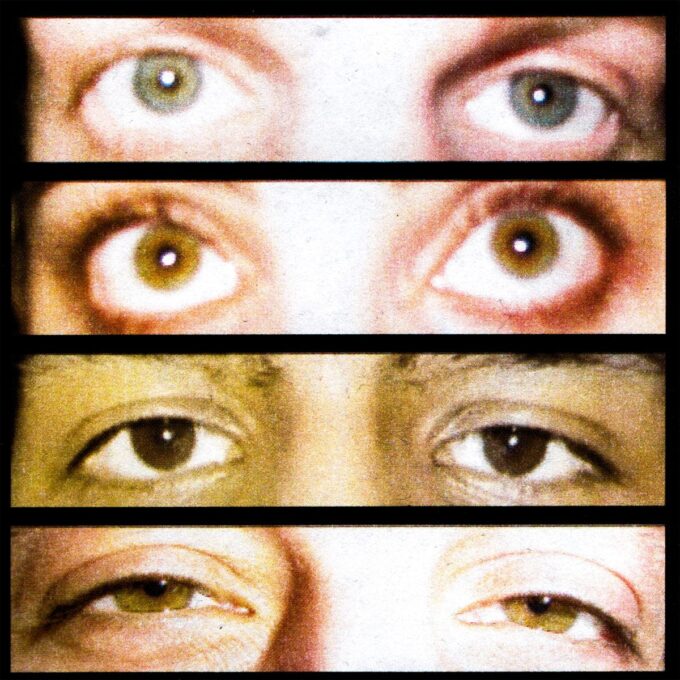
After Compulsion finally went their separate ways, Garret Lee of course would go on to become a renowned producer-in-demand and collaborative recording artist in his own right under the name Jacknife Lee. He also notably recorded a couple of albums with the late ex-Microdisney and Fatima Mansions legend Cathal Coughlan (under the project name Telefís) shortly before the latter’s tragic untimely passing in May 2022. In welcome anticipation of, and bridging, both 30th anniversaries of this 1996 sophomore album and their 1994 debut Comforter, The Future Is Medium was reissued by One Little Indian in 2025 with new completely redesigned artwork and – in the case of the debut – a whole slew of extra bonuses on a second LP.

Listen to the entirety of The Future Is Medium by Compulsion on YouTube:
Music by Compulsion can be purchased from their Bandcamp page
Reappraisal written by Martin Gray
Other reviews and articles by Martin can be found on his profile
A Plea From Louder Than War
Louder Than War is run by a small but dedicated independent team, and we rely on the small amount of money we generate to keep the site running smoothly. Any money we do get is not lining the pockets of oligarchs or mad-cap billionaires dictating what our journalists are allowed to think and write, or hungry shareholders. We know times are tough, and we want to continue bringing you news on the most interesting releases, the latest gigs and anything else that tickles our fancy. We are not driven by profit, just pure enthusiasm for a scene that each and every one of us is passionate about.
To us, music and culture are eveything, without them, our very souls shrivel and die. We do not charge artists for the exposure we give them and to many, what we do is absolutely vital. Subscribing to one of our paid tiers takes just a minute, and each sign-up makes a huge impact, helping to keep the flame of independent music burning! Please click the button below to help.
John Robb – Editor in Chief
PLEASE SUBSCRIBE TO LTW




Leave a comment