

They wrote Signing Off when they were signing on, and went on to sell 100 million records worldwide. LTW’s Phil Ross takes tea with founder members Robin Campbell and Jimmy Brown, and finds UB40 still committed to politics, puns and the struggle that never stops.
There’s a moment etched in my memory: It’s a crisp bright Saturday morning, early in 1980, and I’m standing on the path outside Stephen McGill’s house looking down across Clydebank from the housing scheme where we both lived – up the hill, high above the cranes, shipyards and the Singer sewing machine factory.
The single haunting note of a saxophone glides out of his open living room window, drifting off, surfing the sunlight before dipping down towards the river: melancholic, magnificent and uplifting. I’ve often wondered why this particular moment remains seared on my brain and why I still associate that warm pavement with UB40.
 Brian Travers’ solitary sax on Food For Thought exhales like a long, slow magical breath, with Jimmy Brown’s tapping hi-hat and snare shots dancing underneath. When Robin Campbell’s glassy guitar and the beautiful but urgent bass of Earl Falconer come in, the scene is set for Ali Campbell’s yearning plea:
“It’s not ‘I’m a prima donna’” says McGill. The lyrics were printed in Smash Hits – “It’s Ivory Madonna” he tells us emphatically. There are four of us: McGill, who’s in my year and heavily into Gary Numan, Jazz Simpson, a Protestant hippy boy with long hair and glasses, who lives in the flats next to McGill and loves Yes. Mark McGinley, who’s also at our school, isn’t really into music, he does like disco and dancing, but mostly, Taekwondo. I’d been to see The Ramones and was really into The Clash by that time. We all know Food for Thought by UB40 from the radio, but McGill has bought the single and had been playing it all morning before we arrived.
None of us have any idea what an Ivory Madonna is or what the song is about. We kick the wall and the pavement occasionally, skanking and singing along (wrongly) and pretending to play sax. But there’s one section we all understand, where we point and sing in unison:
Politicians argue, sharpening their knives
Drawing up their bargains, trading baby lives
We all nod in approval as we skank, confident in the tacit knowledge that UB40 are well meaning, they’re the good guys.
McGill goes back into the house repeatedly to put the single on another five times before his uncle finally comes out. He’s a security man working the night shift on the front gate at Faslane, the nearby nuclear submarine base on the Clyde, and now he needs to sleep. We trudge off together on whatever important mission fourteen-year-old boys have on a Saturday.
Decades later, Signing Off, the band’s debut album is still a regular go-to for me. So is Present Arms their second album, but my interest in them had begun to wane with the polished sound of their third album UB44 (1982).
And after their version of Neil Diamond’s Red Red Wine, from the 1983 covers album Labour of Love, became a worldwide number one being played every minute of the day somewhere in the world – on the radio, in pubs, at parties – I lost the connection and they drifted off in my mind along with Lionel Richie, Michael Jackson and the other artists topping the era’s hit parade.
 Now, in May 2026, the band have just completed an extensive European tour and are gearing up for thirteen UK dates before heading off to the States. A new album, Unstoppable, is already recorded and waiting to be mixed. After navigating huge commercial pressure and financial success, I wonder whether UB40 still speak to the unemployed and minority voices that first gave their music its power.
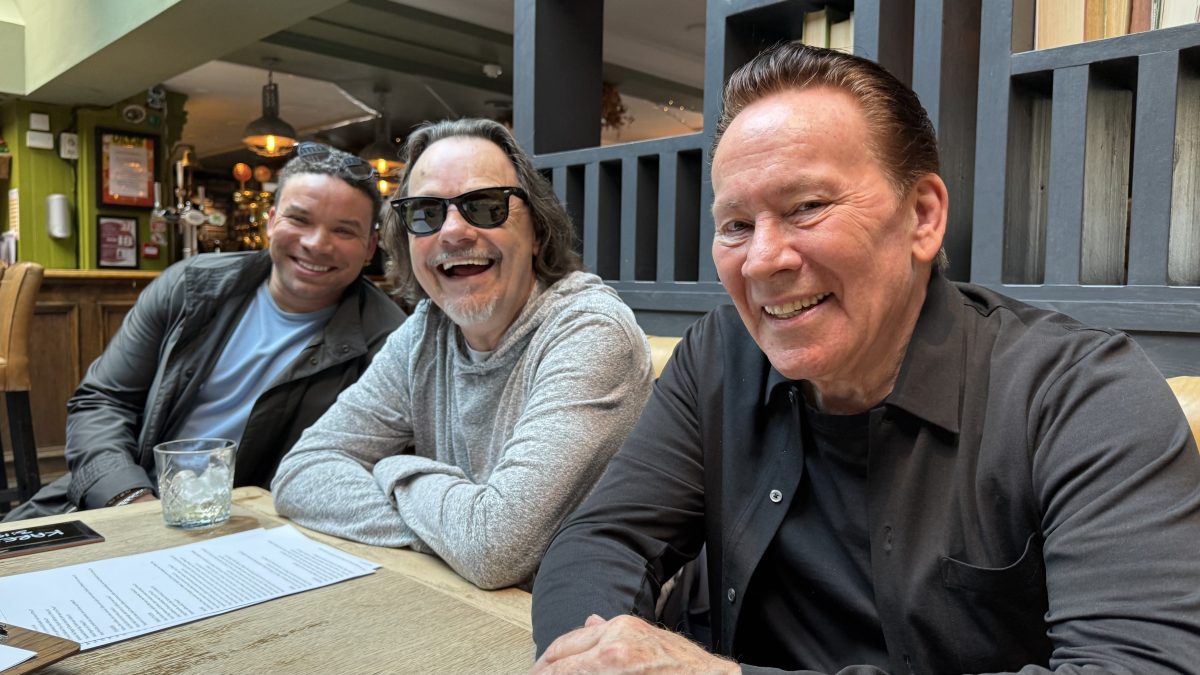
So I’ve come to a busy boozer behind Euston station to meet founder members Robin Campbell and Jimmy Brown who are accompanied by Matt, Robin’s son – and backing vocalist with the band. The bar is full, bustling in the mid-afternoon clink of glasses and the rising volume of drinkers competing to hear and be heard.
I’m a little overwhelmed by the noise, the bright colours, brass fixtures and framed pub-art as we take position in a large corner booth. The table is wide and Robin leans across intently towards me, perhaps to hear better or perhaps to get the measure of his interviewer, I’m not quite sure which. Matt sits off to the far end with a Guinness and next to Robin sits Jimmy with a rum. Coffee and tea for Robin and me.
As one of the world’s most successful reggae acts, their story is well documented. A multiracial group of unemployed Birmingham kids – with English, Irish, Welsh, Jamaican, Scottish and Yemeni heritage, they formed in late 1978 and spent a year learning to play together before performing live. They named themselves UB40 after the unemployment benefit card. Every song would be credited collectively, every royalty shared equally – a founding principle that held for almost five decades.
Their debut double A-side single King / Food For Thought reached number four in February 1980; while the album Signing Off, recorded on a four-track machine in a Birmingham bedsit, climbed to number two that August. By 1983 they were one of the biggest bands in Britain and would go on to sell millions of records worldwide.
Their politics are equally well documented, rooted in anti‑racism, working‑class solidarity and a belief in collective struggle. UB40 spoke for the people that Britain had overlooked, the undercounted and the vilified, the ones who made up the statistics.
 I lean forward to meet Robin across the table, I’m keen to know where the ethos came from, how it formed and how much of it he continues to carry. His family origins are Scottish and Ian Campbell, his father was a renowned figure on the folk circuit, whose song The Sun Is Burning became the unofficial anthem of the CND movement. It was sung at rallies around the world and sold 12,000 copies on a single Aldermaston march.
Robin: My dad was a traditionalist Scottish folk singer. His dad was an Aberdonian, his mum was from Sutherland. And his dad was a big union man in the docks in Aberdeen. Eventually he got blacklisted because of his work with the unions, and couldn’t get any work at all. So they all moved down to Birmingham, that was why they relocated.
Politics must have been at the very heart of the Campbell family from long before you even picked up an instrument?
Robin: It was a great socialist, trade unionist tradition, that’s how I was brought up. As teenagers, both my parents were members of the Communist Party. They went back to socialism later, but it was very strong in my upbringing, for sure.
Jimmy: It had an effect on all of us. The rest of us came from normal backgrounds. My dad was a factory worker and a union man, but he wasn’t political. It was certainly from the Campbell side of the band where the big [politics] came from. We were kids, eleven, twelve years old, and that was highly influential.
Robin: Get them while they’re young. (Laughs).
It occurs to me that formed in 1978, the band would have been right in the middle of punk and the political music movement of the time.
Jimmy: Punk had a massive influence on reggae and made it acceptable, (Jimmy is enthusiastic and Robin nods in agreement). Steel Pulse had the first number one reggae album ever, with Handsworth Revolution. If it wasn’t for the punks, that wouldn’t have happened. We’d go out to dances that punks had organised, they’d be playing reggae, as well as, like, the weird stuff, you know.
Robin: Definitely a large percentage of our audience was punky. Certainly in the late ’70s. Very definitely. That kind of dwindled as we became more commercial, when we sold out and had success.
Jimmy: Yeah when we did Labour of Love.
Robin: Then our audience became less punky, but for sure, there was a massive interest in reggae, amongst the punk fraternity.
 And of course, then the Two Tone thing came along, the Coventry scene, I say.
Robin: Yeah, and of course we knew them guys well. We bumped into them all the time. We did Rock Against Racism gigs together and stuff.
Jimmy: I always felt they were more punk than ska, those bands. But we were doing, what we thought was, contemporary music. We were following contemporary reggae coming in from Jamaica. Whereas, the Two Tone thing was more nostalgia.
Robin: They were playing Prince Buster music. To us, that was last decade’s music. We were all about new music. We saw them as a revivalist thing. In fact, Jerry Dammers offered us a record deal – which we turned down, because we didn’t want to be part of the Two Tone movement. People said we were stupid.
Even Dammers told us we were stupid. He said, ‘Just do a single with us. Just do your first single on Two Tone, it’s guaranteed, it’ll be a top ten hit. Then you can go where you want from there, you can write your own cheques.’ And we still said no, because we didn’t want to be lobbed in with the Two Tone thing. We saw it as a flavour of the year – here today and gone tomorrow. We were looking for longevity. We wanted to be seen as a contemporary band, not a fashionable band.
Jimmy: Exactly. It was all about the music, not about fashion. We didn’t dress the same. We still don’t. We didn’t have a uniform, it was about the music, always has been.
But your politics were highly prevalent too. The band would all only have been about 22-23 years old when you wrote…
Jimmy: (at Robin) He’s a little bit older, about 12, 14 years older. (Everyone laughs).
 …when you wrote the ‘Signing Off’ songs, I smile.
Robin: We wrote them as a direct reaction to Thatcherism. We wrote all of ‘Signing Off’ in 1979 and 80. So it was a direct reaction to what was going on at the time, the rise of Thatcherism, we were diametrically opposed to it. So at the time, it was easy to write that stuff.
Jimmy: We said it would end in tears, and now look at it. (Robin nods).
Robin: Yeah, I think any of those songs from Signing Off and Present Arms and other songs we’ve written since…
I jump in: “One in Ten is beautiful!”
Robin: Absolutely. That’s his song. (Pointing to Jimmy). And it’s as relevant today as it was then. Any of those songs could be written today. That’s the sad thing.
Jimmy: We’ve written so many songs about class war. He wrote Little By Little, (Jimmy points at Robin) which is literally about reaching up to rich people and taking all the money off them. Bringing them down. And I still believe that’s the only way forward now.
I’m thrown by the strange juxtaposition where the band see themselves singing about class war, while Red Red Wine is played at wedding receptions around the world. But Jimmy is clear, Robin is nodding, and of course, they’re absolutely right.
Jimmy: Absolutely there’s a history of way more than the 40 or 50% tax that we take from rich people. It was 70, 80, 90% in the 60s and 70s. That’s what we needed to build the infrastructure of the country. It’s ridiculous that they get away with paying so little tax.
Robin: It’s not about raising taxes from people who can’t afford to pay taxes. It’s about getting tax off the people who don’t pay tax. The richest half a percent of the population of the globe, could end homelessness, end hunger overnight, if they wanted. Why the hell can’t we tax them?
 I wonder what we can expect from Unstoppable, the new album?
Jimmy jumps in emphatically with a grin, “Politics!” he shouts and everyone laughs.
Robin takes a second to let the table settle.
Robin: The usual fodder, a mixture. We’re actually relying quite heavily on the input of newer, younger members, (and we all turn to Matt, half way through his pint), who are bringing us stuff, (Robin grins).
Because that’s the hardest thing for us – we’ve written almost 300 songs and it gets hard to find a new way of saying the same thing. When you’re still angry, still motivated by the same arguments. And what’s great about having new guys, is that they come up with new ways of saying it. They’re full of ideas and they haven’t done it before.
Jimmy: (to Matt) And him being an example of… (Matt holds up his hands).
Matt: I haven’t written anything for this yet.
Jimmy: And I’m disappointed with your lack of input (Jimmy adopts a slightly school-teacher tone and we all laugh)
Robin: Well, off the record, the record’s off.
We all laugh heartily again and Jimmy is particularly tickled by Robin’s joke:
Jimmy: That’s too good not to use (he chortles).
The table settles down, and with lovely comic timing Matt dryly adds:
Matt: Well, I might still pull it out of the bag. (But his dad quickly sets him straight, there’s nothing new going into this album now. It exists as it is – already).
 What’s your take on the state of the country? I ask Matt.
The media and social media, he says, control what people see so completely that politics is just confusing. “The way the fire’s stoked, whatever your agenda is, you’re shown what fits.” He cites Corbyn as an example, and Jimmy cuts in:
Jimmy: I’ve got four daughters, all grown up. They were big Corbyn fans, turned up at the rallies, took an interest in politics for the first time. What happened to Corbyn really damaged their…
Robin: …faith in the system. (Robin finishes his sentence, Jimmy nods)
Jimmy: He was destroyed, wasn’t he?
Matt: There’s been a rebranding of left, right and centrist. Representation has shifted, with the rise of the Greens and Zack. I would have voted Labour years ago… now that doesn’t even talk to me.
Jimmy: They’re dead as far as I’m concerned. The Labour Party are dead.
Robin: They’re still writing me letters, asking me to join again. (Everyone laughs).
I’m struck with the notion that the three band members in front of me embody what seems to be an historic pivot in British politics, and how UB40 who sang about equality, diversity and worker’s rights are standing firm on their values.
Robin: We are the perfect mirror of the streets we grew up on. The first house I lived in, in Balsall Heath, when I was eight; underneath us, we had an Irish family called the Kellys. On one side, we had a Jamaican family called the Hippolytes, and on the other side, we had an Indian family called the Singhs.
Jimmy: In our lifetime, we remember the blatant racism back in the 70s and the 60s. We remember Enoch Powell, and the rivers of blood speech, and the NF, we remember all that. And what happened in the late 80s, and 90s, was that it became unacceptable to be blatantly racist. But today, if you accuse somebody of racism now, they go, oh, ‘you can’t say that’.
 The two men are motionless but somehow more animated. Jimmy reflects for a moment and then as if electrified, he continues.
Jimmy: It happened to me, I was on that show, what’s that guy called? He’s just dreadful…
Robin: Jeremy Vine.
Jimmy: Yeah, I said ‘Farage, that racist’, and they said: ‘Oh you can’t say that’.
They pause for reflection again. Jimmy blames the media, mainly the BBC for the rise of Farage and the far right, Robin agrees.
Robin: He was on Question Time more times than any other guest, it’s ridiculous.
Jimmy: He never had a mandate until Clacton… he got beaten by a bloke dressed as a dolphin for fuck’s sake. So why he had that special treatment from the BBC, I don’t fully understand.
So with the rise of Farage and that constituency, they’re only a minority. They were always a minority, but it went underground at that point, it gets passed on in families. That’s how racism is passed on. If you’re born into a family where they’re casually racist from the second you wake up in the morning…
Robin: Did you see, those nine year old kids walking in the march at the weekend going ‘Allah, Allah, who the fuck is Allah?’ I mean…
Jimmy: Exactly, that’s the parents talking.
Robin: If that isn’t nurture, what is?… unbelievable.
I’d come wondering whether UB40 still spoke for the people they’d always spoken for. I’d been given a more than ample answer, and sensed we could have gone on all afternoon. But the glasses were empty, my untouched tea was cold and the afternoon was ending. I turned our talk to the tour.
Robin: Playing for the fans is a privilege we’ve never tired of, and nothing beats coming back to the towns where it all began. The European leg was great fun, the band’s on form, and it’s great to be going out with Maxi Priest and Aswad again. We’re all excited.
And what about the current scene – any new acts or bands you’d recommend?
Jimmy: It’s not what it was really. The scene’s still thriving but it’s just hard for them to come through. There’s Kabaka Pyramid, Protoje, all that new wave, but they’re not crossing over like they used to.
Robin: It’s really hard for any band now, to break into anything other than the pub circuit. Solo artists do a bit better.
Matt is more upbeat. There’s a healthy scene out there, he says.
Matt: Black Hero’s great, he supported us. And there’s Young Culture, out of Moseley. Multicultural, really cool – they’ve played with us too.
It seems apt to end the afternoon on the youngest member of UB40’s Campbell clan talking about a multicultural band from Birmingham.

Music and politics have run through the Campbell line for generations, back past Ian’s CND anthem, past the grandfather blacklisted on the Aberdeen docks, to distant forebears gutting herring by day and swapping songs by night.
The band’s politics rose and fell with the times, sharpest when the world was at its harshest – Sing Our Own Song, their 1986 anti-apartheid hit, banned in South Africa and sung back to them by thousands when they finally played there after Mandela walked free.
As Jimmy puts it: “There’s no final victory. Just the struggle. Sometimes you do better than others, but the struggle never stops.”
Perhaps, having watched his father’s message reach the world, without reaping the financial rewards, Robin built a band that would hold onto both.
I still haven’t reached a conclusion about why that sunny Saturday morning in 1980 still sits with me. McGill and Jazz Simpson both became apprentice electricians at Faslane. Mark McGinley moved to Newcastle and joined the Royal Marines. I moved to London and I haven’t seen any of them for over forty years. Maybe it was just us trying to unravel the mystery of Ivory Madonna real time.
Food for thought.
~
UB40 Unstoppable 2026 UK TOUR with Maxi Priest and Aswad
Monday 1 June – Brighton Brighton Centre
Wednesday 3 – June Cardiff Utilita Arena
Friday 5 June – London OVO Arena Wembley
Saturday 6 June – Manchester AO Arena
Sunday 7 June – Nottingham Motorpoint Arena
Tuesday 9 June – Hull Connexin Live
Thursday 11 June – Glasgow OVO Hydro
Friday 12 June – Liverpool M&S Bank Arena
Saturday 13 June – Leeds First Direct Bank Arena
Tuesday 16 June – Swansea Swansea Building Society Arena
Wednesday 17 June – Plymouth Pavilions
Thursday 18 June – Bournemouth BIC
Saturday 20 June – Birmingham BP Pulse Live
Tickets are on sale now at tegeurope.com.
Fans can pre-order the new UB40 album now via the Official UB40 Store.
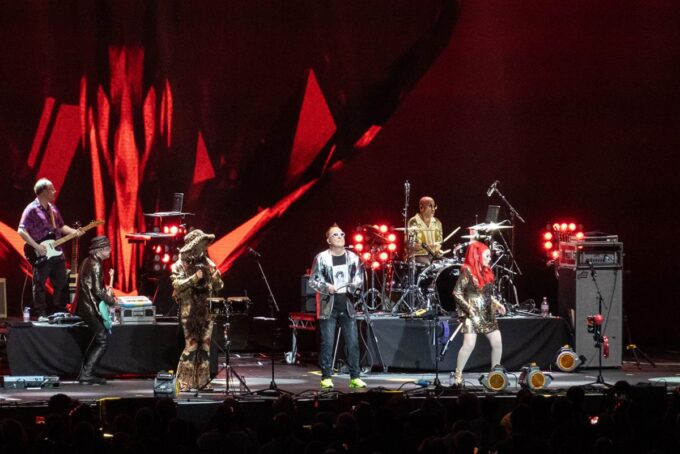
Band photos courtesy of Karen McNamara at Mara Publicity.
Feature image and pub photos by Phil Ross
Words by Phil Ross. More writing by Phil can be found at his Louder Than War author’s archive.
A Plea From Louder Than War
Louder Than War is run by a small but dedicated independent team, and we rely on the small amount of money we generate to keep the site running smoothly. Any money we do get is not lining the pockets of oligarchs or mad-cap billionaires dictating what our journalists are allowed to think and write, or hungry shareholders. We know times are tough, and we want to continue bringing you news on the most interesting releases, the latest gigs and anything else that tickles our fancy. We are not driven by profit, just pure enthusiasm for a scene that each and every one of us is passionate about.
To us, music and culture are eveything, without them, our very souls shrivel and die. We do not charge artists for the exposure we give them and to many, what we do is absolutely vital. Subscribing to one of our paid tiers takes just a minute, and each sign-up makes a huge impact, helping to keep the flame of independent music burning! Please click the button below to help.
John Robb – Editor in Chief
PLEASE SUBSCRIBE TO LTW



Leave a comment